
Fleets of traffic cones lose their night visibility long before the cone body wears out. Collars crack, peel, fade or scuff away after repeated handling and sun exposure. Buyers then face a simple question: replace the whole cone, or fit a new reflective sleeve to the existing body. A traffic cone reflective sleeve can cut cost sharply in the right situation. In the wrong situation, it creates compliance risk.
This guide is written for procurement officers, contractors, municipal fleet managers and distributors who manage large cone inventories. It explains when retrofitting works, what a sleeve cannot fix, and how to compare costs honestly. It also covers specification, MOQ and supplier checks for wholesale buyers.
When a Traffic Cone Reflective Sleeve Is a Valid Alternative to Replacement
Retrofitting makes sense only when the cone itself is still fit for service. The sleeve restores the reflective bands, but it does not restore a damaged body. A quick inspection routine separates cones worth saving from cones that belong in the recycling bin. Start by understanding what the product is and which cones qualify.
1. What a Retrofit Sleeve Actually Is
A retrofit sleeve is a separate reflective collar that fits over an existing cone body. Most sleeves are made from flexible PVC or similar material with retroreflective sheeting applied to the outer face. Some slide down from the top of the cone, and others wrap around it and are fixed in place. Sleeve designs and fixing methods vary by supplier, so confirm the method on the datasheet. The aim is simple: bring an older cone back to the visibility level your site or contract requires.
2. Which Cones Qualify for Retrofitting
A cone qualifies when the body is straight, stable and crack-free, and when the height meets the use. The base should still sit flat, and the color should still read as orange or the color your plan requires. Cones with a split in the body, a warped base or heavy fading are poor candidates. A fresh sleeve on a failing cone only hides the problem. Set a written pass or fail test, and apply it to every cone before you order sleeves.

Compliance Limits: What a Traffic Cone Reflective Sleeve Cannot Fix
A sleeve solves one problem only. It cannot change cone height, shape or body condition. Many retrofit failures happen because buyers assume a sleeve makes any cone night-ready. Review the limits below before you commit budget.
1. Cone Height and Band Placement
Under MUTCD, a cone used at night or on high-speed roads is generally 28 inches tall or more. An 18-inch cone is limited to daytime use on low-speed roads, and no sleeve changes that. For 28-inch and taller cones, the standard layout is two white retroreflective bands, a 6-inch upper band and a 4-inch lower band, with a short gap between them. Check the current MUTCD wording and your local rules before you buy. A sleeve that does not match the required band layout fails the check.
2. Sheeting Grade and Reflectivity Class
Reflectivity depends on the sheeting grade, not on the sleeve itself. MUTCD sheeting types include Engineer, High-Intensity and Diamond grades, and EN 13422 uses classes R1, R2 and R3. A cheap sleeve with low-grade sheeting may give less visibility than the collar it replaces. Ask for the sheeting class in writing, along with a test report from the sheeting supplier. Our comparison of Class 1 vs Class 2 reflective collars explains the performance differences in more detail.
3. Worn Bodies, Faded Color and Deformed Cones
A cone that has lost its color or shape does not meet the visual standard even with a new collar. UV exposure causes fading and brittleness over time, as discussed in our guide to UV degradation in traffic cone lifecycle management. Deformed cones also fail to stack and stand evenly. Retrofit only cones that look and behave like new apart from the collar. Replace the rest, and use the replacement as an opportunity to standardize your stock.

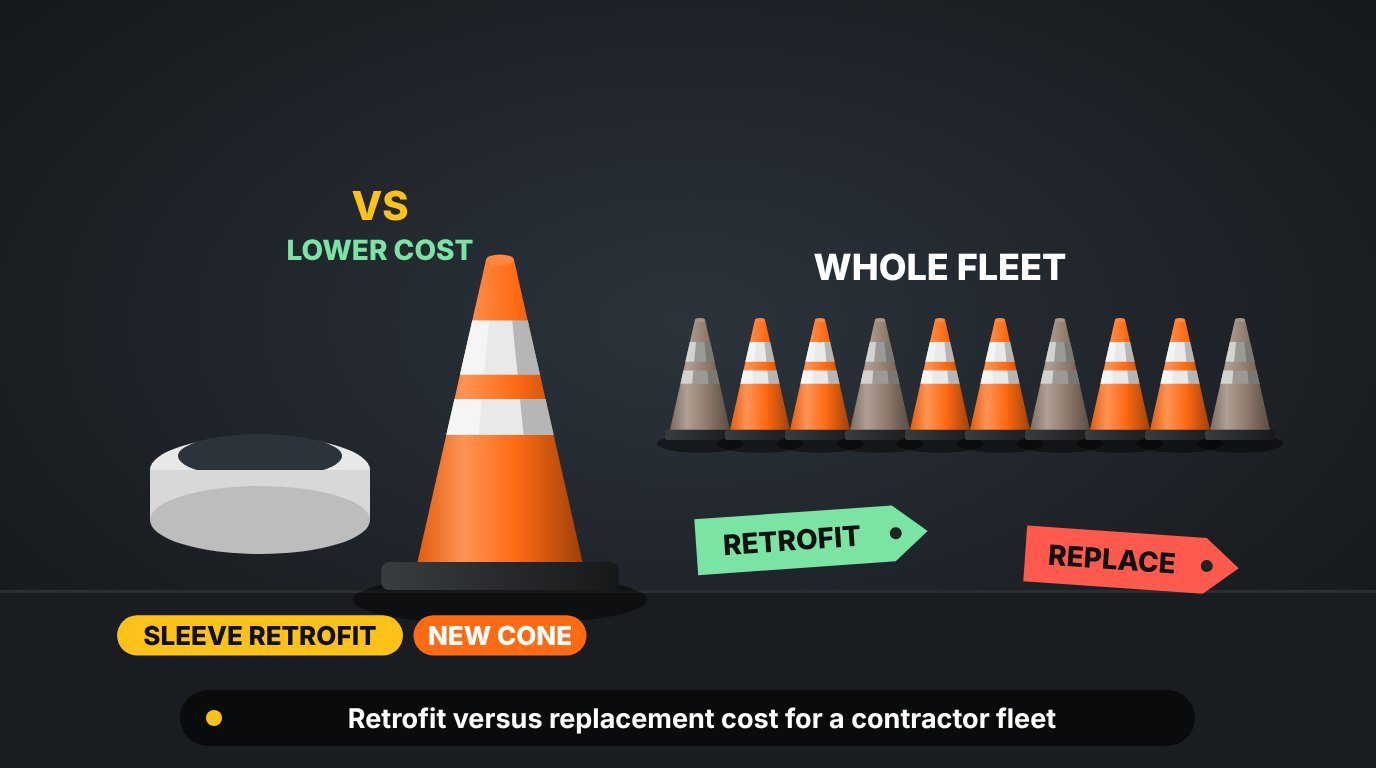
Cost Comparison: Retrofit Sleeve Versus Full Replacement
The cost question looks easy but hides several variables. Unit price is only the first line. Labor, downtime, disposal and stock complexity all change the answer. Use the framework below to compare the options with your own numbers.
1. Direct Unit Cost per Cone
Compare the price of one sleeve with the price of one complete cone of the same height and grade. A sleeve is usually a fraction of the cost of a new cone, but the ratio varies by supplier, material and order quantity. Ask for quotes at several volume tiers, because wholesale pricing falls as order size rises. Include freight, because sleeves pack flat and are cheaper to ship than cones. Compare landed cost per cone, not the factory price.
2. Labor, Handling and Downtime
Retrofitting takes time. Crews must collect cones, clean them, remove the old collar and fit the sleeve. A traffic cone reflective sleeve that slides on quickly saves labor, while a sleeve that needs adhesive and curing time adds it. Calculate the cost per cone using your actual hourly labor rates, and include storage space for cones that wait for treatment. For small fleets, the labor may cancel out the saving.
3. Disposal, Inventory and Lifecycle Value
A replacement cone adds fresh material to your stock and sends the old cone to disposal. A retrofit extends the life of the existing body and delays that cost. Estimate how many more years the body can last. If the remaining life is short, the sleeve may not pay back, but a young and sound cone often favors retrofitting. Mixed-age stock also creates sizing and compliance variations, so keep clear records of which cones carry retrofit sleeves.
4. A Simple Break-Even Method for a Traffic Cone Reflective Sleeve
Add the landed price of one sleeve to the labor cost of fitting it. Divide that total by the landed price of one new cone of the same height and grade. If the result is well below one, the retrofit saves money on that cone. Then check the remaining life of the body, because a cheap retrofit on a cone that fails next season is a false saving. Run the calculation for each cone height, using your own supplier quotes, because the ratio changes with size, region and volume.
Technical Specification for Retrofit Sleeves
A wholesale order for sleeves needs clear technical requirements. Without them, suppliers quote different products at similar prices. Write the specification before you request quotes. The points below cover the details that cause most problems.
1. Sleeve Size, Taper and Fit
Cones taper, so a sleeve must match the diameter at the point where it will sit. A loose sleeve slides down and ruins the band layout. A tight sleeve tears when you fit it. Provide the supplier with measurements for each cone model you own, including the height and the diameter at the top, middle and base. Ask for sleeve sizes by cone height, such as 18 inch, 28 inch and 36 inch, and test fit a sample on each model.
2. Sheeting, Backing and Bonding
The sleeve carrier material should stay flexible in cold weather and resist heat in summer. The retroreflective sheeting must be bonded firmly to the carrier. Peeling edges are a visible failure that inspectors can spot from a distance. Ask the supplier which adhesive and sheeting combination they use, and what temperature range they have tested. Prices and test results vary by supplier, so compare data sheets side by side.
3. Durability and Acceptance Tests
Request samples and run a simple field test. Mount the sleeve on a cone, run it through repeated stacking and unstacking, and leave it outdoors for several weeks. Check the bands for scuffing, fading and edge lifting. Also check that the sleeve stays in position when the cone is knocked over. If a supplier refuses to provide samples, treat that as a warning sign, and keep approved samples as the reference for later shipments.

Wholesale Buying: MOQ, OEM and Distributor Stocking
Distributors and large buyers treat sleeves as a repeat product. Good terms reduce risk and make reordering simple. Confirm the commercial details before you place a trial order. They shape your cost as much as the unit price does.
1. MOQ and Pack Size
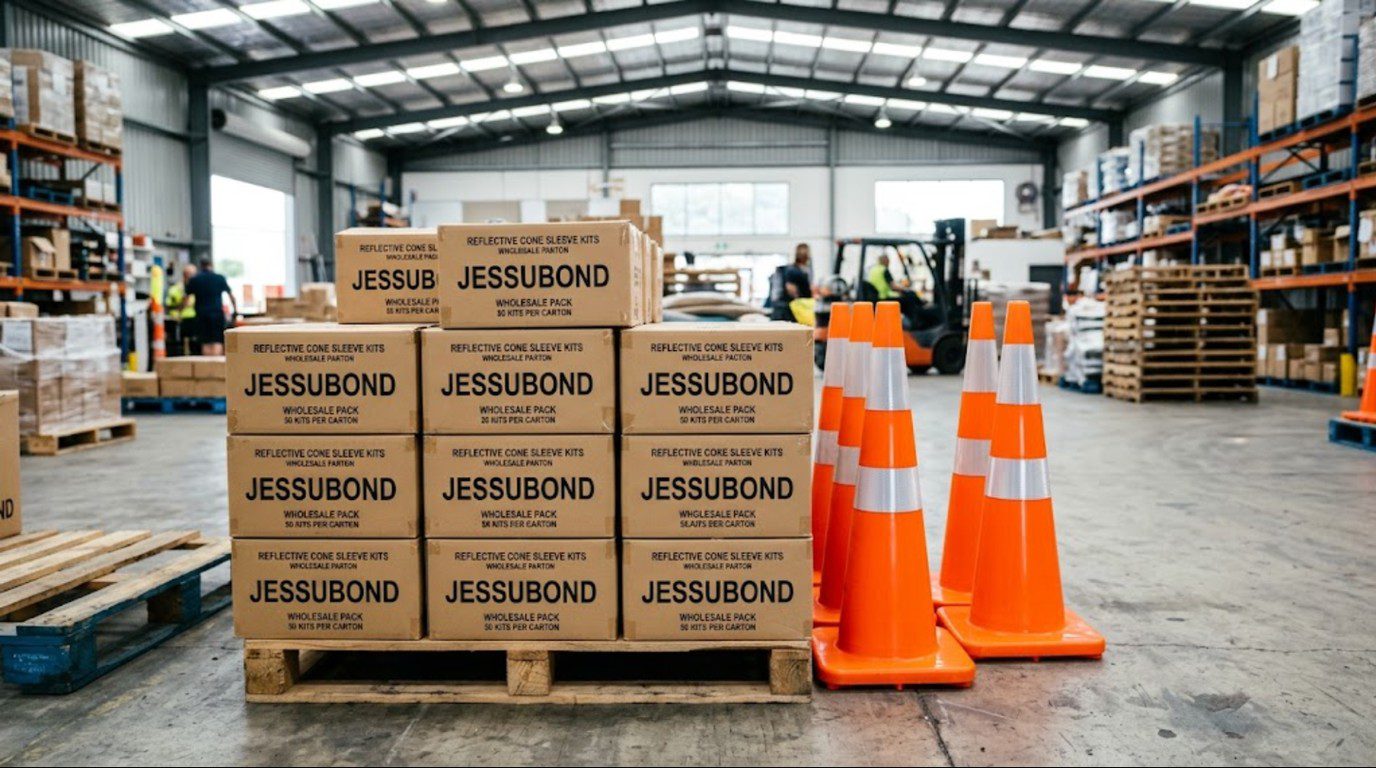
Sleeves are small and light, so factories often set MOQs in the hundreds or low thousands of pieces. The exact figure depends on the factory, the size range and the sheeting grade. Ask whether you can mix sizes inside one MOQ, since most fleets own cones of several heights. Request carton quantities and pallet counts for each size. Clear pack sizes make receiving and stock counting easier.
2. OEM Branding and Custom Sizes
OEM programs let you add a logo, a private label or custom packaging. Some buyers also request sleeves in non-standard sizes for special cone models. Provide drawings and tolerances to avoid mistakes. Our article on custom logo printing and reflective collar classifications covers how branding and collar grade affect wholesale pricing. Confirm who owns the artwork and whether the factory can store it for reorders.
3. Selling Retrofit Kits to Contractors
Distributors can bundle a traffic cone reflective sleeve with new cones, which gives contractors a choice. Retrofit kits suit customers with large installed fleets and tight budgets. New cones suit customers who need standardization or who face strict audits. Offer both, and train sales staff to explain the compliance limits. A distributor who advises honestly earns repeat orders and avoids returns.
4. Quality Documents and Supplier Checks
Ask every supplier for a sheeting data sheet, a batch record and a sample from the production run. A reliable factory can show where the sheeting was sourced and which test it passed. Confirm the supplier can keep the same sheeting grade across repeat orders. Visit the factory or request a video audit for large contracts. These checks cost little compared with a failed delivery of several thousand sleeves.
A Decision Framework for Fleet and Procurement Managers
A clear process turns the retrofit question into a routine decision. It also protects you if an auditor or client reviews your equipment. The steps are easy to apply to a small yard or a national fleet. Document each decision and review it every year.
1. Audit the Existing Cone Inventory
Count cones by height, condition and collar status. Sort them into three groups: sound with a worn collar, sound with a compliant collar, and damaged. Only the first group suits retrofitting. Record the age of the body, because it affects remaining life. A simple audit sheet saves time at every later purchase.
2. Set Replacement Triggers
Write down the conditions that trigger replacement instead of retrofit. Examples include cracks, height below the required minimum, severe fading or repeated collar failure. Add a limit on how many times a body may be retrofitted. Clear triggers prevent crews from guessing, and they make audits easier. Review the triggers when standards or contract terms change.
3. Document, Label and Train
Record each retrofit with a date and a batch number. Label cones that carry sleeves so crews can identify them quickly. Train crews to check band position and edge adhesion on every deployment. Good records show clients that you maintain your equipment properly. They also give you data for the next purchasing decision.

Conclusion: A Traffic Cone Reflective Sleeve Pays Off Only on Sound Cones
A traffic cone reflective sleeve is a smart purchase when the body is sound, the height is correct and the sheeting grade meets your need. It is a poor purchase when the cone is damaged, faded or too short for night use. Compare landed unit cost, labor and remaining body life before you decide. Then write a specification that includes size, sheeting class, bonding method and test samples.
Wholesale buyers should also confirm MOQ, pack sizes and OEM terms with the supplier early. A short audit and clear replacement triggers make future decisions faster. The result is lower cost per deployment without lower safety.
Retrofit the cones worth keeping, and replace the cones that only look worth saving.
Looking for a manufacturer that supplies traffic cones and reflective collars in custom sizes and sheeting grades with flexible MOQ and transparent per-unit pricing at volume? At JessuBond, we produce traffic cones and reflective collar options with full customization support. Contact us here.