
Two convex mirrors of the same diameter can behave very differently after one year on a loading dock. One stays clear and intact, while the other yellows, scratches or cracks after an impact. The difference is the lens material. The choice between an acrylic vs polycarbonate convex mirror, with glass as a third option, is one of the most important decisions in a bulk order.
This guide is written for procurement officers, distributors, importers, contractors and facility managers who buy convex mirrors in volume. It compares the three lens materials on impact resistance, weather performance, clarity, cost and safety. It also explains how to write a specification and what to test. Finally, it covers the MOQ and OEM terms to expect from a manufacturer.
Why Lens Material Decides Convex Mirror Performance and Cost
The lens is the part of the mirror that carries the optical surface, takes the impact and faces the weather. Frames, brackets and backing plates matter, but they do not replace a suitable lens. A wrong material choice shows up as complaints, replacements and safety gaps. Buyers who understand the basics can avoid these costs.
1. What the Lens Actually Does
A convex lens must give a wide, clear and undistorted view of the area it covers. It must also survive knocks from forklifts, pallets, vehicles and cleaning equipment. Outdoors, it must resist sun, rain, heat and cold without yellowing or warping. Each material handles these demands differently. Therefore the right choice depends on where the mirror hangs and what hits it.
2. Where Bulk Buyers Get Caught
Many tender documents specify a diameter, a mounting type and a color, but they leave the lens material open. Suppliers then quote the cheapest option that fits the description. The buyer receives hundreds of mirrors that look fine on delivery but fail in service. A written lens specification closes this gap, makes quotes comparable and forces the acrylic vs polycarbonate convex mirror decision before the order, not after the complaints. Our guide to essential specifications for road safety convex mirror procurement lists the other points to include.
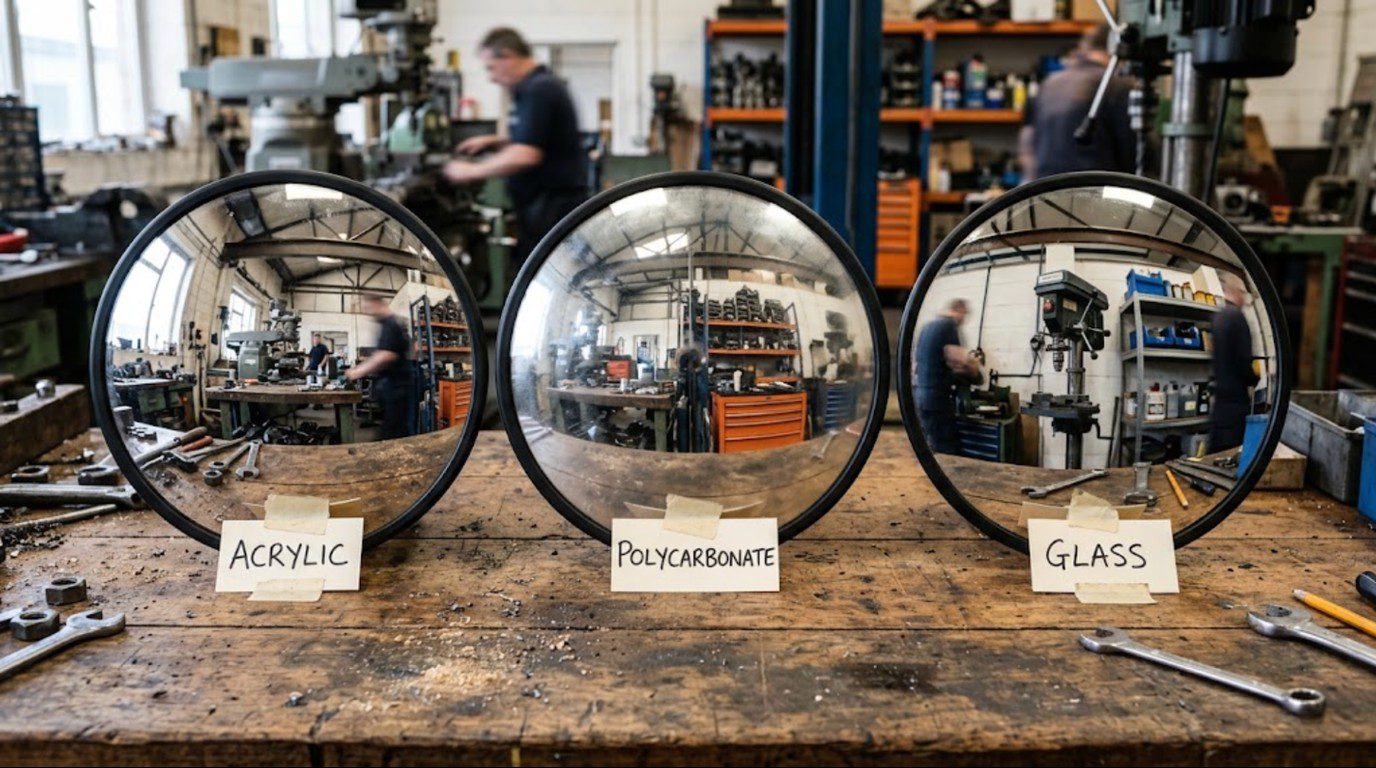
Acrylic Convex Mirrors: Strengths and Limits
Acrylic, also called PMMA, is the most common lens material for general-purpose convex mirrors. It is light, clear and affordable. It performs well in many indoor and outdoor settings. However, it has limits that buyers must understand.
1. Optical Clarity and Surface Hardness
Acrylic transmits slightly more light than polycarbonate, and it keeps a clear, bright reflection. Its surface is harder than polycarbonate, so it resists everyday scratching better. Minor surface marks can often be polished out. These traits suit parking areas, shop aisles and building corners. They also make acrylic a popular choice for decorative and photo frame mirrors.
2. UV Stability and Weather Performance
Acrylic resists UV light well and does not yellow in the way many other plastics do. This makes it a reliable choice for outdoor mirrors in sunny climates. It also holds its shape through normal temperature swings. Extreme heat can still soften it, so check the temperature range for your site. For more on outdoor durability, see our article on what makes quality outdoor convex safety mirrors withstand harsh conditions.
3. Impact Limits and Cracking Risk
Acrylic is tougher than glass, but it is much less impact resistant than polycarbonate. A hard knock from a forklift or a pallet can crack it. Cold weather makes the risk worse. For this reason, acrylic is better for locations where impacts are rare. In high-traffic industrial aisles, a more impact resistant lens usually pays for itself.

Polycarbonate Convex Mirrors: Strength for High-Impact Sites
Polycarbonate, often called PC, is the strong option in the plastic group. It is chosen when impacts, vandalism or rough handling are likely. It costs more than acrylic, but the extra cost often reduces replacement. Review its strengths and its limits before you order.
1. Impact Resistance
Polycarbonate is far more impact resistant than acrylic, and test values vary by grade and thickness. It can take a knock from a forklift or a thrown object without cracking. This makes it a strong choice for loading docks, factories, parking lots and public spaces. For sites where breakage risk is high, a polycarbonate convex mirror can lower long-term cost. A property comparison from Interstate Plastics shows how large the difference can be.
2. UV Protection and Hard Coating
Polycarbonate scratches more easily than acrylic, and it can yellow if it lacks UV protection. Outdoor grades should be UV stabilized or coated. A hard coat improves scratch resistance and keeps the surface clear for longer. Ask the supplier whether the coating covers the mirror face, and what test supports the claim. Coatings differ widely between suppliers, so ask for details rather than accepting a general claim.
3. Temperature Range and Cold Performance
Polycarbonate tolerates higher temperatures than acrylic and stays tough in cold conditions. This suits freezer entrances, outdoor sites with harsh winters and areas near heat sources. Always confirm the tested temperature range for the specific product. Prices and performance differ by supplier and grade, so compare data sheets as well as samples.
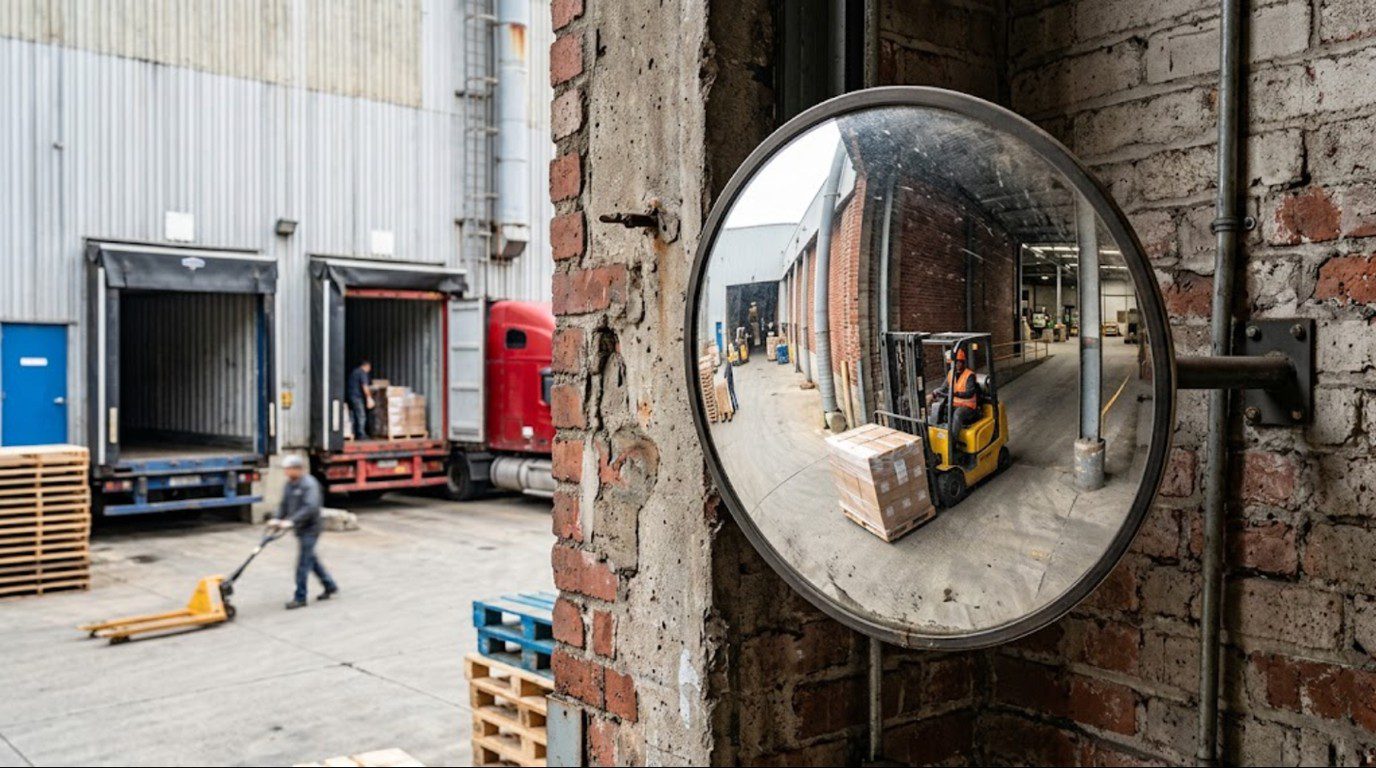
Glass Convex Mirrors: When Glass Still Makes Sense
Glass is the traditional mirror material. It gives excellent optical quality and a hard, scratch-resistant surface. It also has serious drawbacks for safety applications. Most bulk buyers choose plastic, but a few cases still favor glass.
1. Optical Quality and Surface Durability
Glass gives a sharp, bright reflection and stays clear for many years. It resists scratching from cleaning and does not yellow in sunlight. For some decorative or architectural uses, these traits matter more than impact resistance. A glass lens may also suit sites with strict fire or heat conditions. Confirm the exact glass type and thickness with the supplier.
2. Weight, Breakage and Liability
Glass is heavy and brittle. A broken mirror creates sharp fragments, which can injure people and contaminate products. Many food, pharmaceutical and warehouse sites restrict glass for this reason. Safety managers should check internal rules before specifying it. In most industrial settings, plastic lenses lower the risk and the insurance concern.
3. Mounting Hardware and Freight
Heavy lenses need stronger brackets and poles, which increases cost. Freight is also higher because of weight and the need for protective packing. Breakage during transport is a further risk. As a result, a glass mirror usually has a higher landed cost than a plastic one. Buyers should include these costs in the comparison.
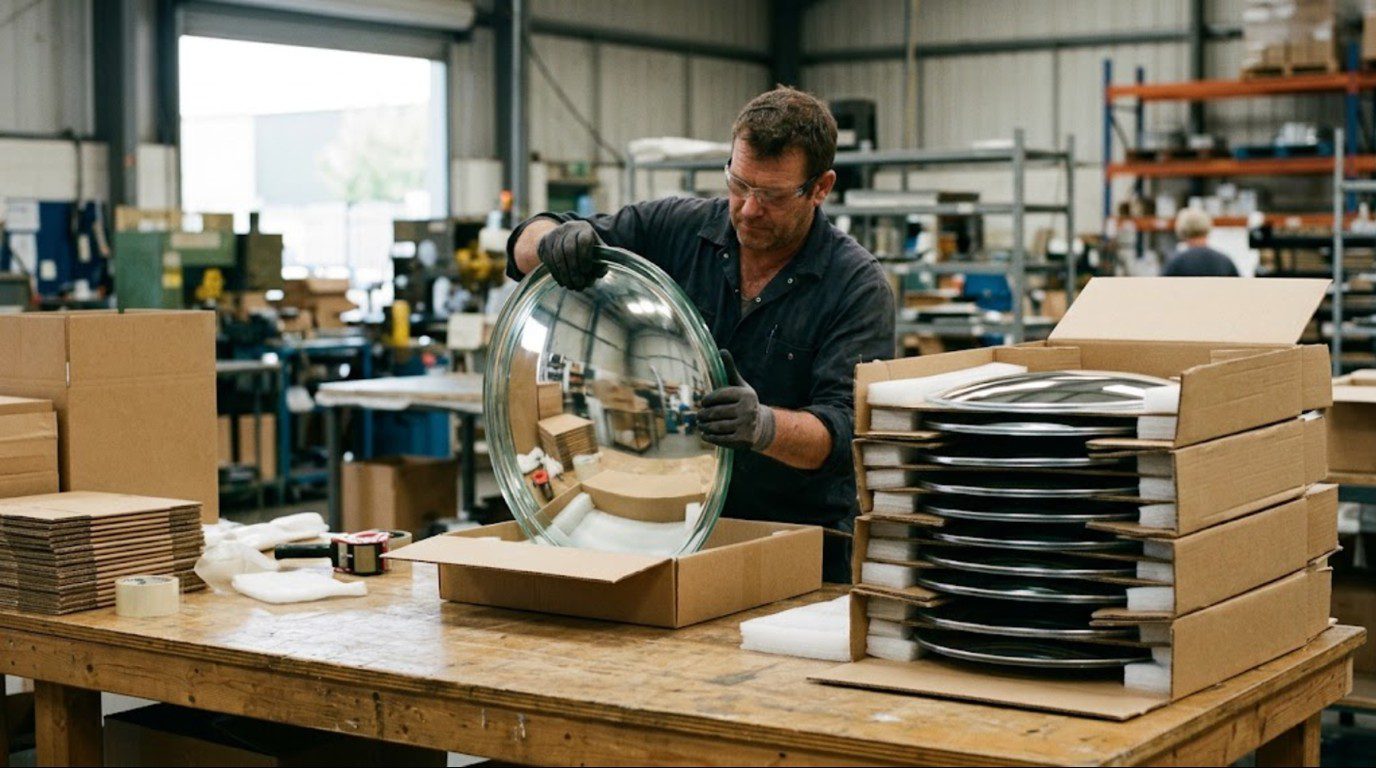
Matching the Lens to the Application
The right material depends on the site. A short list of common sites shows how the choice changes. Use it as a starting point, then test samples under your own conditions.
1. Warehouses and Forklift Aisles
Forklifts, pallets and trolleys hit mirrors regularly. Polycarbonate is usually the safer choice here because it absorbs knocks better. Place mirrors above typical load height to reduce contact. Also check that the mounting bracket is as strong as the lens.
2. Outdoor Roads, Driveways and Parking Areas
Sun exposure is the main challenge outdoors. Acrylic handles UV well and offers a clear view at a lower price. UV-stabilized polycarbonate is better where vandalism or impact is likely. Check the mounting height and the local weather before you decide. Our article on convex mirror lifespan expectations helps you plan the budget.
3. Indoor, Retail and Decorative Uses
Retail corners, building lobbies and decorative locations have little impact risk. Acrylic is usually the best value in these places. It gives a clear image at low cost and works with many frame colors and finishes. Choose glass only when the design requires it and the safety rules allow it.
4. Quick Rules for Choosing the Lens
Start with impact risk, and choose polycarbonate if the mirror will be hit. Next, consider sun exposure, because acrylic handles UV with less need for special treatment. Then check the rules at your site, since some facilities ban glass and some require impact-rated lenses. Finally, compare the landed cost per mirror and the expected service life. An acrylic vs polycarbonate convex mirror comparison on these four points usually settles the decision in a few minutes.

Specification and Testing for Bulk Orders
A good specification removes ambiguity. It also gives you the right to reject poor shipments. Write requirements in plain language and attach them to the purchase agreement. Then test samples before releasing a full order.
1. Specifying an Acrylic vs Polycarbonate Convex Mirror in Writing
State the lens material, thickness, diameter and the surface coating. Specify whether the lens must be UV stabilized and give the required temperature range. Define the backing material and how the lens is fixed to the frame. Add the allowed distortion and the reflective finish. Include packaging requirements to prevent scratches in transit.
2. Tests to Request
Ask for results from recognized test methods, such as ASTM G154 or ISO 4892 for UV exposure and ASTM D1003 for light transmission. Impact tests should state the method and the sample size. If a supplier has no data, run a simple drop or strike test on samples. Compare the surface before and after several weeks of outdoor exposure. Keep the results with the order record.
3. Sampling and Batch Consistency
Approve a production sample, then compare later shipments against it. Check thickness, curvature and clarity at random from different cartons. Reject mirrors with waviness or distorted reflections. For tender writing support, see our guide on writing a convex mirror specification sheet for international tenders.
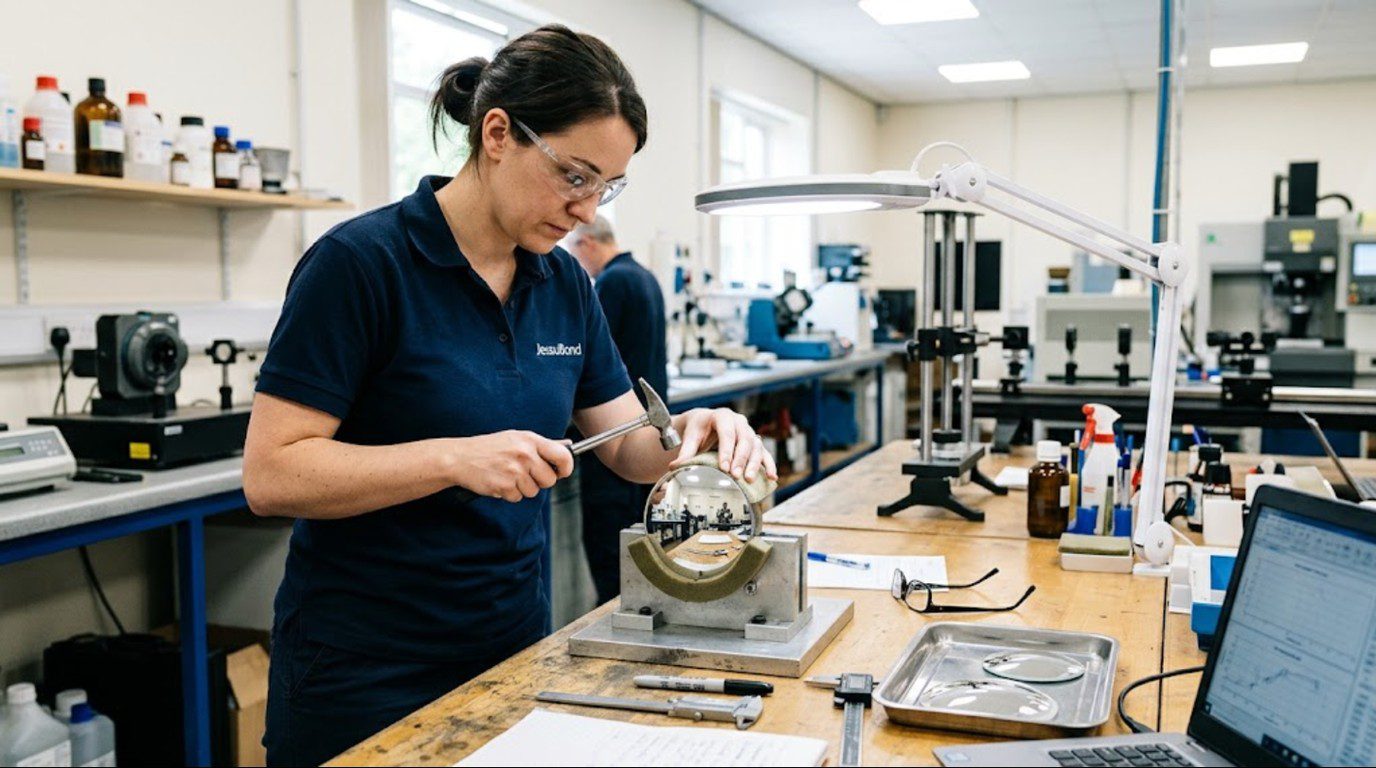
Wholesale Terms: Price, MOQ and OEM Options
Lens material changes cost, lead time and order structure. Knowing these effects helps you negotiate. It also helps you compare quotes on a fair basis. Confirm the commercial terms before you finalize the specification.
1. Price Gap in an Acrylic vs Polycarbonate Convex Mirror Quote
Acrylic is generally the lowest cost of the three, polycarbonate costs more, and glass adds weight and freight on top. The exact difference depends on thickness, coating, volume and supplier. Prices vary widely, so request quotes for each material and compare landed cost. A higher unit price can still win if it reduces replacements.
2. MOQ and Mixed Orders
Typical MOQs range from a few hundred to around 1,000 pieces, depending on the model and the lens material. Ask whether you can mix acrylic and polycarbonate models within one order. Mixed orders help distributors serve both indoor and industrial customers. Confirm lead times for each material, because polycarbonate and coated lenses may need longer production. Ask about packing as well, since thermoformed lenses need protective film and rigid cartons to arrive without scratches.
3. OEM Branding and Custom Frames
OEM programs let you add your brand to frames, backing plates and packaging. Custom colors and mounting options are common. Share artwork and drawings early to avoid delays. A good manufacturer will also keep your approved samples and artwork on file for reorders.

Conclusion: Choose the Acrylic vs Polycarbonate Convex Mirror by Impact Risk and Exposure
The right lens material depends on where the mirror hangs and what it faces. Acrylic offers clarity, UV stability and low cost for indoor, outdoor and decorative use. Polycarbonate offers far better impact resistance for warehouses, docks and public sites, provided it carries UV protection and a hard coat. Glass offers optical quality but brings weight, breakage and liability that most industrial buyers want to avoid.
Specify the lens material in writing, request test data, and approve a sample before you release the order. An acrylic vs polycarbonate convex mirror decision made on these terms saves money over the life of the contract. It also keeps your people safer.
The cheapest mirror is the one that survives the site it was bought for.
Looking for a manufacturer that supplies acrylic and polycarbonate convex mirrors in custom sizes, frames and branding with flexible MOQ and transparent per-unit pricing at volume? At JessuBond, we produce convex mirrors for indoor, outdoor, dome and inspection use with full customization support. Contact us here.