
Two quotes for a 28-inch traffic cone can differ by a wide margin, even when the photos look identical. Buyers often assume the cheaper supplier is simply more efficient. In practice, the gap usually comes from three things. These are the cost of PVC resin and compound, the real weight of the cone, and the order volume behind the price. Understanding these drivers is the fastest way to judge any traffic cone wholesale price.
This guide is written for procurement officers, distributors, importers and contractors who buy cones in volume. It explains how raw materials move the price and why weight matters. It also covers how tiers and MOQ shape the quote. In addition, it shows how to compare offers fairly and how to protect yourself in the contract.
How to Read a Traffic Cone Wholesale Price Quote
A quote is a summary of many decisions made inside the factory. Some decisions raise cost and improve performance. Others only reduce cost and quality together. Before you compare numbers, you need to know what each number includes.
1. Unit Price, Landed Price and What Sits Inside Them
The factory unit price covers materials, labor, tooling, overhead and margin. The landed price adds freight, insurance, duties, port charges and inland delivery. A low ex-works price can become a high landed price if the packing is bulky or the cone is heavy. Therefore, always ask for the Incoterm used in the quote, such as EXW, FOB or CIF. Compare offers on a landed basis, because that is the number your finance team will see.
2. Why Identical-Looking Cones Have Different Prices
Cones from different suppliers often look the same in a catalog photo. The differences sit in the compound, the wall thickness, the base weight and the collar grade. A thinner wall costs less but may crack in cold weather, and a lighter base saves resin but tips more easily in wind. Our complete B2B pricing breakdown for bulk traffic cone orders covers the full cost structure. This article focuses on the three drivers that move the price most.

PVC Resin Costs and Compound Formulation
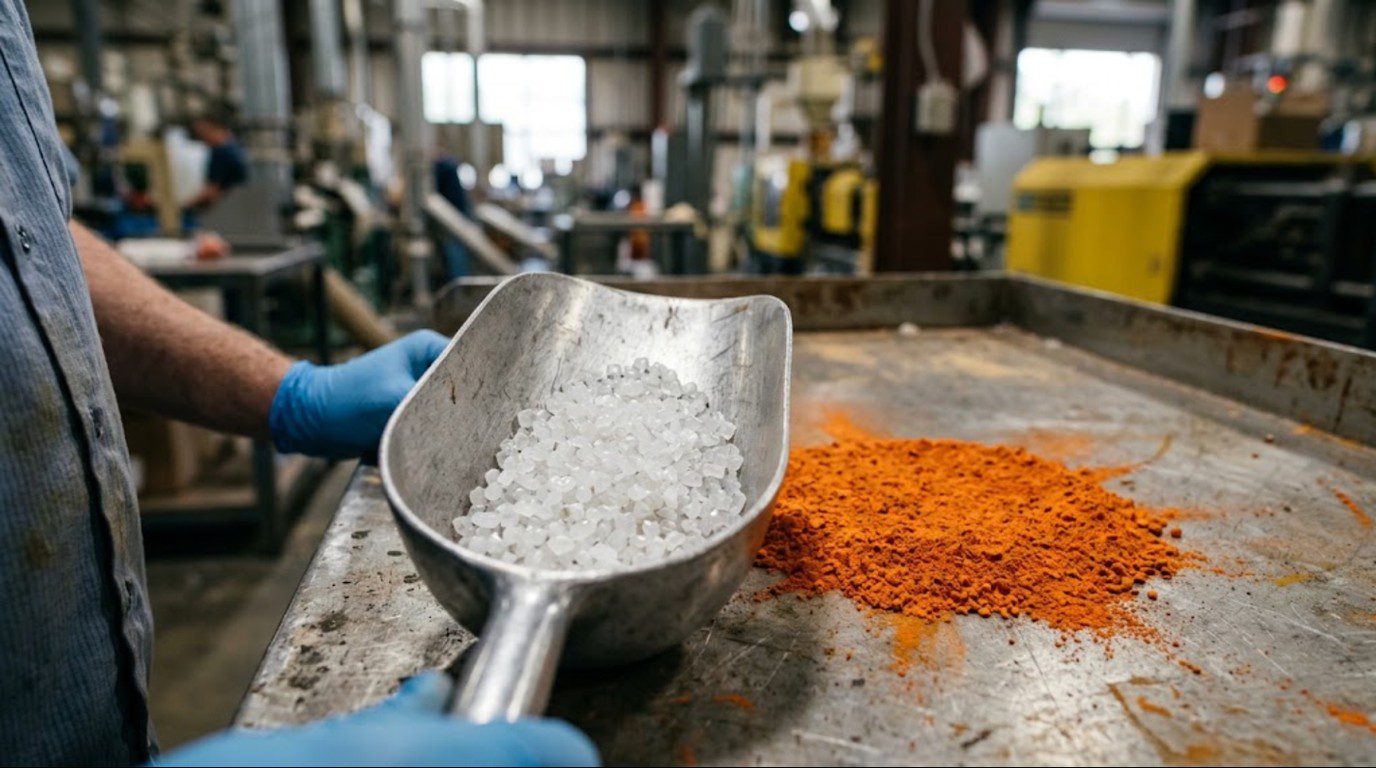
PVC is the base material for most traffic cone bodies and many bases. Its price sets a floor under the traffic cone wholesale price. However, resin is only one part of the compound that goes into the mold. Additives and fillers change both the cost and the quality of the finished cone.
1. How PVC Resin Prices Move
PVC resin prices follow feedstock and energy costs, regional supply and demand, and the broader economic cycle. They can change within a few months, and the swings are not always the same in every region. Public benchmarks exist, including PVC futures on the Dalian Commodity Exchange and regional price reports from commodity publishers. A factory that buys resin at a low point can offer a better price than one that buys at a peak. Ask suppliers how long their quote stays valid, because a long validity period in a rising market is a warning sign.
2. Plasticizers, Stabilizers and Pigments
Raw PVC resin is rigid, so it needs plasticizers to become flexible. Stabilizers protect it from heat during molding and from sunlight in service, and pigments give the cone its orange color. Higher quality additives cost more, but they extend service life. A cone that cracks or fades in one season is more expensive than a better cone that lasts three. Ask for the supplier’s compound approach and any UV resistance data.
3. Fillers, Regrind and Recycled Content
Some factories add mineral fillers or recycled material to reduce the cost per cone. Used with care, these additions are acceptable, but heavy use makes the cone stiffer and more likely to crack. A very low traffic cone wholesale price often signals a high filler load. Request a sample, bend it, and compare it with a cone from a higher quote. Our article on PVC vs rubber traffic cones explains how material choices affect long-term value.
Cone Weight and Base Design as a Price Driver
Weight is the most direct link between material cost and the quote. A heavier cone uses more material and ships at higher freight cost. It also resists wind and traffic draft better. Buyers must therefore match weight to use instead of simply choosing the lightest or the heaviest option.
1. Why Weight Moves the Price
Material is a major cost in a cone. When the base weight rises, resin, rubber or ballast use rises with it, and so does freight. As a result, a heavy cone carries a higher traffic cone wholesale price at the factory and again at the port. Height also matters, because a 28-inch cone, the size generally expected for night and high-speed work under MUTCD, uses more material than an 18-inch cone. Market weights for 28-inch cones vary widely by supplier and by use, so always request the exact figure.
2. Base Materials and Design Choices
Bases come in several forms: solid PVC, PVC with filler, rubber and weighted inserts. Rubber bases add stability and are popular for highway work, while solid PVC bases are common for general use. Square bases save space in stacks and resist rolling. Each design has a different cost, so compare designs with the same function, not just the same height. For wind guidance, see our article on traffic cone weight requirements for high-wind sites.
3. Verifying Weight and Tolerance
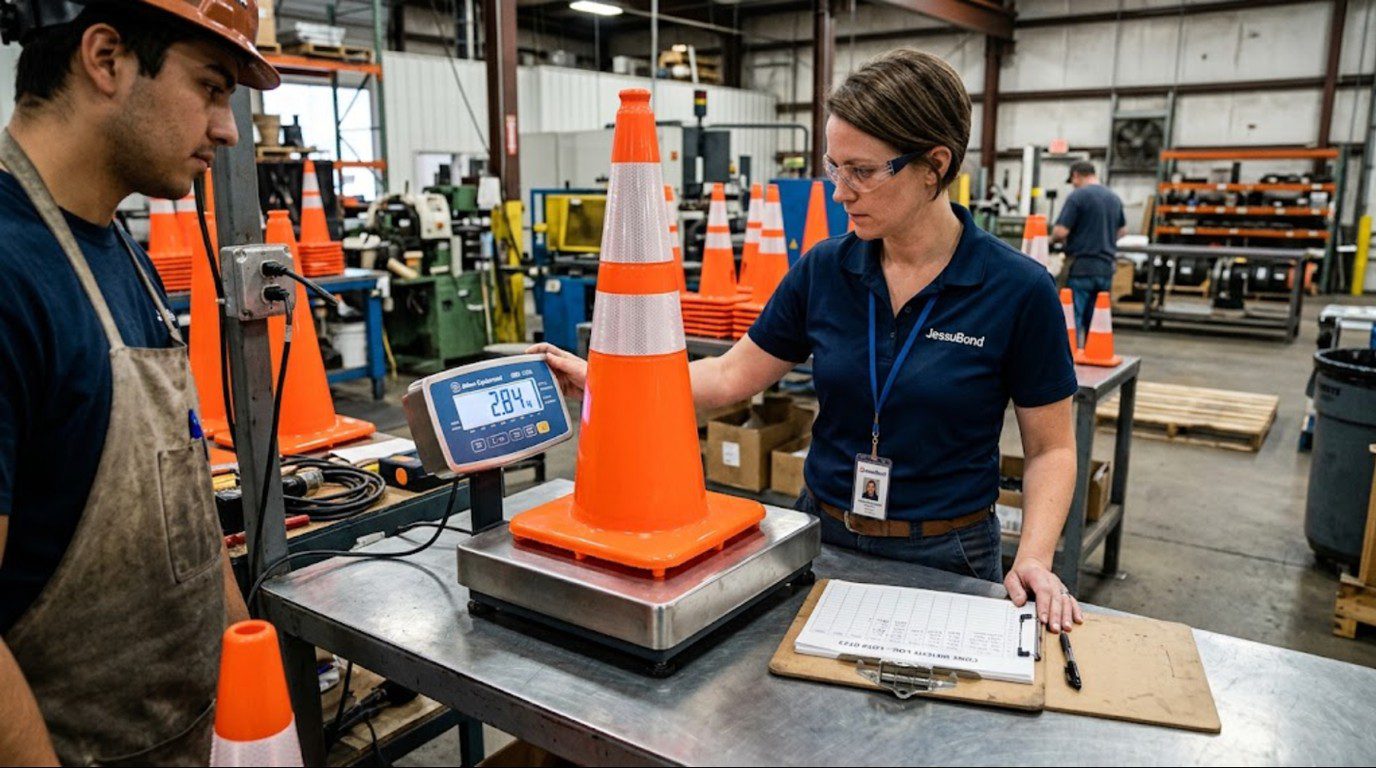
Weight on a data sheet is a claim, and the shipment must match it. Weigh a sample of at least 20 cones from the production run, and record the average and the range. Set an acceptable tolerance in the contract. A supplier that quotes a heavy cone and ships a light one is cutting cost at your expense. This simple check protects both the budget and the safety performance of your cones.
Order Volume, MOQ and Tiered Pricing
Volume affects price through factory efficiency, material purchasing and fixed costs. Larger orders spread setup costs over more units. They also allow the factory to buy resin in bigger lots. Buyers should understand where those savings come from, so they can negotiate realistically.
1. How Factories Build Volume Tiers
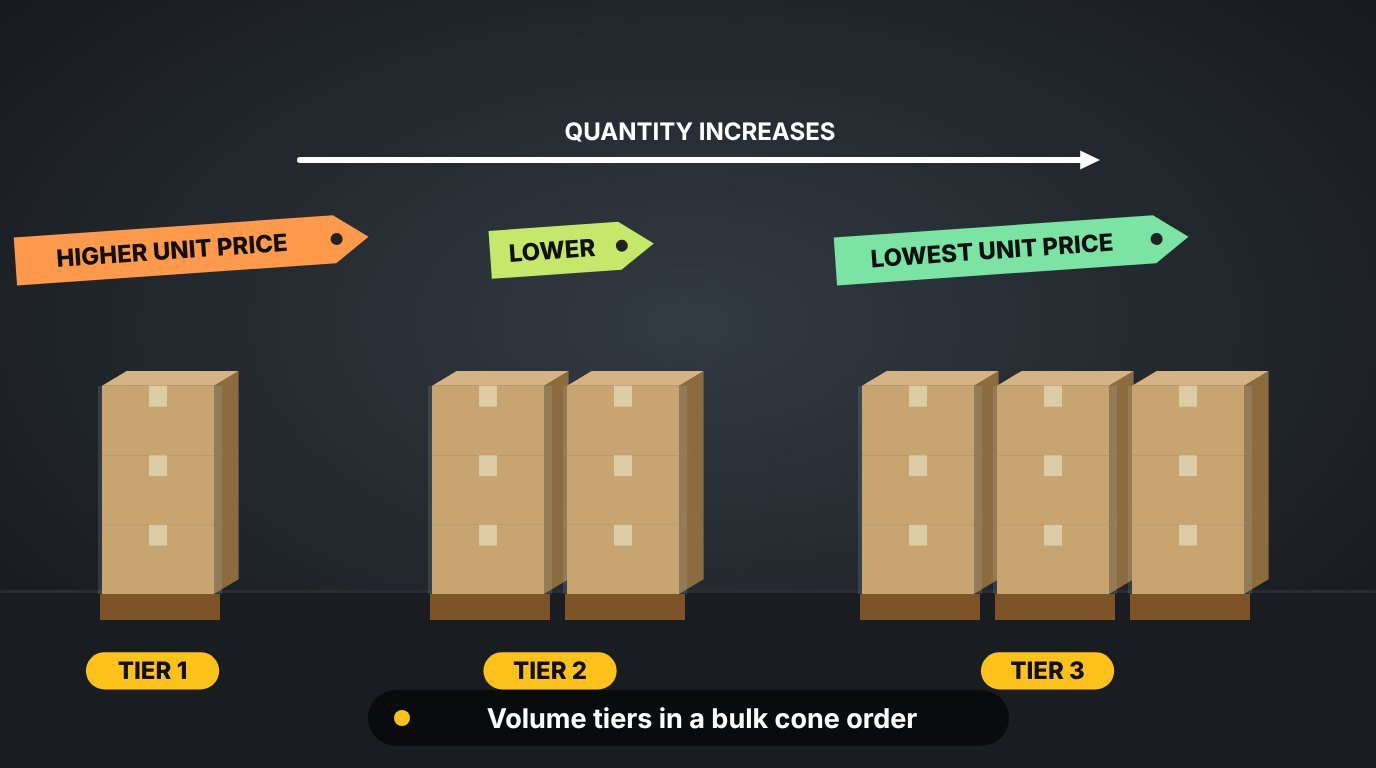
A typical quote offers several price tiers, with a lower unit price at each higher quantity. Tiers reflect the cost of tooling use, mold changes, color changes and packing runs. The price drop between tiers is not always equal, so ask for several breakpoints. Prices and breakpoints vary by supplier and by season. A tier that looks attractive may require more cones than you can store or sell.
2. MOQ for Stock and Custom Cones
Stock orange cones usually have a lower MOQ than printed or custom colored cones. Many factories set MOQs around 1,000 pieces for standard models, but the figure depends on the product and the supplier. Custom items need extra setup and often a larger run. If your volume is low, ask whether the factory can combine your order with another customer, or whether you can mix sizes within the MOQ. These options reduce risk without sacrificing price.
3. Annual Contracts and Split Shipments
A yearly volume commitment can secure better pricing than a series of small spot orders. Split shipments allow you to pay for the full volume tier but receive stock in stages. This reduces storage cost and cash tied up in inventory. However, you must confirm how the supplier handles price changes during the contract. Ask for a clear clause on resin movements and currency changes.
4. Seasonal Timing and Currency Effects
Demand for cones rises before construction season and before major events, so factory schedules fill and lead times lengthen. Ordering early gives you stronger negotiating power and avoids rush costs. Currency also matters, because export prices are often quoted in one currency while the factory pays costs in another. Ask which currency the quote uses and how long the exchange rate is fixed. A clear answer protects your traffic cone wholesale price from sudden shifts.
Extra Cost Layers: Collars, Printing, Packing and Freight
The cone body is only one part of the final price. Collars, logos, cartons and shipping each add cost. They also differ more between suppliers than the body itself. Separate these items in your comparison, so you can see exactly where the differences sit.
1. Reflective Collars and Printing
Collars cost more as the sheeting grade increases, and printing adds setup and unit costs. Multi-color artwork and special inks cost more than single-color logos. Our guide to custom logo printing and reflective collar classifications explains these cost factors in more detail. Ask for itemized quotes, so you can evaluate each option. Check that the collar class meets your specification before you accept a low price.
2. Packing Density and Container Loading
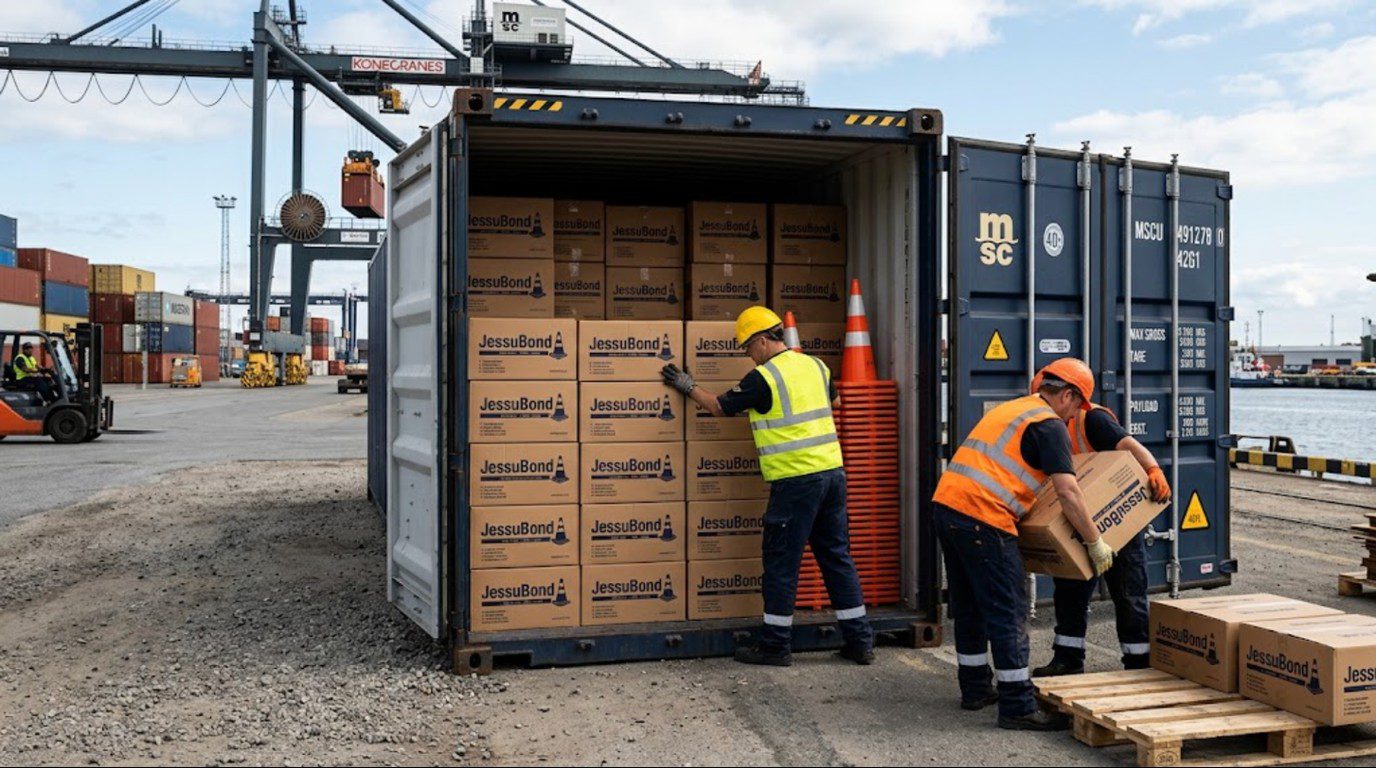
Cones are bulky, and shipping space is expensive. Nesting cones reduces the number of cartons and increases the number per container. Request the quantity per 20-foot and 40-foot container for each model. A slightly higher factory price with better nesting can be cheaper on a landed basis. Mixed loads of different cone sizes also affect space, so confirm the loading plan with the supplier.
3. Incoterms, Duties and Payment Terms
The Incoterm decides who pays for each part of the journey. FOB quotes leave ocean freight and insurance to you, while CIF includes them up to the destination port. Duties and taxes depend on your country and the product classification. Payment terms also matter, because a deposit and balance schedule affects your cash flow. Confirm all of these items before you compare quotes.
Comparing Quotes and Negotiating with Suppliers
A fair comparison needs a common basis. A clear process also gives you the evidence to negotiate. The steps below are simple enough for a small buyer and strong enough for a large contract.
1. Build a Normalized Comparison Sheet
List each supplier in a row and record height, weight, wall thickness, collar class, print method, carton quantity and Incoterm. Convert every price to a landed cost per cone. If a quote lacks any of these details, ask for them in writing. This sheet shows quickly which offers are truly comparable. It also reveals which supplier is cutting cost where you cannot see it.
2. Test Samples Before the Order
Request samples from the shortlisted suppliers and test them side by side. Check weight, flexibility, color, print durability and collar adhesion. Leave one cone outdoors for several weeks and compare it with a fresh one. A good supplier will provide samples and answer technical questions. A supplier that avoids samples may be hiding quality problems.
3. Contract Protections
Write the specification into the purchase agreement, including weight and tolerance. Add price validity dates, a clause for resin and currency movement, and a right to inspect or test shipments. Agree penalties or replacement terms if the cones fail to meet the specification. Clear terms prevent disputes and keep the traffic cone wholesale price honest over the life of the contract.

Conclusion: Spec the Cone First, Then Negotiate the Traffic Cone Wholesale Price
The traffic cone wholesale price reflects resin and compound quality, base weight and order volume, with collars, printing and freight added on top. A low quote usually saves money somewhere you cannot see, such as thinner walls, a lighter base or heavy filler. Define height, weight, compound and collar class first, and verify them with samples and shipment checks. Then compare quotes on a landed basis and negotiate volume tiers, price validity and resin clauses.
Buyers who follow this order pay a fair price and receive a cone that performs. They also avoid hidden costs from early failure and replacement. Finally, a clear specification gives suppliers a fair basis to quote, which usually leads to better offers.
The lowest quote is only the cheapest cone until the first batch fails.
Looking for a manufacturer that supplies PVC and rubber traffic cones in custom weights, collars and logo printing with flexible MOQ and transparent per-unit pricing at volume? At JessuBond, we produce traffic cones for distributors, contractors and municipalities with full customization support. Contact us here.