
A speed bump that drivers see too late is a hazard, not a control measure. Commercial sites such as logistics yards, shopping centers and industrial parks run around the clock. Many of them have uneven lighting after dark. A reflective speed bump gives drivers earlier warning, protects vehicles from hard impacts and reduces the chance of liability claims. Choosing the right color and reflective system is therefore a procurement decision, not a cosmetic one.
This guide is written for procurement officers, facility managers, contractors, distributors and importers who buy speed bumps in volume. It compares color options and reflective strip types, explains how durability and maintenance affect night performance, and covers compliance limits. It also sets out specification points, testing methods and wholesale terms for bulk orders.
Why Night Visibility Matters for Speed Bumps at Commercial Sites
A speed bump works only when drivers notice it in time. In daylight, color and shape do most of the work. After dark, headlights, weather and wet pavement change what drivers can see. Reflective features close the gap between a bump that exists and a bump that is seen.
1. Uneven Lighting and Late Detection
Many parking areas and yards have patchy lighting, with bright spots near buildings and dark zones between them. A dark bump on dark asphalt can disappear until the vehicle is almost on it. As a result, late detection leads to hard braking and to impact damage on low vehicles. It also increases the chance of a complaint or claim. A reflective speed bump returns headlight beams to the driver and gives a clear cue at a safe distance.
2. Risks for Vehicles, Pedestrians and Two-Wheelers
A sudden bump can damage tires, suspension and cargo. It can also throw a motorcycle or bicycle rider off balance. In addition, pedestrians may trip over a bump they cannot see at night. For these reasons, visibility is a safety requirement for every user group, not only for cars. Reflective features are especially valuable at entrances, loading areas and crossings.
3. What a Reflective Speed Bump Must Achieve
A good reflective system gives a clear signal at a distance that allows normal braking. It must stay bright after rain, dirt and wheel contact. It must also work from the driver’s viewing angle, which is low and shallow. Many buyers focus on color only and ignore these tests. Our guide to choosing the right speed bumps for your industrial facility shows how to match the product to site conditions.
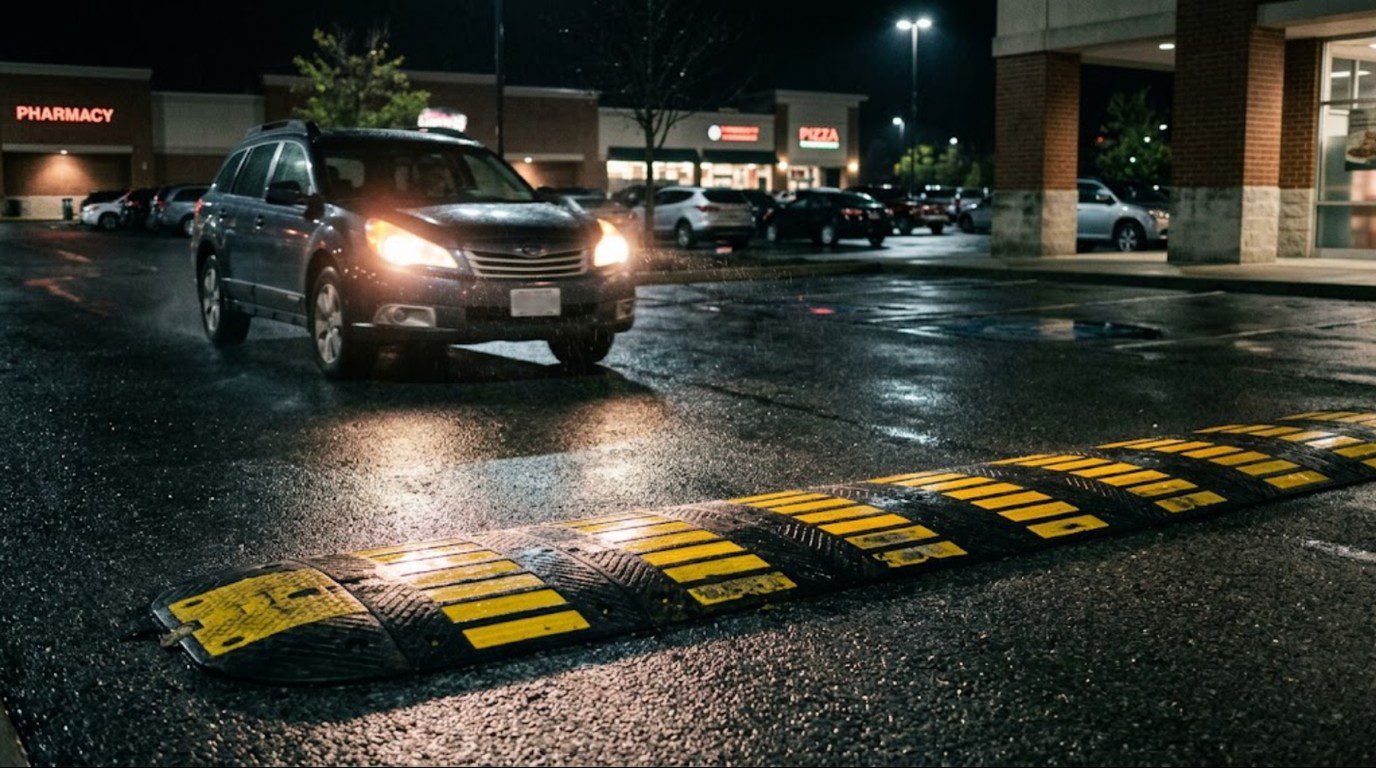
Color Options and What They Communicate
Color gives drivers a first impression of the bump. It must contrast with the surface and signal caution. It must also survive sun and weather without fading. The right choice depends on the pavement, the lighting and the site rules.
1. Black and Yellow as the Standard Combination
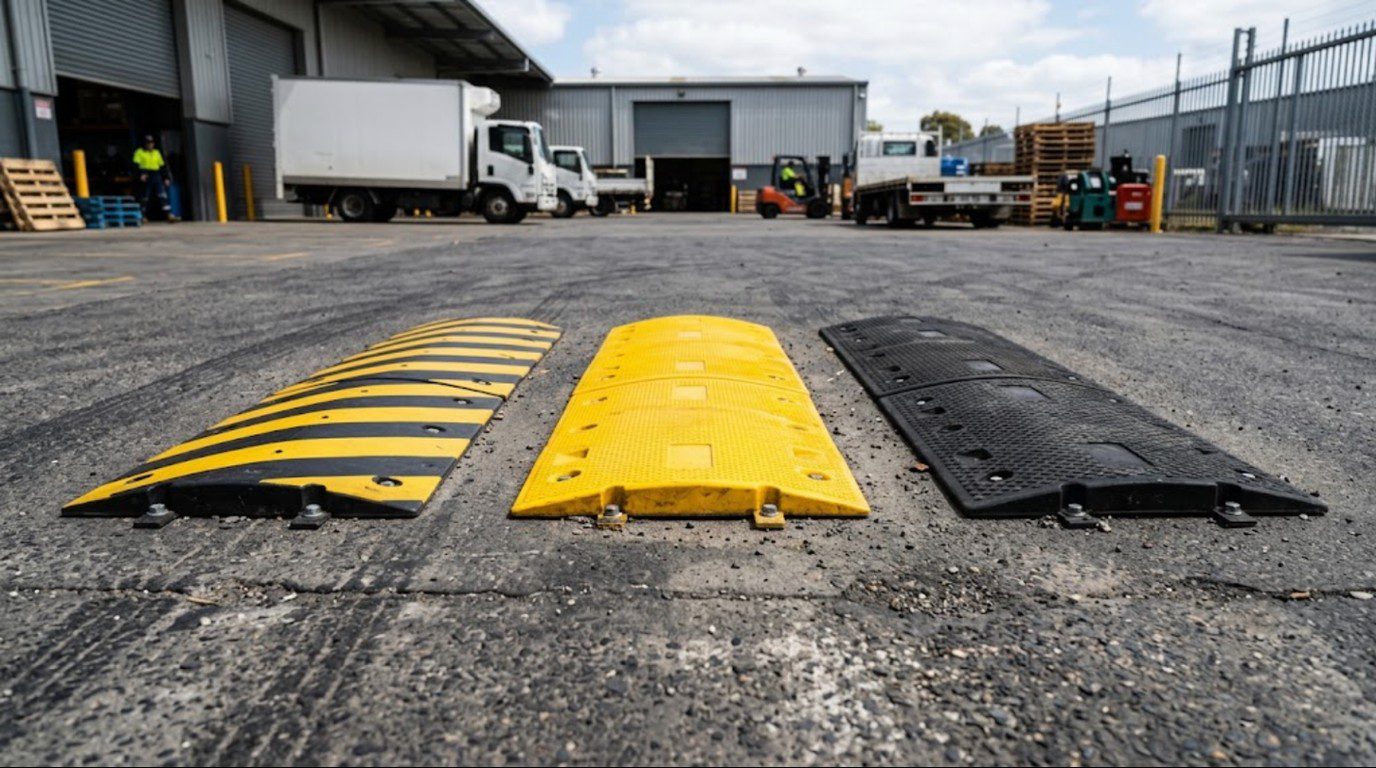
Black and yellow is the most common color scheme for rubber speed bumps. Yellow signals caution, and the black body gives high contrast between the stripes. The pattern is easy to recognize from a distance and in poor light. Many products use a black rubber base with yellow reflective stripes, as on this black and yellow rubber speed bump for traffic safety. For most commercial sites, this combination is the safest starting point.
2. All-Yellow, White and Other Colors
All-yellow bumps give a bright surface, which helps in dark areas. However, they may show dirt more easily, and some sites prefer a darker body for that reason. White or red can be used for special zones where site rules allow it. Keep the color scheme consistent across the site so that drivers learn what to expect. Avoid using colors that look like other warning systems, such as fire lane markings.
3. Color Fade and UV Stability
Sunlight bleaches pigments over time, and yellow can fade or chalk. As a result, a faded bump loses contrast and looks neglected. Ask suppliers about the UV stabilizers in the compound and the color pigment used in the stripes. Request samples that have been exposed outdoors for several weeks. Color stability varies by supplier and material, so test before a bulk order.
4. Contrast Against the Pavement
The best color depends on the surface it sits on. Black rubber on dark asphalt gives little contrast without stripes. Yellow stripes on black rubber stand out on almost any surface. On light concrete, a darker body may give a stronger signal. Review photos of the site at night before you decide.
Reflective Strip and Reflector Options
Reflectivity comes from several methods. Each method has different cost, brightness and durability. Many products combine two methods for better results. Buyers should know the options before they request quotes.
1. Reflective Tape and Sheeting Strips
Reflective tape or sheeting strips are bonded to the surface of the bump. They give a wide, bright line that is easy to see at a distance. The grade of the sheeting affects brightness and service life, so ask for the grade in writing. However, tape can wear under repeated wheel contact, especially at the crown of the bump. Check the bond strength and the edge sealing, because peeling is the main failure mode.
2. Cat-Eye Reflectors and Inserts
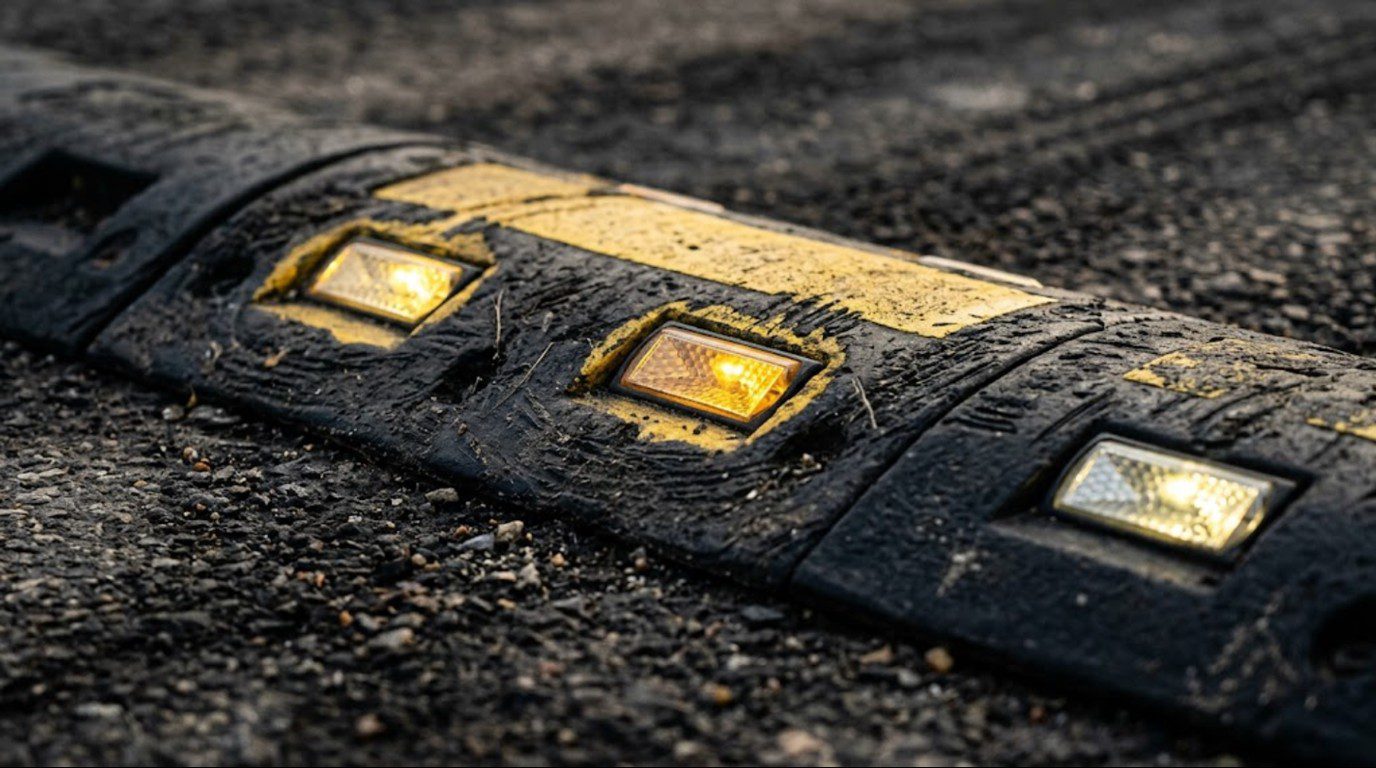
Cat-eye reflectors are small reflective units set into the bump. They return light strongly at a distance and survive wheel contact better than surface tape. One retailer lists a rubber speed bump with eight cat-eye reflectors and three yellow reflective stripes, which shows how the two systems are often combined. However, reflectors can dislodge if the fitting is poor, so check how they are fixed. Replaceable reflectors help with repair costs.
3. Molded-In and Painted Reflective Features
Some bumps include reflective material molded into the surface, or use reflective paint. These options avoid separate parts, but they often give lower brightness. For example, paint wears quickly under traffic. Use these features as supplements rather than as the only reflective system on a busy site.
4. Choosing a Combination
For high-risk areas, combine reflective strips with cat-eye reflectors for the strongest signal. For low-speed, well-lit areas, strips alone may be enough. Match the system to the speed of traffic, the lighting and the maintenance routine. Ask the supplier for night photos or test videos of the finished product. Judge a reflective speed bump by how it looks from a car, not by how it looks on a data sheet.
Durability and Maintenance Factors
Reflective performance falls over time if the bump is not maintained. Dirt, wear and weather all reduce brightness. A simple maintenance plan keeps the system working. It also extends the life of the bump.
1. Wheel Wear, Snow Plows and Dirt
Wheels abrade reflective surfaces, and snow plows can strip tape from the crown. Dust and oil dull reflectors and strips. In addition, sites with heavy trucks wear the surface faster than parking lots. Ask the supplier about the abrasion resistance of the reflective system. Consider recessed or raised reflector designs for sites with plowing.
2. Cleaning and Inspection Routines
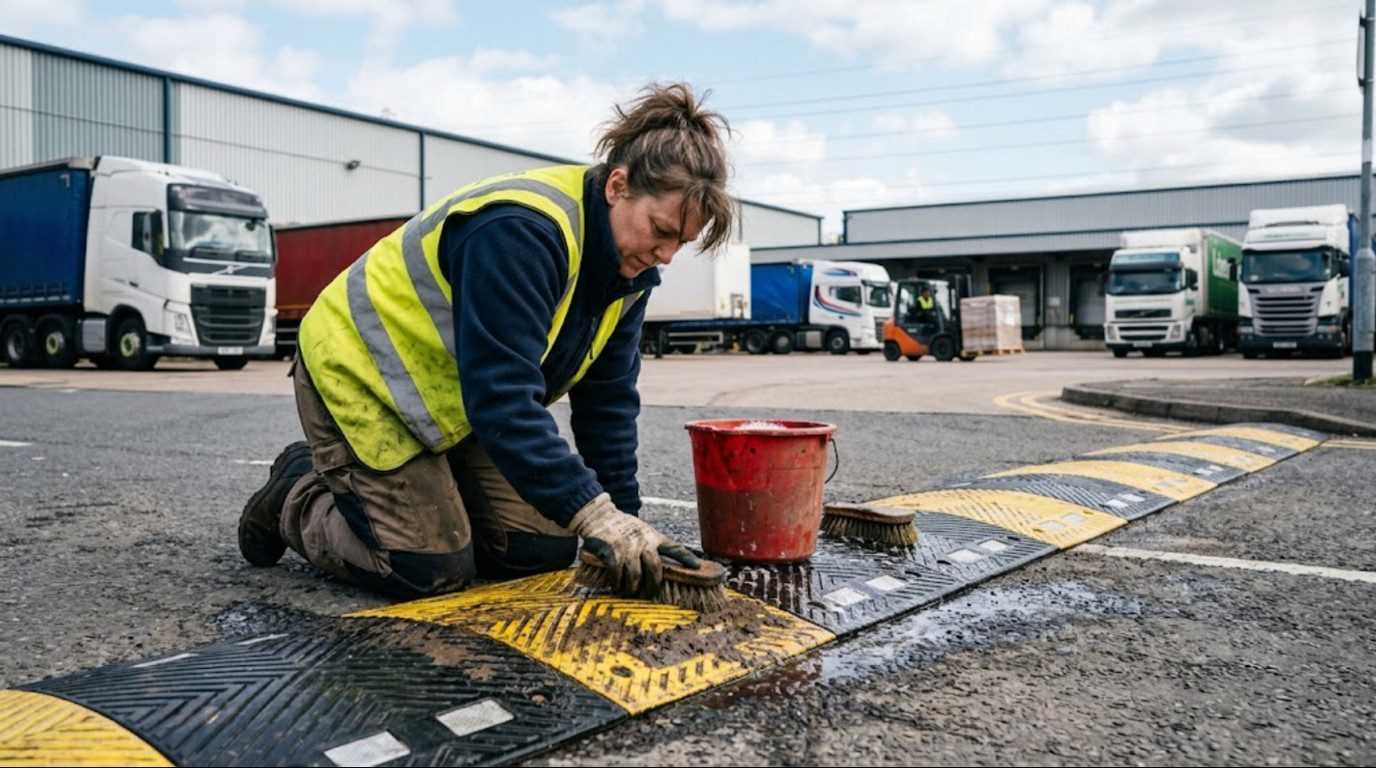
Inspect reflective bumps on a regular schedule and clean them with water and a soft brush. Check for loose reflectors, peeling tape and faded color. Record the results in a simple log. Our guide to speed bump maintenance schedules for fleet protection programs explains how to plan these checks.
3. Replacement Parts and Modular Designs
Modular bumps allow you to replace a damaged section without removing the whole line. Replaceable reflectors and strips lower repair costs. Keep a small stock of spare parts on site. Ask the supplier whether parts are available as standalone items, and what lead time applies. A modular design makes a reflective speed bump easier to maintain over many years.
Compliance, Markings and Liability
Rules differ between public roads and private sites. Buyers should know which rules apply to their location. They should also document their decisions. Clear records help in any later dispute.
1. Public Road Rules and Private Site Practice
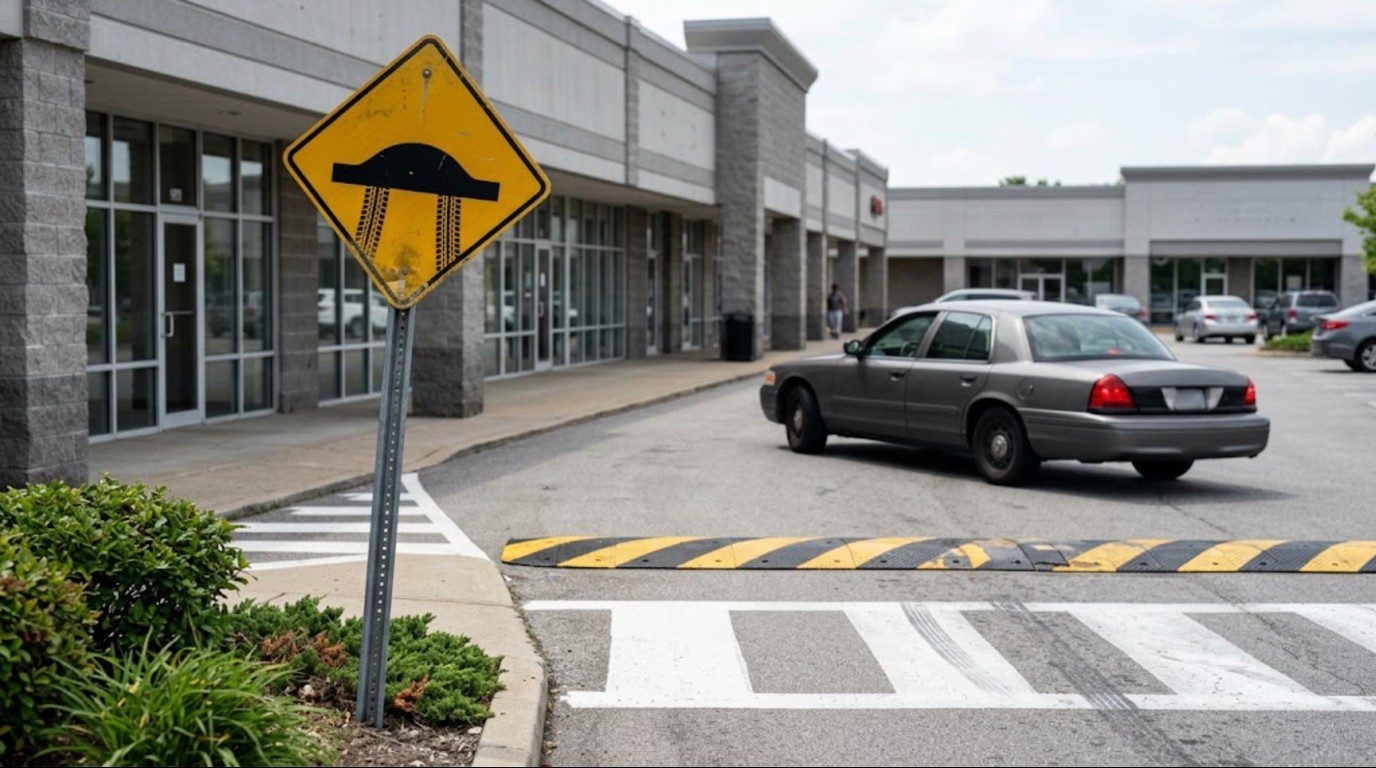
On public roads in the United States, speed humps follow the MUTCD speed hump marking figure, which shows white chevron markings on the pavement. Rubber speed bumps on private commercial sites often follow industry practice instead, using black and yellow with reflective features. Local authorities may set additional rules, so check before you install. Our article on installing speed bumps: a compliance guide for business owners covers these points in more detail.
2. Warning Signs and Pavement Markings
A reflective speed bump works best with a warning sign before it. Add pavement markings where rules or site policy require them. Signs and markings extend the warning distance beyond the reach of headlights. Place them where a driver has time to react. Keep signs clean and visible, because they are part of the system.
3. Documentation and Liability
Keep records of the specification, the supplier data and the installation date. Record inspections and repairs. In a dispute, these records show that you took reasonable care. Our guide on how speed bumps reduce liability in commercial parking lots explains the link between visibility and risk.
Specification and Wholesale Buying for Reflective Speed Bumps
A good specification gives suppliers a clear basis for quotes. It also gives you a way to reject poor products. Write the requirements in plain language and attach them to the purchase order. Then test samples before releasing the order.
1. What to Include in a Reflective Speed Bump Specification
State the length, width, height and profile of the bump. Specify the material, color and the reflective system, including the number and type of reflectors and the sheeting grade. Add the fixing method and hardware, and say whether end caps are required. Include the temperature range and UV resistance requirements. Specify packaging so that reflective surfaces arrive undamaged.
2. Testing Night Performance
Run a simple drive-by test with samples. Place a bump on a dark surface and view it from a car at several distances. Compare brightness in dry and wet conditions. Test again after cleaning and after a few weeks of exposure. Keep the test photos with your purchase record.
3. MOQ, OEM and Lead Time
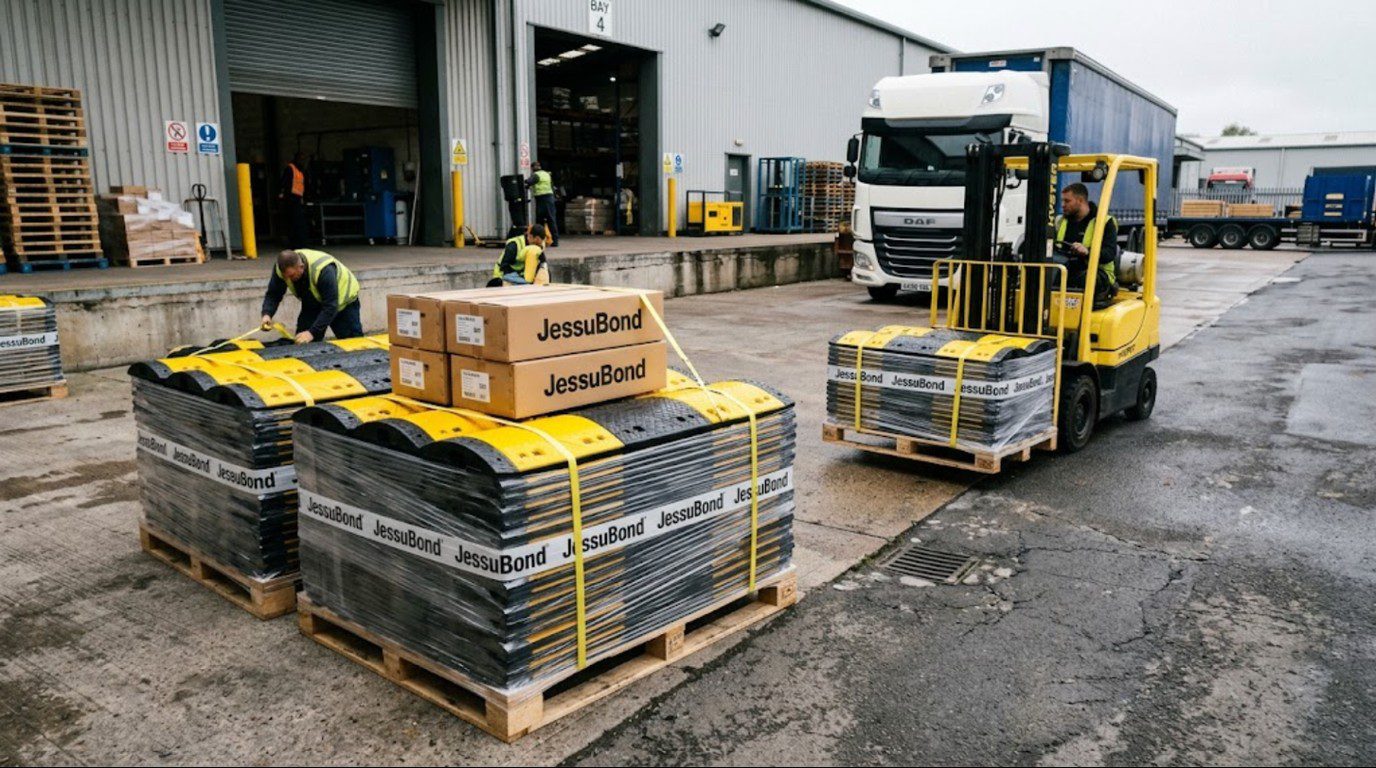
Typical MOQs range from a few hundred pieces to around 1,000 pieces, depending on the model and the reflective system. Custom colors and reflector layouts may need higher quantities and longer lead times. Ask about OEM options for color, branding and packaging. Confirm that the manufacturer can match your approved sample in later orders. A reliable supplier will keep your specifications on file.
4. Comparing Quotes for a Reflective Speed Bump
Quotes for the same length of bump can hide big differences. One supplier may include eight reflectors and another only four, and one may use a higher sheeting grade. Therefore, build a simple comparison sheet that lists length, weight, reflector count, tape grade and hardware included. Add freight and packing to reach a landed cost per bump. Finally, check what the warranty covers, because reflective parts often have shorter cover than the rubber body.
Conclusion: Choose a Reflective Speed Bump by How It Looks at Night
A reflective speed bump must be seen from a safe distance on the worst night of the year. Choose black and yellow for most commercial sites, add tape strips or cat-eye reflectors according to risk, and test samples under real conditions. Plan maintenance from the start, because dirt and wear reduce reflectivity over time. Follow local rules, add warning signs and keep records.
Wholesale buyers should confirm MOQ, OEM options and lead time before they place an order. A clear specification saves time and avoids disputes with suppliers. The result is a safer site and a lower repair bill.
A speed bump only slows traffic when drivers see it in time.
Looking for a manufacturer that supplies black and yellow rubber speed bumps with reflective strips and cat-eye reflectors at flexible MOQ and transparent per-unit pricing at volume? At JessuBond, we produce speed bumps with full customization support. Contact us here.