
Industrial facilities operate in high-stakes environments. With the constant movement of forklifts, delivery trucks, employee vehicles, and heavy equipment, traffic safety becomes a critical part of day-to-day operations. One of the most effective tools for managing speed and reducing accidents in these settings is the installation of speed bumps.
But not all speed bumps are the same. Choosing the right type, size, material, and placement is essential to ensure effectiveness without interrupting operations. This article walks you through what to consider when selecting speed bumps for your industrial facility, so you can improve safety and minimize liability while maintaining operational efficiency.
Understand the Purpose of Speed Bumps in Industrial Settings
In industrial environments, speed bumps are primarily used to:
- Reduce vehicle speeds in high-traffic zones
- Protect pedestrians and forklift operators
- Minimize accidents at loading docks and crosswalks
- Encourage safe driving within private lots and roads
Before selecting a speed bump, clarify the specific problem you’re solving. For example, are you trying to slow delivery trucks near loading docks or control forklift traffic inside a warehouse yard? Understanding the use case will guide every other decision.

Identify the Types of Vehicles Using the Facility
The type of traffic in your facility is a major factor in choosing speed bumps. Industrial areas often see a mix of vehicles such as:
- Forklifts
- Semi-trailers
- Delivery vans
- Employee cars
- Utility trucks
Heavy-duty vehicles require low-profile, wide bumps that reduce speed without causing damage or discomfort. For lighter traffic areas like employee parking, traditional speed bumps are usually enough.
If your traffic includes large trucks or trailers, consider speed humps or speed cushions instead of standard speed bumps. These provide gentler transitions while still enforcing slower speeds.
Choose the Right Material Based on Environment
Speed bumps come in different materials, each suited to specific environments. Here’s a breakdown of common materials and their industrial use cases:
Rubber
Durable, flexible, and ideal for temporary or semi-permanent installations. Rubber bumps are often used in distribution centers or employee parking lots. They’re easy to install, remove, and relocate.
Plastic or Composite
Lightweight and resistant to corrosion. Best for areas with light to moderate vehicle use. Not ideal for zones with heavy trucks, as they may wear down faster under high loads.
Concrete
Highly durable and permanent. Best for high-traffic or heavy-load areas like truck yards and warehouse entrances. However, they require professional installation and can’t be moved.
Asphalt
Often integrated into the road surface. Suitable for long-term use in areas with consistent traffic patterns. Like concrete, asphalt bumps are permanent and more expensive to install or modify.
The environment also matters. Outdoor lots exposed to heat, snow, or chemicals may need materials that can withstand extreme conditions without cracking or degrading.

Select the Proper Dimensions
Speed bump height and width affect how they impact vehicles. For industrial use:
- Height: 2 to 3.5 inches is standard. Higher bumps are more aggressive but may disrupt low-clearance equipment.
- Width: Wider bumps (up to 3 feet) ensure better contact with large vehicle tires, leading to more effective speed reduction.
- Length: Varies based on lane width. Make sure the bump spans the full lane to prevent drivers from swerving around it.
In high-speed zones, consider using speed humps or elongated speed bumps that provide smoother transitions. For low-speed internal routes or confined warehouse areas, smaller bumps can do the job.
Assess Visibility and Signage Needs
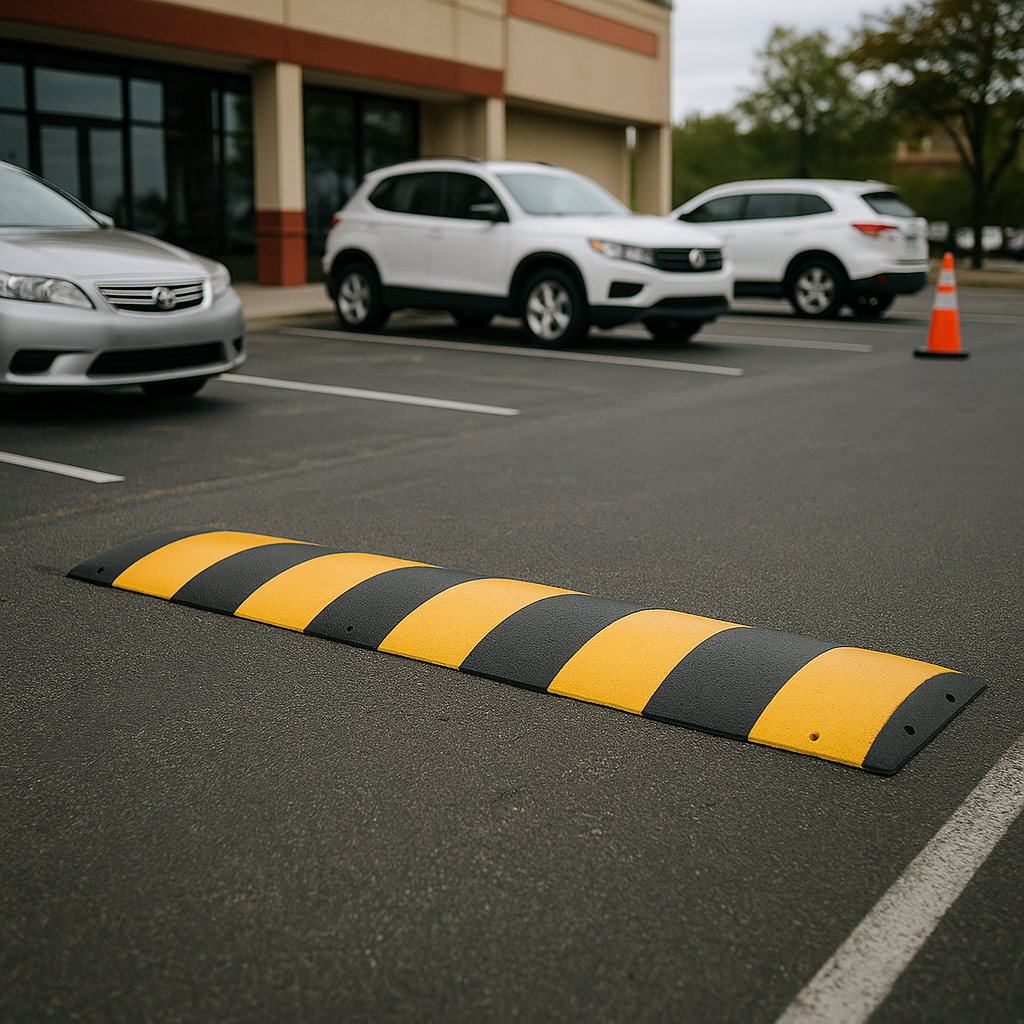
Industrial facilities often operate in low-visibility or high-noise conditions. To ensure safety, speed bumps should be clearly marked and visible at all times.
- Use bright yellow or reflective tape for night visibility
- Add signage warning of upcoming speed bumps
- Consider adding LED lights or road markers for added attention
- Use contrasting colors if the road surface is dark
A poorly visible speed bump can cause abrupt stops, vehicle damage, or even accidents. High visibility reduces liability and keeps drivers alert.
Decide Between Permanent and Temporary Installation
Not every speed bump in an industrial facility needs to be permanent. Temporary speed bumps may be better in areas where traffic flow changes seasonally or where operations are evolving.
Permanent speed bumps
- Better suited for long-term use in loading zones, entrances, or internal roads
- More durable and professional looking
- Require excavation or anchoring into concrete or asphalt
Temporary speed bumps
- Ideal for work zones or trial placement
- Can be moved or removed based on traffic flow changes
- Often made of rubber or plastic
Evaluate whether the area’s traffic pattern will remain stable or might change in the near future. Permanent options are better for high-traffic, unchanging routes, while temporary ones offer flexibility.
Factor in Compliance and Safety Regulations
Certain jurisdictions have rules about where and how speed bumps can be installed. In industrial settings, compliance is especially important for safety audits, insurance coverage, and labor regulations.
- Ensure ADA compliance for pedestrian routes
- Follow OSHA guidelines for workplace traffic control
- Check for local codes regarding spacing and placement
- Avoid placement in areas where emergency vehicles need smooth access
Consult with your safety officer or facility manager to ensure your installation meets all relevant standards. Failing to comply can increase your liability rather than reduce it.
Plan Strategic Placement
Strategic placement ensures that speed bumps do their job without causing workflow bottlenecks. Key areas to consider include:
- Warehouse entrances and exits
- Loading dock approaches
- Employee parking lots
- Crosswalks and pedestrian zones
- Sharp turns or blind spots
Avoid placing speed bumps too close to gates or intersections, where sudden stops could create confusion or collisions. Also, space them out to maintain smooth traffic flow, especially for larger vehicles.
Calculate the ROI of Installing Speed Bumps
Though they are relatively low-cost, speed bumps offer high returns in terms of safety and liability reduction. Consider the potential savings from:
- Fewer workplace accidents
- Reduced property damage
- Lower insurance claims
- Improved worker morale and safety culture
Over time, the cost of a few speed bumps is minimal compared to a single injury or lawsuit. Plus, a well-controlled industrial environment boosts operational efficiency and reputation.
Conclusion
Choosing the right speed bumps for your industrial facility isn’t just about slowing vehicles. It’s about improving safety, reducing liability, and keeping operations running smoothly. By considering your traffic type, environment, materials, dimensions, and placement, you can select a solution that fits your facility’s unique needs.
Make speed bumps part of your overall site safety strategy. It’s a small investment that delivers big protection for your people, your property, and your bottom line.
Let me know your next title when you’re ready.
Looking for a custom Speed Bumps manufacturer or supplier? Struggling to find the right factory to bring your vision to life? We’ve got you covered! At our place, we craft top-quality Speed Bumps with precision and care. Big or small, your needs are our mission. Let’s launch your Speed Bumps project and take your product line to the next level! Click here to contact