
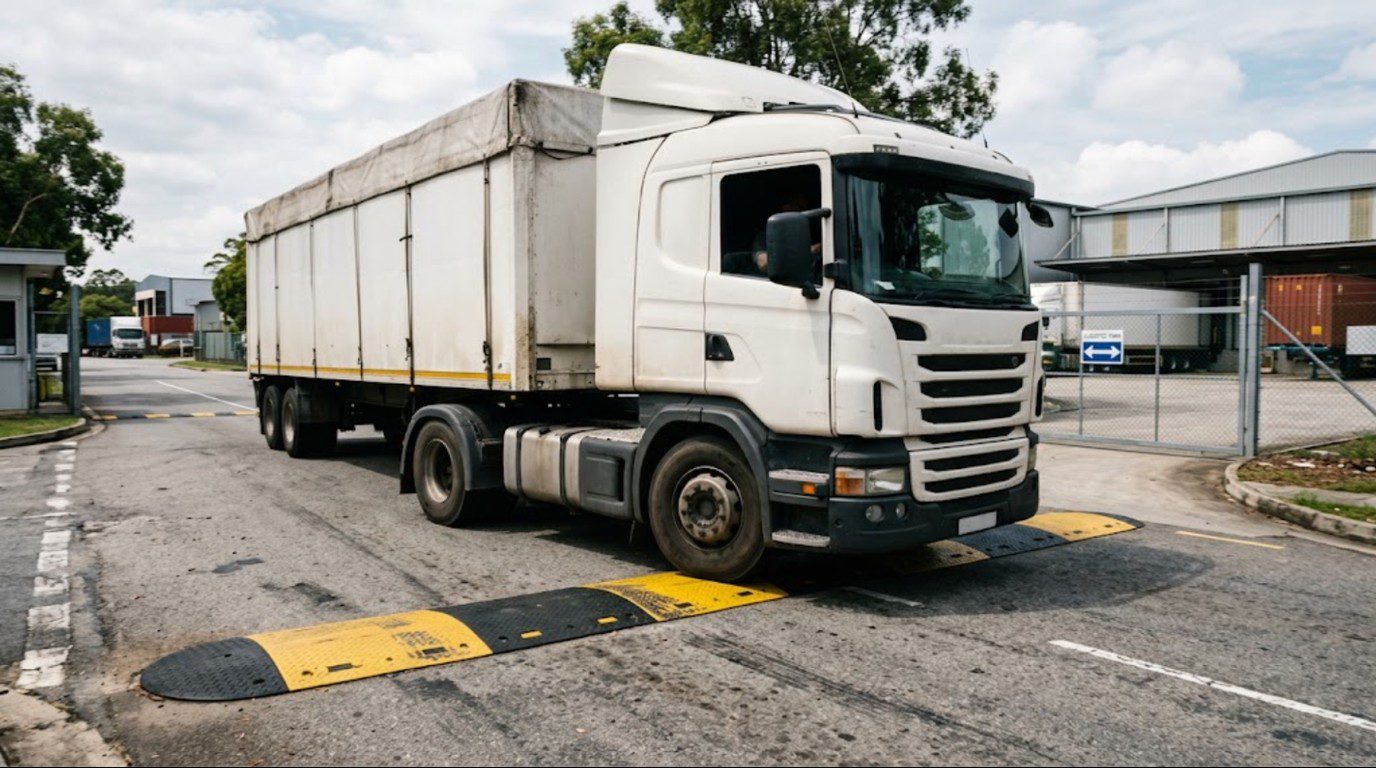
A speed bump that works for passenger cars can fail quickly under a loaded truck or a full bus. Anchors loosen, rubber compresses and cracks, and the bump creeps along the pavement. At the same time, a bump that is too tall can damage trailers, throw cargo and make buses uncomfortable for passengers. A heavy duty speed bump must therefore be chosen for both load capacity and profile, not for price alone.
This guide is written for procurement officers, fleet and depot managers, logistics park operators, municipal contractors and distributors. It explains how to read load ratings, how profile height and length affect different vehicles, and which materials suit heavy traffic. It also covers site planning, testing and wholesale terms, so your bulk order works on the first day and keeps working.
Why Heavy Vehicles Change Speed Bump Specification
Heavy vehicles put more force into a bump than cars do. They also have different geometry, from long wheelbases to low trailer clearances. These differences change what a suitable bump looks like. Start by understanding where the extra stress comes from.
1. Axle Loads, Wheel Loads and Dynamic Impact
A loaded truck concentrates its weight on a small number of axles, and each wheel carries a large share. When the wheel strikes a bump, the force can be much higher than the static weight because of the vertical movement. Speed makes the effect worse. This is why a bump rated for a given weight at rest may still fail under impact. A heavy duty speed bump should have evidence that covers dynamic loading, not only static weight.
2. Vehicle Geometry and Ground Clearance
Trucks, trailers and buses have long wheelbases, low front overhangs and air suspension. A steep or tall bump can scrape the underside, and it can cause the trailer to pitch. Low-loader trailers and some buses are especially sensitive. Passenger comfort and wheelchair safety also matter on bus routes. Therefore profile selection must consider the worst vehicle that uses the road.
3. Where Heavy Vehicles Meet Speed Bumps
Heavy traffic is common in logistics parks, depots, ports, quarries, factories and bus terminals. Speeds are lower than on public roads, but loads are higher and the number of passes is large. Wear accumulates quickly under thousands of crossings a month. Our guide on speed bumps for logistics parks and best placement practices explains how layout affects safe speeds on large sites.
Heavy Duty Speed Bump Load Ratings: What to Ask and How to Read Them
Load ratings look simple on a data sheet, but they hide important details. Two suppliers can quote the same number for very different tests. Buyers must ask what the figure means and how it was obtained. The questions below help separate real capacity from marketing.
1. Static Versus Dynamic Ratings
A static rating describes the weight the bump can carry while stationary. A dynamic rating describes the load it can handle while a vehicle drives over it at speed. Dynamic ratings are more relevant for speed control, because the vehicle is always moving. Ask the supplier which rating they quote and at what vehicle speed. If they give only a static figure, request dynamic data or a field reference.
2. Per Wheel Versus Per Axle
Ratings may be quoted per wheel, per axle or per vehicle. These are not interchangeable. An axle rating covers the combined load of the wheels on that axle, while a wheel rating covers one tire. Check which basis the supplier uses, and compare it to the heaviest axle load on your site. Prices and ratings vary by supplier, so compare on the same basis.
3. Test Evidence for a Heavy Duty Speed Bump
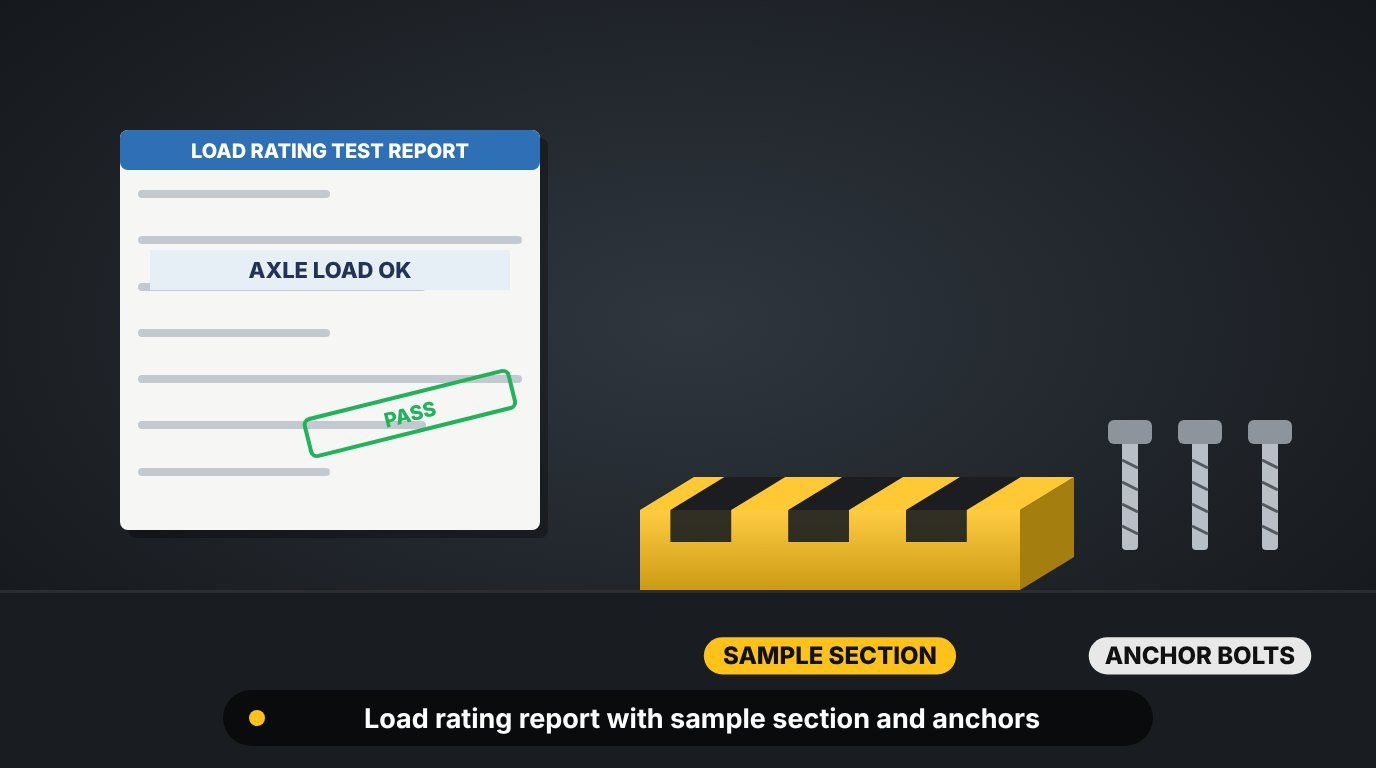
Ask for a test report that states the method, the load, the number of cycles and the result. An independent report carries more weight than an internal claim. Request photos or video of the test if no written report exists. Look at what happened to the bump after testing, such as cracking, flattening or loss of anchor strength. A supplier that cannot show evidence for a heavy duty speed bump rating should not be trusted for heavy traffic.
4. Safety Margin, Legal Limits and Anchoring
Axle load limits differ by country and region, and some vehicles exceed them. Add a safety margin above the heaviest legal load you expect. The bump is only as strong as its fixing, so check the anchor type, spacing and the shear strength of the fasteners. Our article on the complete installation guide for rubber speed bumps in commercial facilities covers anchoring and surface preparation.
Profile Selection: Height, Length and Slope
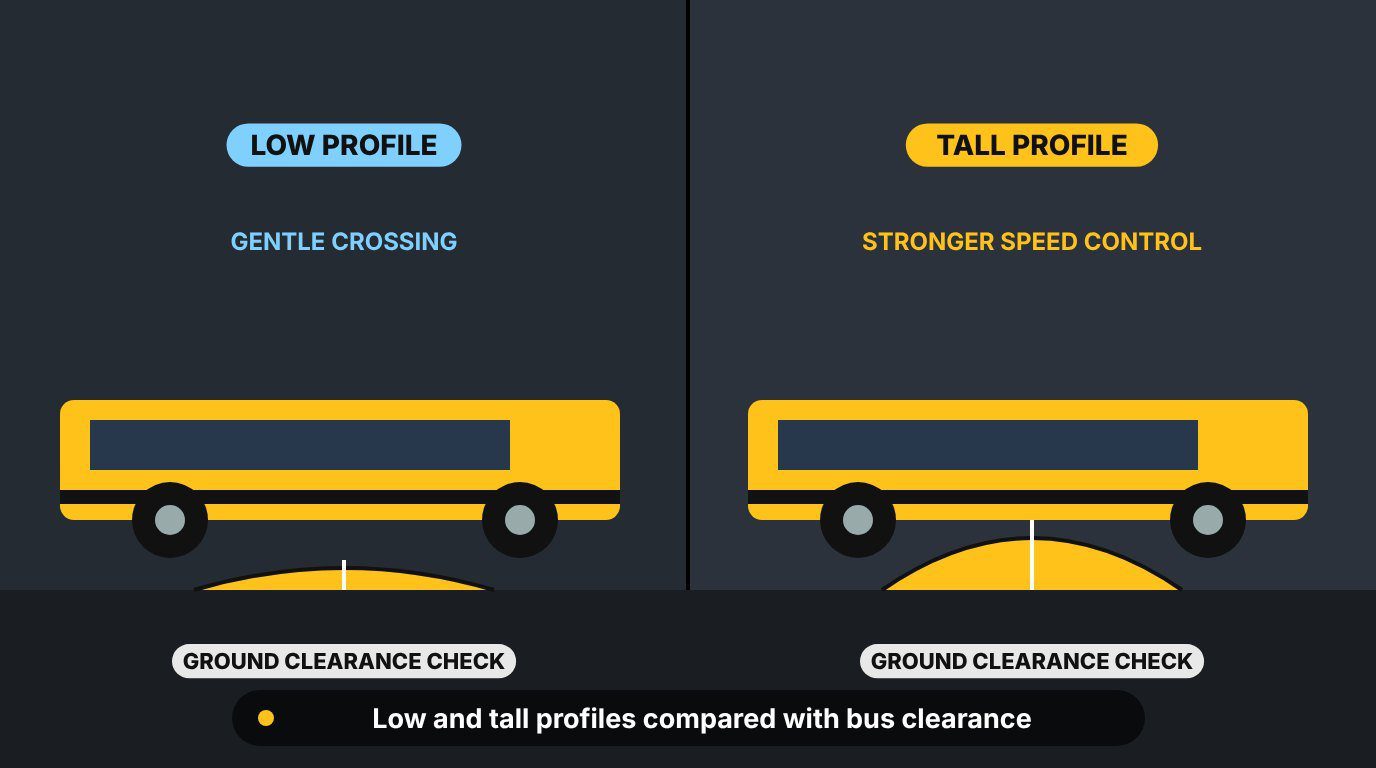
Profile decides how strongly a bump slows traffic and how harshly it treats vehicles. A tall, short bump creates a sharp jolt. A longer, lower bump is gentler and works better for long vehicles. The right choice balances speed control against vehicle damage.
1. Height and Approach Angle
Rubber speed bumps for commercial sites are often around two to three inches tall, though sizes vary by product and supplier. A typical public speed hump is about three inches high and twelve feet long, according to the University of Kentucky safe design guide on speed humps. A taller or steeper profile slows traffic more, but it raises the risk of underbody contact. For a mixed fleet, choose the profile that suits the vehicle with the lowest clearance. A lower profile bump is often the safer choice at the entrance to a depot.
2. Length, Slope and Long Wheelbases
Length controls how gradually the wheels climb the bump. Longer profiles suit buses and trucks because the front and rear axles cross at different times. A very short bump can cause the front axle to drop before the rear axle rises. This produces a pitching motion that affects passengers and cargo. If space allows, use a longer and gentler profile on routes with large vehicles.
3. Speed Cushions and Wheel Gaps
Speed cushions are a variant of speed humps with cutouts that let wide-track vehicles pass with less vertical movement. The same University of Kentucky source notes that humps are generally not suitable on transit routes and primary emergency vehicle routes. Cushions can meet the needs of buses and some trucks while still slowing cars. Check that the gap spacing suits the wheel track of the vehicles on your site. Consult local rules for roads that carry emergency services.
4. Spacing Multiple Bumps
One bump slows traffic only at one point. A series of bumps keeps speeds low along a longer stretch, but it increases wear on vehicles. Space them far enough apart that drivers do not accelerate hard between them. Review the vehicle mix before you decide the number. Our guide to concrete speed bumps vs plastic speed bumps explains how material choice affects long-term cost for repeated installations.
Material Options for Heavy Traffic
Material decides how a bump handles load, weather and wear. Each option has strengths and limits. No material is best for every site. Match the choice to the vehicles, the climate and the maintenance plan.
1. Solid Rubber Speed Bumps
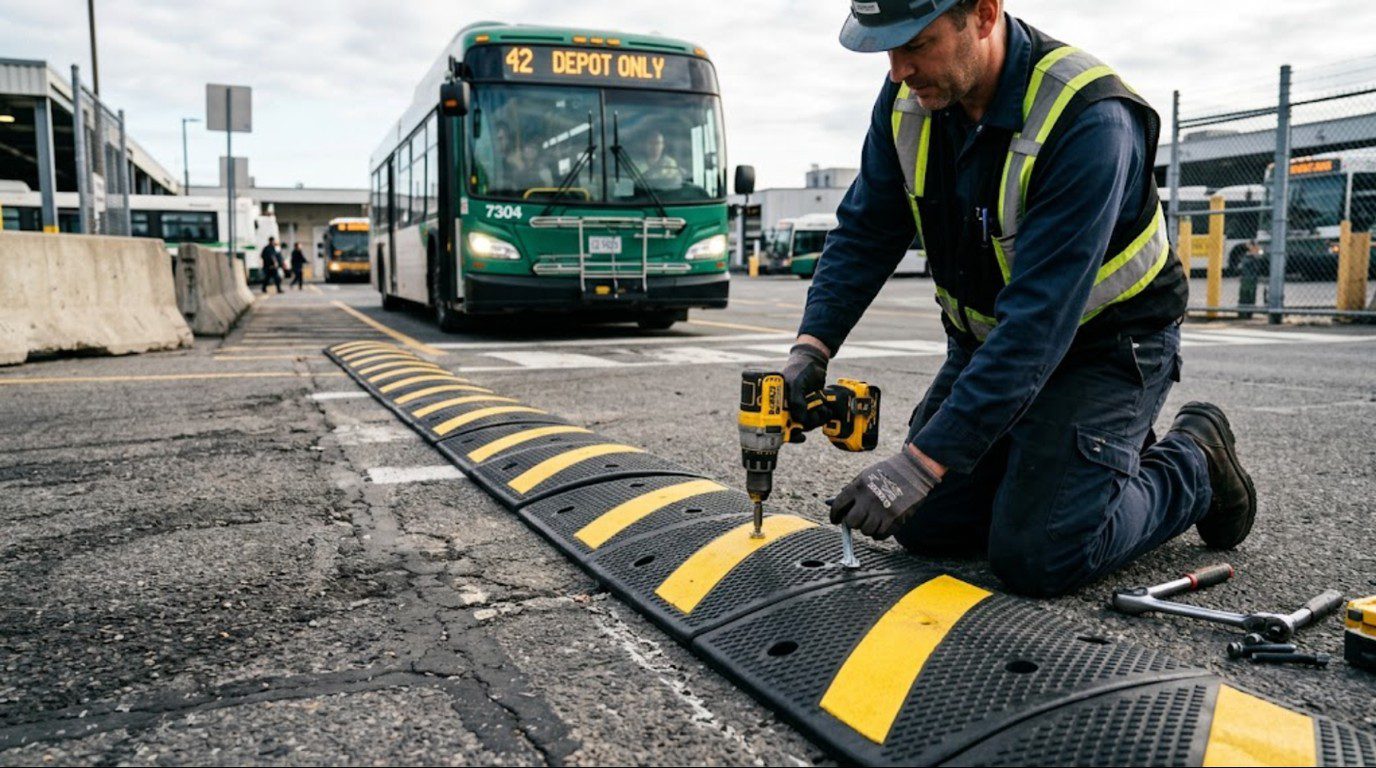
Rubber bumps made from vulcanized or recycled rubber are flexible, durable and easy to install. They absorb impact and tolerate temperature changes. Heavier and denser products usually resist crushing better under loaded trucks. Ask about density and thickness, not only length and height. Modular sections allow you to build a longer profile and replace damaged pieces.
2. Recycled Plastic and Composite Bumps
Recycled plastic bumps are light and easy to handle. They are common for parking lots and light duty areas, where loads are lower. For heavy traffic, check the load data carefully, because plastics can crack or deform under repeated heavy loads. Composite designs with internal reinforcement may perform better. Always ask for test evidence for the exact product.
3. Steel, Concrete and Asphalt Options
Steel bumps offer high strength but create harsh impacts and can damage vehicles. Concrete and asphalt humps are permanent and strong, but they are costly to modify or remove. They suit fixed roads that will not change for many years. Rubber modular bumps allow future changes, which suits sites that evolve. Review your site plan before choosing a permanent option.
4. UV, Temperature and Wear Resistance
Sunlight and heat age rubber and plastic. Cold makes some materials brittle. Heavy traffic adds surface wear on the crown of the bump. Ask for the compound details and any weathering test data. A heavy duty speed bump should keep its shape and surface after a full year of outdoor use.
Site Planning: Placement, Speed and Safety
Even a well-specified bump fails if it is placed badly. Placement affects driver behavior, safety and wear. Plan the layout with the traffic flow in mind. Good planning also reduces complaints from drivers and neighbors.
1. Approach Speed, Signs and Visibility
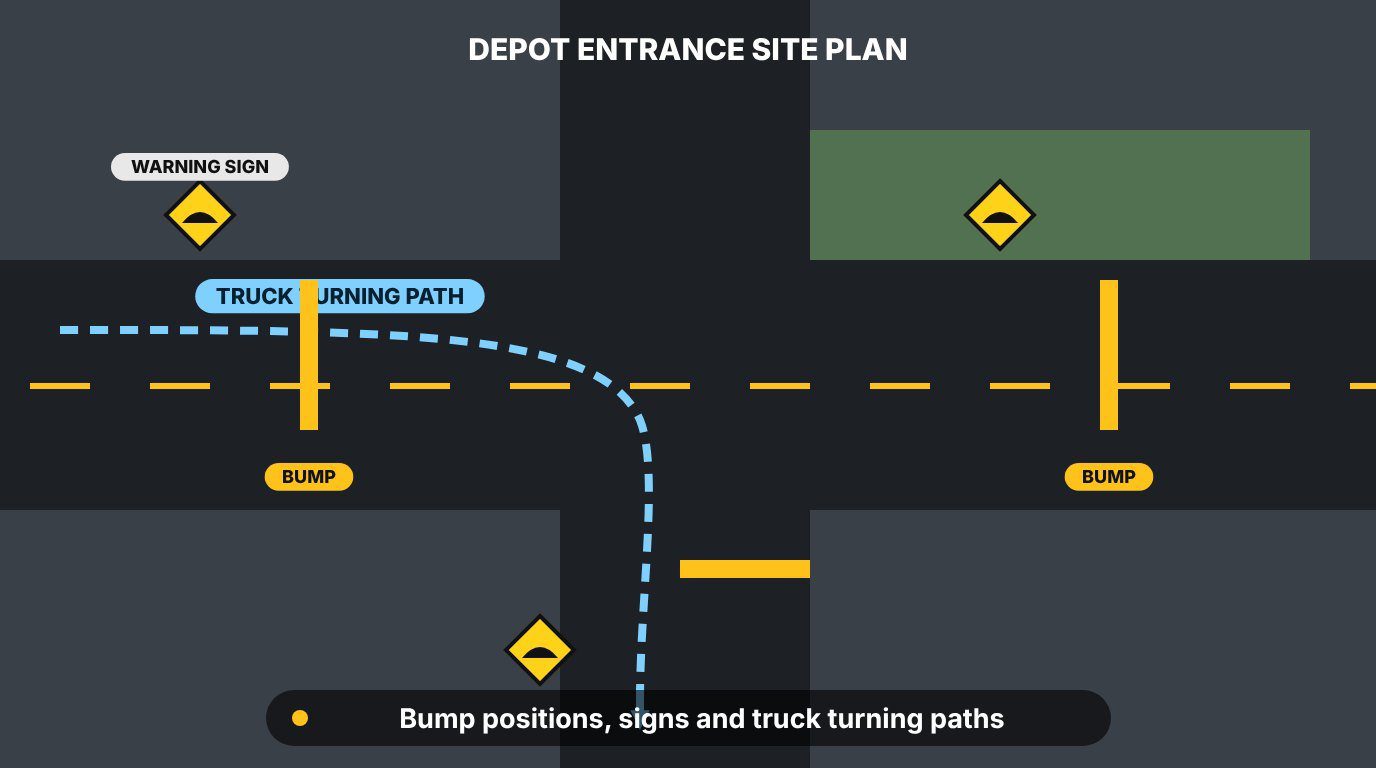
Drivers must see a bump in time to slow down. Add warning signs before it and keep the surface visible with color and reflective features. Poor visibility causes hard braking and impact damage. Heavy vehicles need more stopping distance, so place the sign earlier on routes with large trucks. Check visibility at night and in rain.
2. Placement Away from Turns and Junctions
Avoid placing a bump immediately after a tight turn, where a truck cannot straighten before it hits. Keep bumps clear of junctions, where braking and turning combine. Allow stable approach lengths so that the vehicle is straight when it crosses. Check turning paths for long trailers. Test the layout with the largest vehicle before final installation.
3. Emergency Access and Removability
Fire trucks and ambulances may need to cross at higher speed. Consider speed cushions or removable sections on emergency routes. Removable modular bumps also help with snow clearing and pavement repair. Agree the plan with the local authority and the site safety manager. Document any exceptions in the site plan.
Wholesale Buying: MOQ, Testing, OEM and Warranty
Wholesale buyers need clear terms and evidence. A good purchase protects you from poor products and late deliveries. It also gives you a basis to claim if a product fails. Confirm each point before you place a volume order.
1. Quantity Planning and MOQ for a Heavy Duty Speed Bump Order
Count the length of bumps needed for each site, and add spare sections for replacement. Typical MOQs range from a few hundred pieces to around 1,000 pieces, depending on the model and the material. Modular products may allow mixed orders of bumps, end caps and hardware. Ask whether you can combine sizes within the same MOQ. Plan delivery in stages if storage is limited.
2. Samples, Testing and Acceptance
Request samples of the exact product and test them on site. Check weight, thickness, hardness and surface condition. Install a short section on a busy route for several weeks. Inspect it for movement, cracks and anchor loosening. Keep the sample as the reference for later shipments.
3. OEM, Colors and Packaging
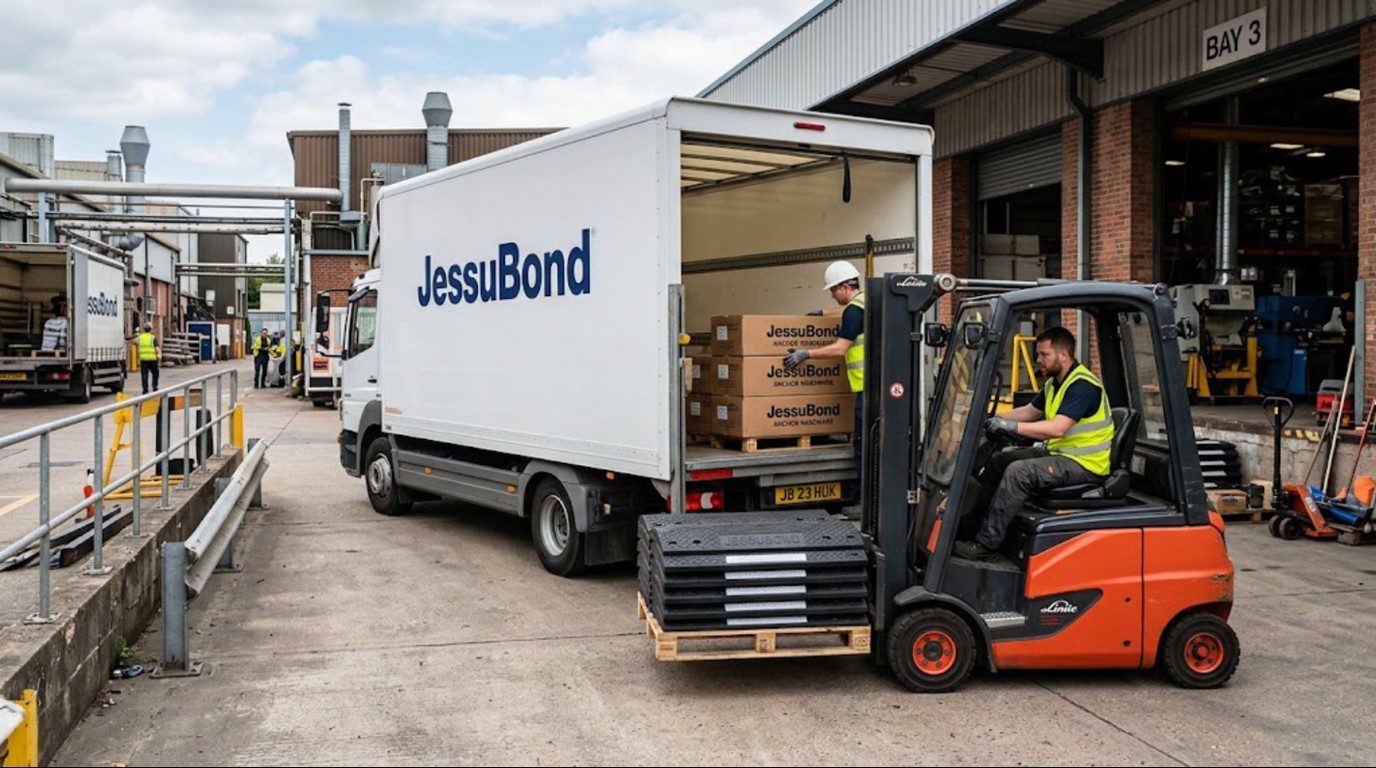
OEM programs let you add your brand, custom colors and reflective features. Heavy products need strong packaging, so ask about pallet loading and protection during shipping. Confirm the labeling for each carton. Clear labels speed up receiving and installation planning. A manufacturer that stores your artwork and specifications makes reorders easier.
4. Warranty and After-Sales Support
Read the warranty carefully, including what it covers and what it excludes. Wear under heavy traffic may fall outside standard warranty terms. Ask what evidence the supplier needs to process a claim. Our guide on speed bump warranty evaluation for property management companies explains what to check. Good after-sales support reduces downtime if sections need replacing.
Conclusion: A Heavy Duty Speed Bump Must Match the Load and the Vehicle
A heavy duty speed bump must carry the dynamic load of the heaviest vehicle and treat the lowest vehicle fairly. Ask suppliers to state ratings per wheel or per axle, to show test evidence and to explain the anchoring. Choose a profile that is long and low enough for buses and trailers, and consider speed cushions where wide-track vehicles dominate. Select materials for the climate and the traffic count, and plan placement, signs and emergency access.
Wholesale buyers should confirm MOQ, samples, OEM terms and warranty before they commit to volume. A short field trial often prevents a costly mistake. The result is a speed control system that lasts and protects drivers, vehicles and cargo.
A speed bump rated only for cars is a speed bump for cars.
Looking for a manufacturer that supplies heavy duty rubber speed bumps and modular sections for trucks, buses and industrial sites with flexible MOQ and transparent per-unit pricing at volume? At JessuBond, we produce speed bumps with full customization support. Contact us here.