
Schools and campuses run on tight daily routines. Buses, parent vehicles, delivery vans and hundreds of pedestrians share the same space within a short window. School traffic cones are one of the cheapest tools a facility manager has to organize that movement. They are also easy to misuse, because a poorly chosen cone can tip, fade or confuse a driver at the worst moment.
This guide is written for facility managers, district procurement officers, campus operations teams and distributors who supply them. It covers where cones are used, how to choose height and color, and how to place them for safe flow. It also explains durability, wholesale MOQ and customization, so your purchase order matches real campus conditions.
Where Schools and Campuses Use Traffic Cones
Campus traffic is more varied than most buyers expect. The same cone may guide parents at 8 a.m., mark a field at noon and close a lane for maintenance at night. A realistic use list is the starting point for any specification. Map each use before you choose a size or a quantity.
1. Drop-Off and Pickup Lanes
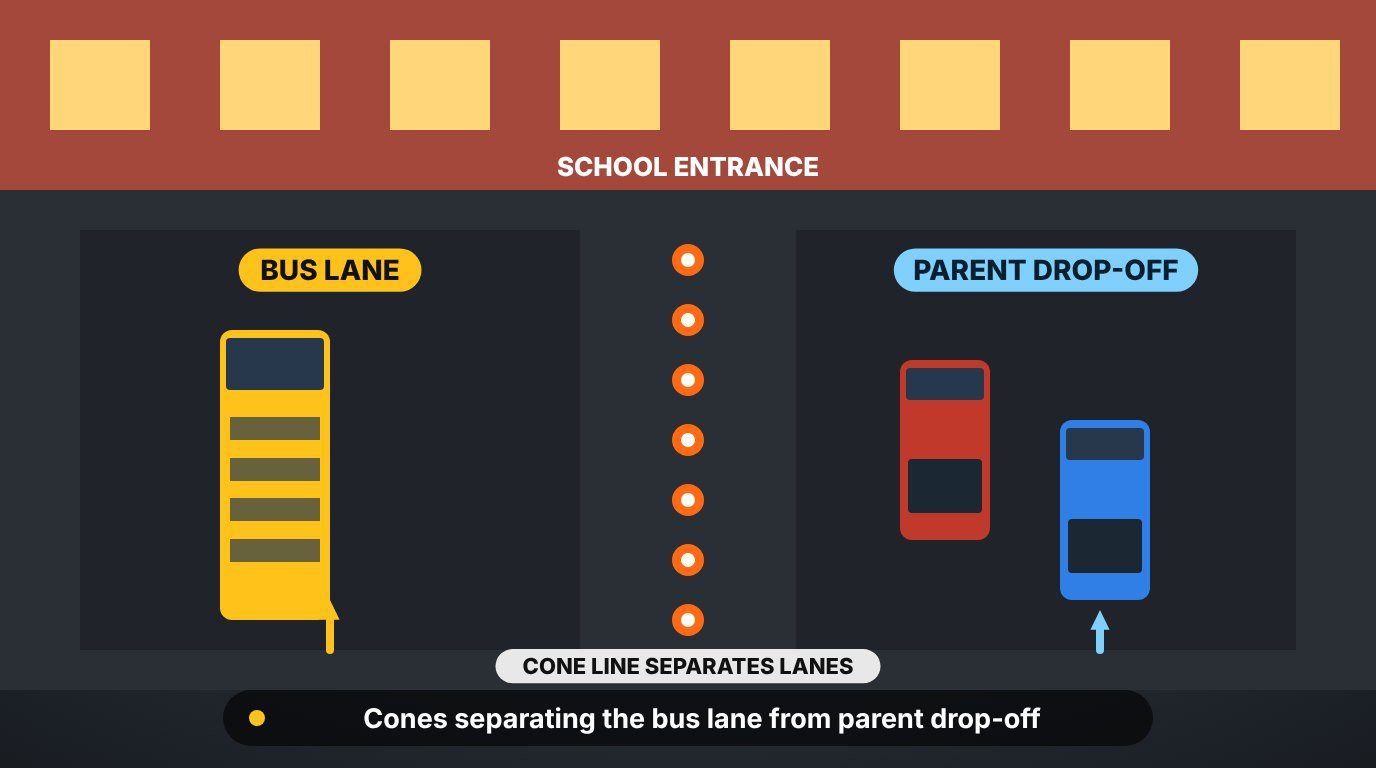
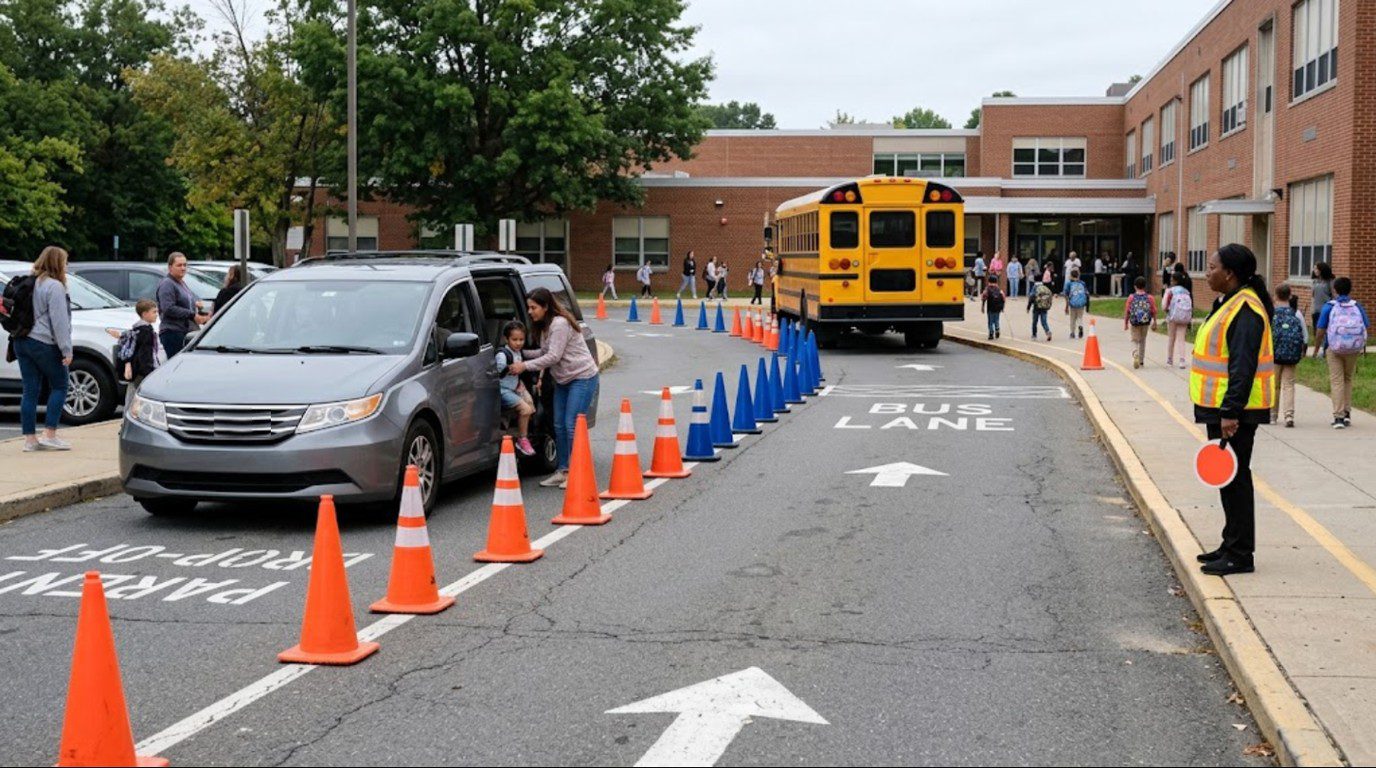
Drop-off is the busiest and riskiest period of the school day. Cones separate bus lanes from parent lanes, mark stopping points and keep vehicles out of crossing areas. They also help staff direct traffic, and a consistent layout lets drivers learn the pattern quickly. Cones guide behavior, but they do not stop vehicles. Therefore, adult supervision is still required at every busy entrance.
2. Parking Lots, Athletic Fields and Events
Parking lots need cones to mark reserved spaces, accessible bays and overflow routes. Sports days, graduations and open evenings create temporary traffic plans that last only a few hours. Staff must set up and remove cones quickly, often with volunteers. For related guidance, see our article on traffic cones in parking lots. A stackable, lightweight cone with a stable base suits these tasks best.
3. Maintenance, Construction and Temporary Closures
Summer is the main season for repair work on school grounds. Contractors close lanes, protect trenches and mark new paving. Cones also mark wet floors and hazards near entrances during the school year. These tasks need more durable and more visible cones than a simple parking marker. Specify them separately from daily-use cones.
Cone Height and Visibility for School Environments
Height and reflectivity decide whether drivers notice a cone in time. School zones present specific challenges, such as low morning sun, early winter darkness and visual clutter from parked vehicles. The right specification balances visibility with safe handling by staff. Choose each cone type for the lowest-visibility situation it will face.
1. Choosing 18-Inch, 28-Inch and Smaller School Traffic Cones
An 18-inch cone suits low-speed daytime tasks, such as marking parking bays or guiding pedestrians in a quiet lot. A 28-inch cone is easier to see from a distance and is the usual choice for roads and for any use after dark. Smaller cones work for sports fields, gym floors and playground markings. Many schools buy two heights and keep them in separate stores. For more detail on height rules, see our guide to cone height regulations for commercial applications.
2. Reflective Collars for Early and Late Hours
Winter mornings and evening events create low-light conditions. Reflective collars make cones visible in headlights, and they also mark the edges of a lane. Choose collars for any cone used before sunrise or after sunset, and ask the supplier for the sheeting grade in writing. Weak collars peel quickly in daily use. Therefore, request samples and handle them roughly before you approve a bulk order for school traffic cones.
3. Base Weight, Wind and Handling Safety
A base that is too light tips in wind or after a minor touch. A base that is too heavy is hard for staff and volunteers to carry. Choose a weighted base that stays upright in normal wind and can still be lifted by one person. Smooth edges and a stable shape reduce injury risk during setup. Ask suppliers for the base weight, and compare it with your current cones.
Color Strategy for School Traffic Cones
Color helps people read a layout without signs. Used well, it reduces confusion and speeds up setup. Used badly, it creates a patchwork that nobody understands. Keep the scheme simple and document it.
1. Orange as the Default for Vehicle Areas
Orange is the standard color for vehicle control, and drivers recognize it immediately. Therefore, use it for roads, lanes and any area where a vehicle must react. Do not dilute this meaning by using orange for decoration or play areas. A consistent orange signal builds driver habits over time. For a deeper comparison, read our guide to selecting orange, blue and green traffic cones.
2. Zone Coding with Blue, Green and Yellow
Other colors can separate zones such as bus lanes, parent pickup, staff parking and accessible bays. Keep the number of colors small, so that staff remember what each color means. Post a simple map in the staff room and in the facility office. Use the same code every day. Colors also help volunteers who set up for events and do not know the campus well.
3. School Colors, Logos and Identification
Many schools prefer school traffic cones that carry the school name or logo. This helps staff identify school property and discourages cones from leaving the site. It also reinforces the school identity at public events. Printing should never cover the reflective collar or reduce visibility. Request a printed sample and check how well the print survives rubbing and weather.
Placement Principles for Campus Facility Managers
Placement matters as much as the cone itself. A good cone in the wrong place creates risk. A clear plan makes setup repeatable and teachable. Always follow local rules and guidance from your traffic authority.
1. Spacing, Tapers and Guidance Lines
Cones work best as a continuous visual line. Place them closer together on curves and at entrances, where drivers need stronger guidance. Use a gradual taper where a lane narrows so that vehicles do not swerve at the last moment, and avoid gaps that tempt drivers to cut through. Check public-road requirements in the MUTCD Part 7 on school areas and in your local rules. Private campus roads may follow different rules, but many districts adopt the same principles.
2. Sight Lines and Crossing Points
Never place cones where they block the view of a crosswalk or a child entering the road. Keep them clear of the exact crossing path, and position them to direct drivers toward a stop or slow point. Walk the layout from a driver’s seat and from a child’s viewpoint before you approve it. Adjust any cone that hides a pedestrian or a sign. Cones should clarify the scene and not create new blind spots.
3. Emergency Access and Fire Lanes
Cones must never block access for ambulances, fire trucks or other emergency vehicles. Mark fire lanes and emergency routes clearly on your layout diagram, and keep them free at every stage of an event. In addition, make sure cones can be moved quickly by one person if an emergency vehicle needs to pass. Share the layout with local emergency services, because they can point out risks that staff may miss. A short annual review with them is a low-cost safety step.
4. Daily Deployment and Removal Routines
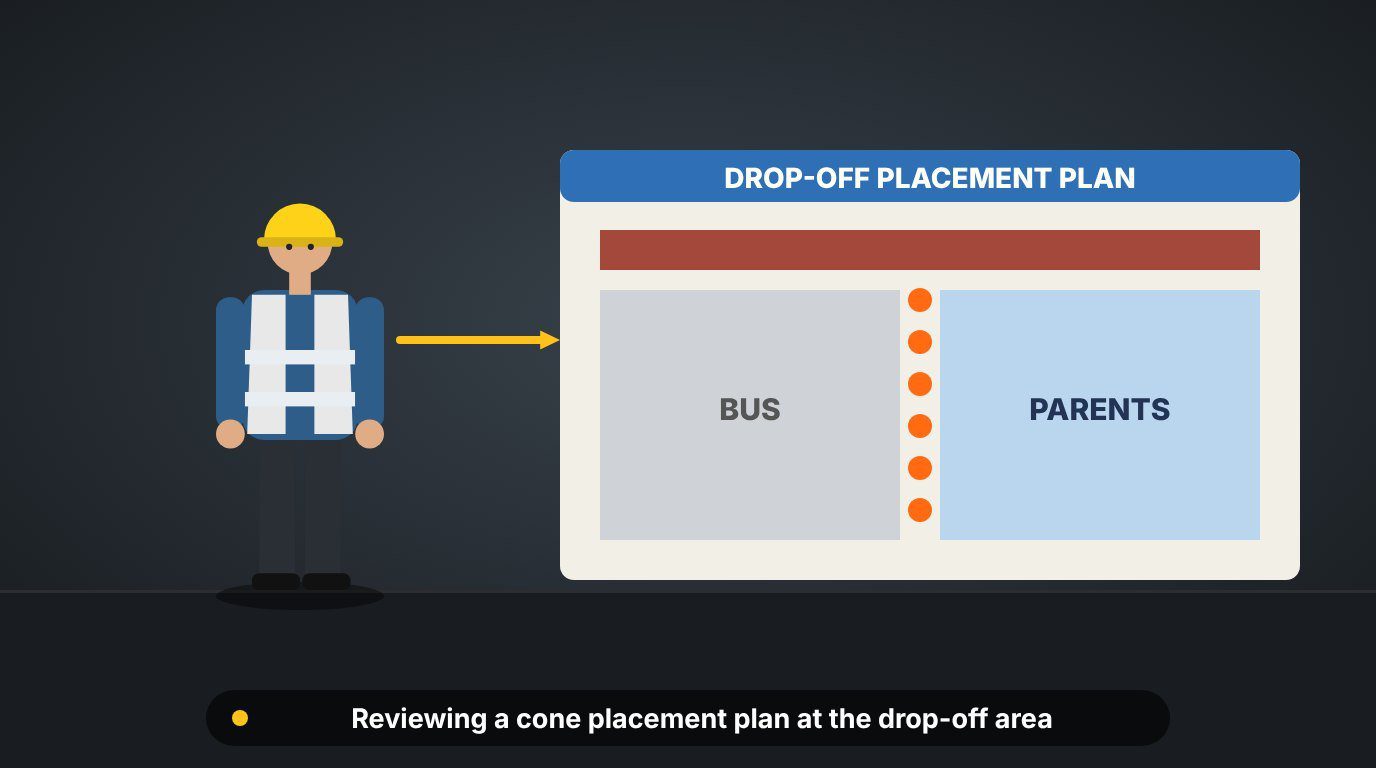
A repeatable routine saves time and prevents errors. For example, assign a named staff member to set up and collect cones each day. Record the layout in a simple diagram and keep a copy with the cone store. Missing cones should trigger a replacement order before the next event. Our article on why every facility needs a cone deployment plan gives a framework for this routine.
Material, Durability and Safety Specification
Cones in a school lead a hard life. Students touch them, vehicles clip them and weather ages them. A durable specification reduces replacement cost across the school year. It also keeps staff safe during handling.
1. PVC, Rubber and PE Materials
PVC cones are flexible and light, and they take printing and reflective collars well. Rubber base cones add weight and grip, which helps in wind and on slopes. PE cones are cheaper and useful for temporary or indoor uses. Choose the material according to how often the cone will be handled and how much wind it will face. Prices and service life vary by supplier and volume, so compare quotes and samples.
2. UV Exposure, Cold and Daily Handling
Sun, cold and repeated stacking all cause wear. UV exposure fades color and makes plastic brittle. Cold weather can make a poor compound crack when a vehicle clips it. Ask suppliers for the temperature range and UV resistance of the material. Store cones indoors during long breaks where possible, as this extends their life.
3. Compliance, Local Rules and Liability
Cones used on public roads near a school must meet local traffic control rules. Cones used on private campus property are governed by your own safety policy, but a clear standard protects you in a dispute. Keep records of specifications, purchase dates and inspection checks. Review the plan with your insurer or legal adviser if needed. Remember that cones guide traffic, and physical barriers are needed where vehicles must be stopped.
Wholesale Purchasing: Quantity, MOQ and Customization
School and district buyers often purchase once or twice a year. A good order balances quantity, budget and lead time. Wholesale terms also matter if you supply several campuses. Plan the order before the term starts.
1. Estimating Quantities of School Traffic Cones Across Zones
First, count cones for each use, such as lanes, lots, events and maintenance, then add a spare margin for loss and damage. Separate daily-use cones from event cones, because event stock is used less often. Reuse the same count each year, and adjust it after an audit. Multi-campus districts can pool orders to reach better volume pricing. Clear counts also make supplier quotes easier to compare.
2. MOQ, Printing and Custom Colors
Custom printed or custom colored cones usually require a higher MOQ than stock orange cones. Typical MOQs range from a few hundred to around 1,000 pieces, but the exact number depends on the factory and the print method. Distributors can combine several school customers into one order to meet the threshold. Ask whether the factory stores artwork for repeat orders. Confirm color tolerance in writing.
3. Lead Time, Delivery and Storage
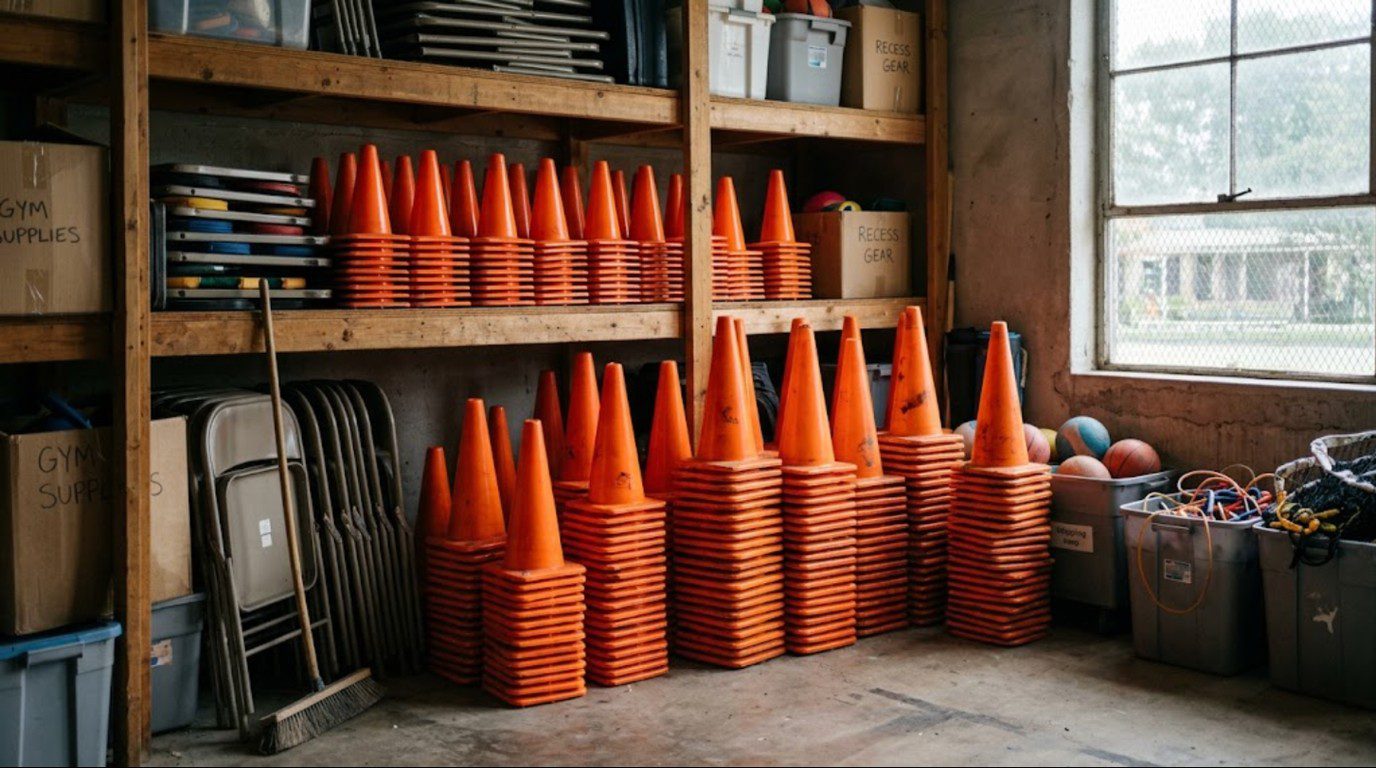
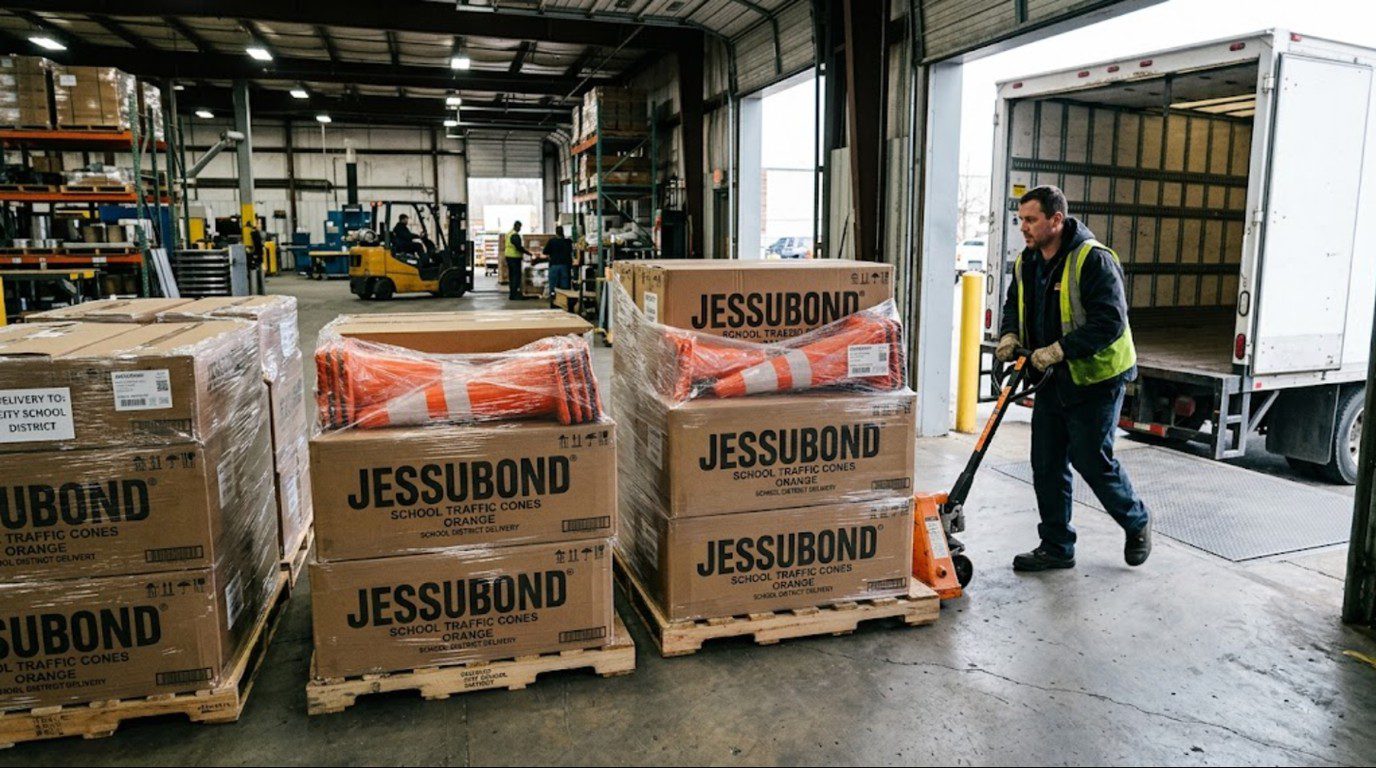
Order well before the start of term, because custom production and shipping take time. Ask for a production schedule and add a buffer for delays. Plan storage space for the delivery, since cones are bulky. Check how many cones fit in each carton and on each pallet. These details prevent surprises on delivery day.
4. Supporting Equipment and Spare Stock
Cones work better with simple support items. Cone carts speed up setup and collection, and connecting bars or chains turn separate cones into a continuous line for queues. However, each extra item needs storage and a place on the inventory sheet. Keep a small stock of spare cones and collars, and reorder as soon as stock falls below your set minimum. School traffic cones last longer when staff rotate stock and retire cracked units quickly.
Conclusion: Specify School Traffic Cones for the Hardest Use, Not the Easiest
The best school traffic cones are visible at the worst hour, stable in the worst wind and simple for staff to deploy. Choose heights by zone, use reflective collars for low light and keep the color code simple. Place cones to guide drivers, protect sight lines and support supervised crossings. Write the specification once, test samples and review it every year.
Wholesale buyers should confirm MOQ, printing options, lead time and carton packing before they place an order. A clear plan reduces cost, improves safety and makes cone management easier for every staff member. Review it after each school year, and use damage and loss records to adjust the next order.
A cone layout that a new volunteer can follow on day one is a layout that works.
Looking for a manufacturer that supplies school traffic cones in custom heights, colors and logo printing with flexible MOQ and transparent per-unit pricing at volume? At JessuBond, we produce traffic cones for schools, districts and distributors with full customization support. Contact us here.