
Traffic cone color selection represents more than aesthetic preference in professional applications. Different cone colors communicate specific messages, comply with distinct regulatory frameworks, and serve unique operational purposes across construction, utility, municipal, and facility management contexts. Understanding the appropriate application for orange traffic cones, blue traffic cones, and green traffic cone options enables organizations to implement effective traffic control systems that enhance safety and ensure regulatory compliance.
Understanding Traffic Cone Color Standards and Significance
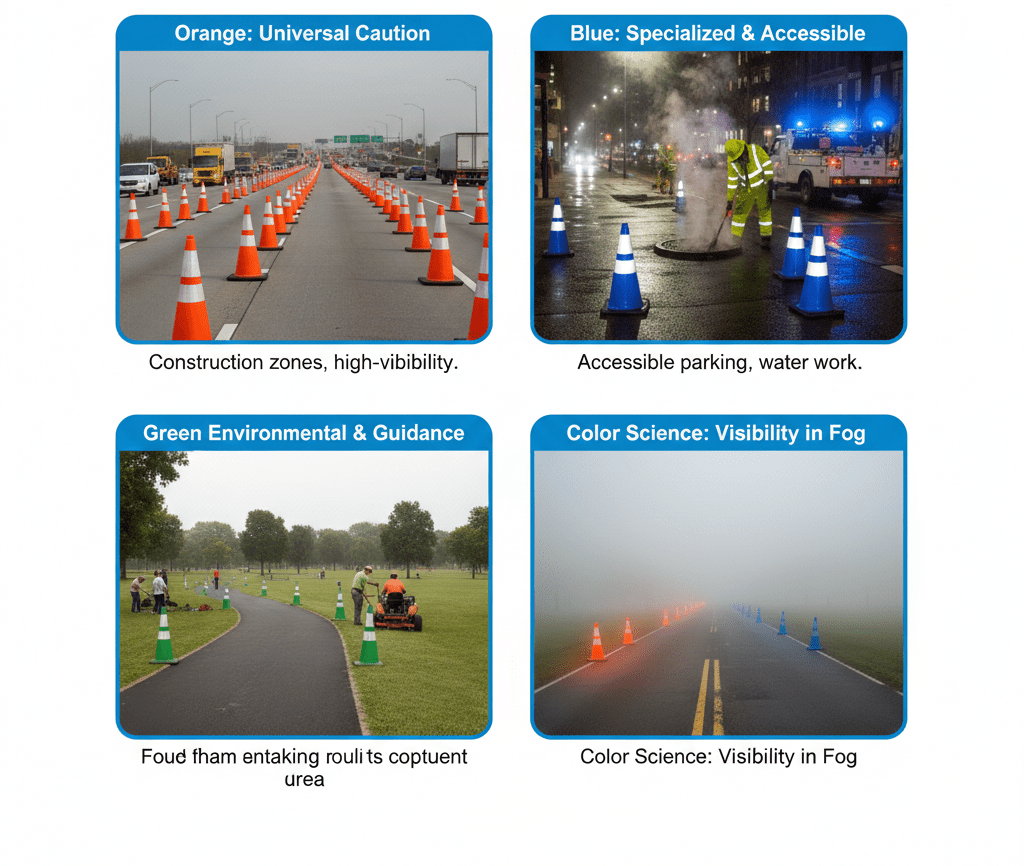
The familiar orange color dominates traffic cone deployments for good reason. Traffic orange cones have become the universal standard for general-purpose traffic control throughout North America and most international markets. This bright fluorescent orange provides maximum visibility across diverse lighting conditions, weather scenarios, and viewing distances. The color’s psychological association with caution creates immediate recognition that alerts drivers and pedestrians to exercise increased attention.
However, orange represents just one option in a broader spectrum of specialized traffic cone colors designed for specific applications. Blue traffic cones and green traffic cone variants serve distinct purposes that make them superior choices for particular scenarios. Selecting the appropriate color for each application optimizes communication effectiveness while potentially enhancing compliance with industry-specific standards.
The physical science behind cone color visibility influences selection decisions. Orange wavelengths penetrate fog, rain, and low-light conditions more effectively than many other colors, explaining orange’s widespread adoption for roadway applications. Blue and green wavelengths offer different visibility characteristics that prove advantageous in specific contexts, particularly where color coding distinguishes between different work zones or hazard types.
Orange Traffic Cones for Standard Applications
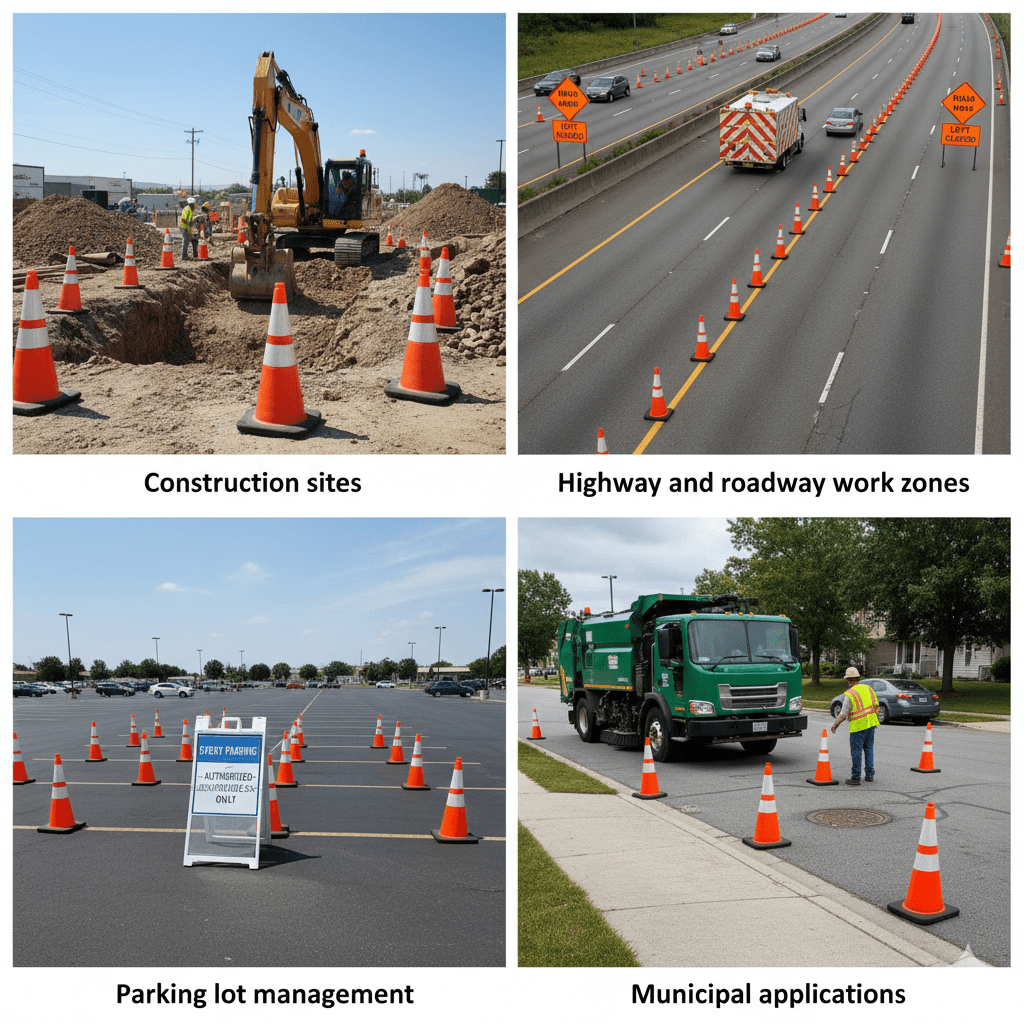
Orange traffic cones represent the default choice for most traffic control scenarios, and their ubiquity reflects genuine performance advantages across diverse applications. Construction sites rely overwhelmingly on traffic orange cones to delineate work zones, channel traffic around hazards, and establish temporary traffic patterns during roadway modifications. The color’s universal recognition means that drivers encountering orange cones immediately understand they’re approaching a hazard zone requiring heightened attention.
Highway and roadway work zones deploy orange traffic cones as the primary traffic control device for lane closures and shoulder work. The Manual on Uniform Traffic Control Devices (MUTCD) and similar regulatory frameworks worldwide specify orange as the standard color for temporary traffic control devices, making orange cones the only compliant choice for many roadway applications.
Parking lot management applications also favor orange traffic cones for designating restricted areas, reserving spaces for special events, and temporarily blocking off sections undergoing maintenance. The color’s strong visibility ensures that drivers notice cones even when distracted or approaching rapidly.
Municipal applications including street cleaning, utility access points, and temporary parking restrictions utilize orange traffic cones extensively. Public works departments maintain large inventories of orange cones because their universal applicability reduces equipment management complexity.
Blue Traffic Cones for Specialized Applications
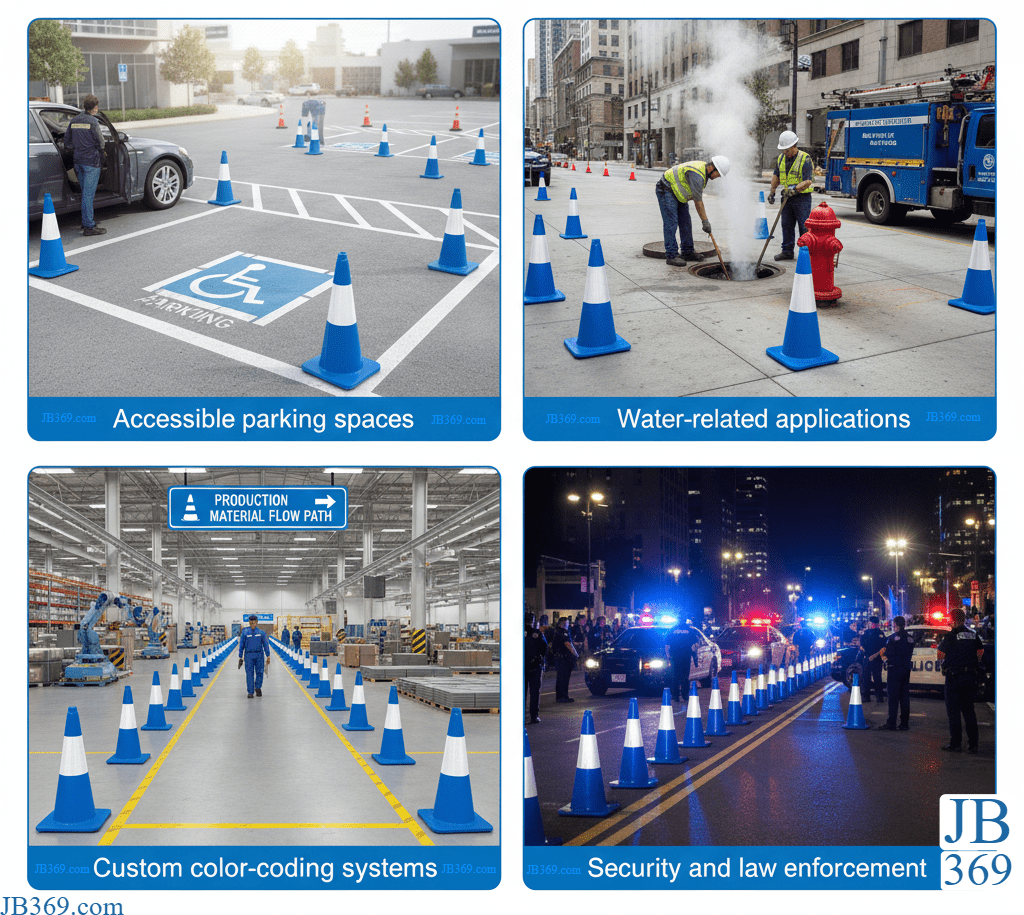
Blue traffic cones serve specialized purposes that make them the superior choice for specific applications despite their less common deployment. The most prevalent use of blue traffic cones involves designating accessible parking spaces and pathways. The blue color’s association with accessibility signage and ADA-compliant facilities creates immediate visual communication that these areas serve specific accessibility purposes.
Facilities management teams deploy blue traffic cones to temporarily designate accessible parking when permanent signage is unavailable or to supplement existing accessible spaces during special events. The distinctive color prevents confusion with general-purpose orange cones and clearly communicates the space’s reserved status.
Water-related applications represent another common use case for blue traffic cones. Utilities and municipalities working on water main repairs or fire hydrant access often deploy blue cones to visually differentiate water-related work zones from other utility work occurring nearby. This color coding helps workers quickly identify which zones relate to water systems.
Some organizations implement blue traffic cones as components of custom color-coding systems for facility-specific applications. Manufacturing plants might use blue cones to designate production material flow paths, while event venues could deploy them to mark VIP access routes.
Security and law enforcement applications occasionally utilize blue traffic cones for establishing perimeters or directing traffic during special events. The color’s association with police and security services can reinforce the authoritative nature of the traffic control deployment.
Green Traffic Cone Applications and Use Cases
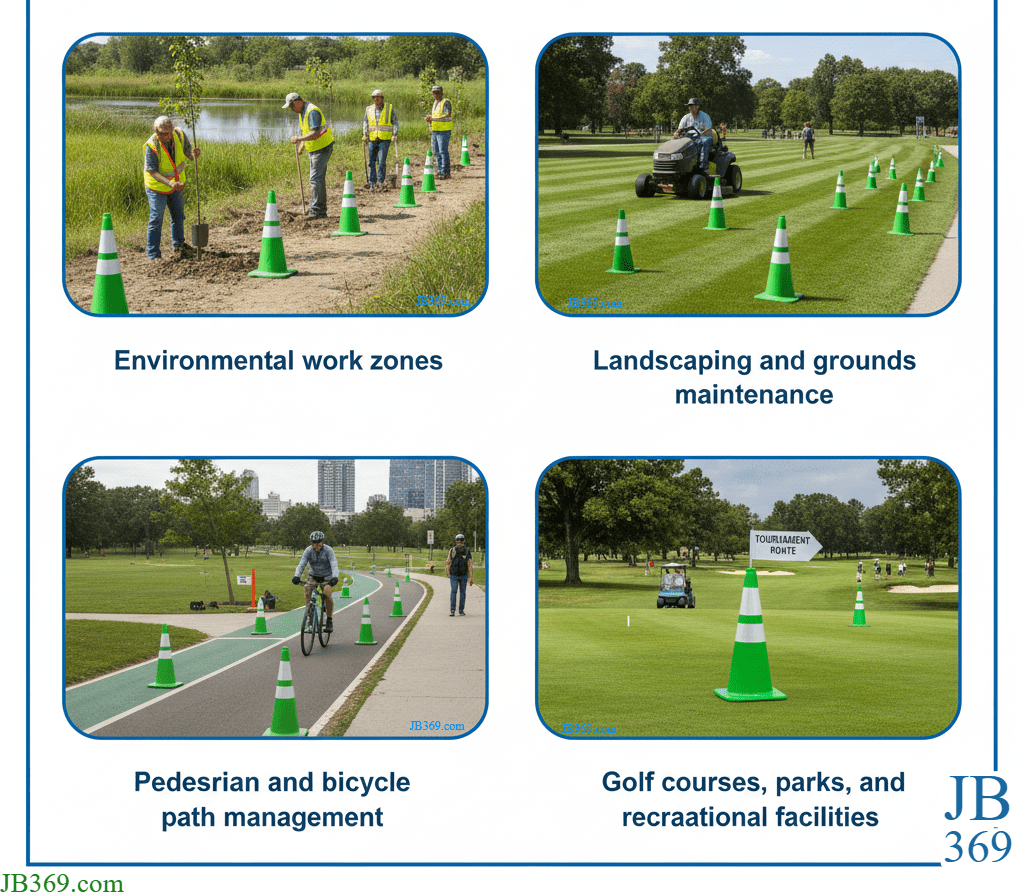
Green traffic cone deployments remain less common than orange or blue alternatives, but specific applications exist where green represents the optimal color choice. Environmental work zones frequently employ green traffic cones to visually distinguish environmental remediation or ecological restoration projects from standard construction activities occurring nearby. The color’s association with environmental initiatives creates intuitive communication about the work zone’s purpose.
Landscaping and grounds maintenance operations find green traffic cone options useful for designating work areas without creating the alarm response that orange cones might trigger. When conducting routine lawn care or landscape installation in public spaces, green cones effectively mark work zones while communicating a less urgent hazard level than orange cones suggest.
Pedestrian and bicycle path management represents another application where green traffic cones prove valuable. Some municipalities deploy green cones along temporary bike lanes or pedestrian detours to differentiate these pathways from vehicle traffic zones marked with orange cones.
Golf courses, parks, and recreational facilities use green traffic cones for tournament routing, temporary pathway designation, and maintenance area identification. The color blends more naturally with outdoor recreational environments than bright orange while still providing adequate visibility.
Some organizations implement green cones within custom facility management systems for designating approved or safe zones, creating visual contrast with orange or red cones marking hazard areas. This application requires clear worker training to prevent confusion.
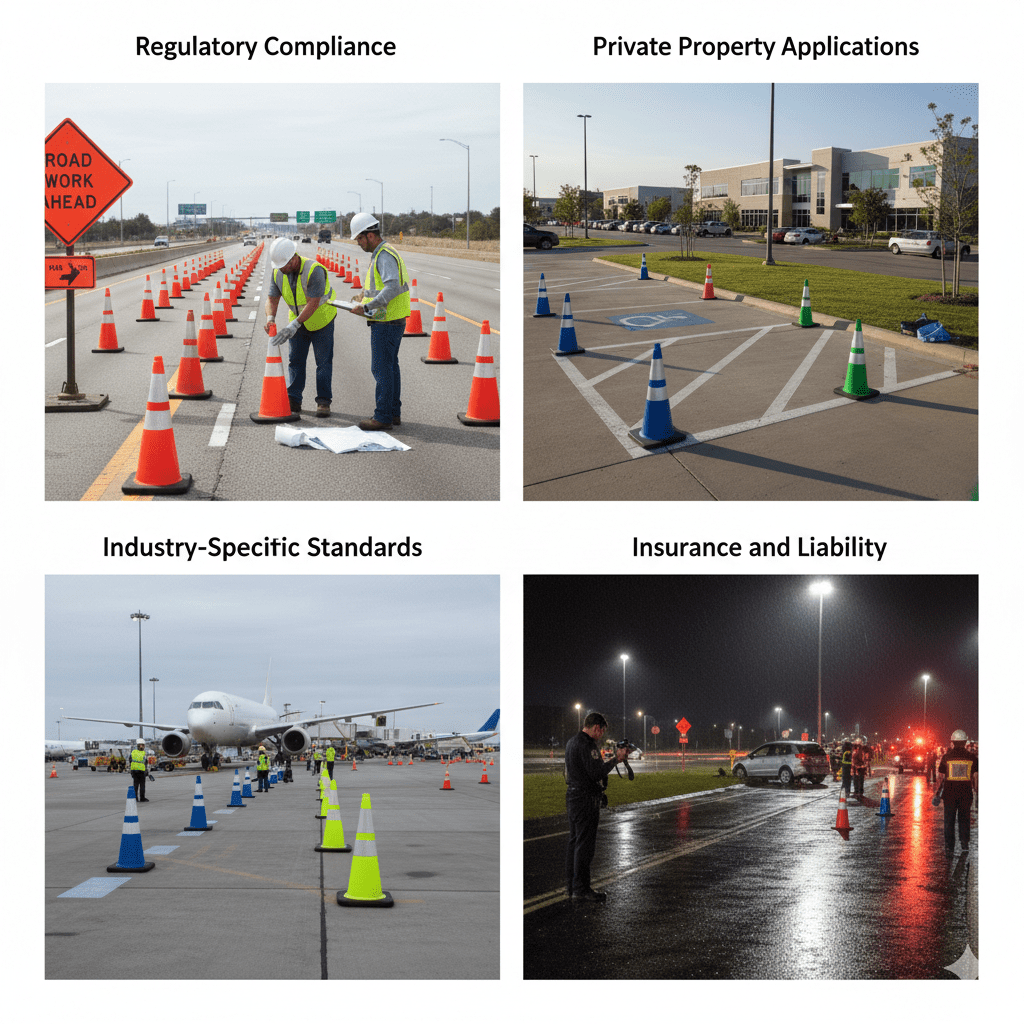
Regulatory Compliance and Industry Standards
Understanding applicable regulations and industry standards proves essential when selecting traffic cone colors for professional applications. The MUTCD specifies orange as the required color for traffic cones deployed on public roadways in the United States, making color selection non-negotiable for roadway work zones and construction projects affecting public rights-of-way.
Contractors bidding on public works projects should verify color requirements in project specifications. Many transportation departments explicitly require orange cones and may reject invoices for projects deploying non-compliant cone colors. This regulatory framework reflects legitimate safety concerns about confusing motorists conditioned to associate specific colors with particular traffic control meanings.
Private property applications offer greater flexibility in cone color selection since MUTCD requirements don’t typically apply to parking lots or facility grounds. Organizations managing private facilities can implement custom color-coding systems using orange, blue, green, or other traffic cone colors without regulatory constraints.
Industry-specific standards may dictate traffic cone color selection in particular sectors. Airports, seaports, and rail facilities often maintain detailed traffic control guidelines specifying when different cone colors should be deployed. Organizations operating in these regulated environments must ensure their cone procurement and deployment practices align with applicable industry standards.
Insurance and liability considerations also influence color selection decisions. Deploying inappropriate cone colors in situations where specific colors are standard practice could potentially create liability exposure if accidents occur and investigations reveal non-standard traffic control practices.
Practical Considerations for Multi-Color Cone Programs
Organizations managing complex facilities or conducting diverse operations often benefit from maintaining inventories of multiple traffic cone colors. This multi-color approach enables sophisticated traffic control deployments that communicate nuanced information through color coding while maintaining regulatory compliance where required.
Inventory management becomes more complex when maintaining multiple cone colors. Organizations should establish clear guidelines specifying when each color should be deployed to prevent confusion and ensure consistent application. Written standard operating procedures that document color selection criteria help maintain consistency as personnel change.
Storage and transportation logistics require attention when managing multi-color cone inventories. Separating different colors during storage prevents accidental mixing that could lead to incorrect deployments. Some organizations color-code storage containers to match cone colors, reducing selection errors during rapid deployment scenarios.
Training programs should address cone color selection to ensure workers understand when each color is appropriate. Construction crews accustomed to deploying only orange cones may require specific instruction if organizations introduce blue or green cones for specialized applications.
Cost considerations affect multi-color inventory decisions. Specialized colors like blue and green often carry premium pricing compared to commodity orange traffic cones due to lower production volumes. Organizations should evaluate whether the communication benefits of specialized colors justify the incremental costs.
Visibility and Safety Performance Across Colors
While regulatory compliance drives much of the color selection discussion, actual visibility performance varies between cone colors under different conditions. Orange traffic cones provide superior visibility in most scenarios, particularly during dawn, dusk, and nighttime operations. The fluorescent orange pigments used in quality cones contain additives that enhance visibility in low-light conditions, making orange the safest choice for applications where maximum visibility is paramount.
Blue traffic cones offer good daytime visibility but may prove less conspicuous during low-light conditions compared to orange alternatives. Organizations deploying blue cones in areas with vehicle traffic should ensure adequate supplementary measures like reflective striping enhance visibility during darkness.
Green traffic cone visibility falls between orange and blue in most conditions. The color provides adequate conspicuity for pedestrian-scale applications but may prove insufficient for high-speed roadway contexts. Organizations deploying green cones should limit their use to controlled environments with lower traffic speeds.
Reflective striping significantly enhances nighttime visibility regardless of cone base color. Quality cones of any color should feature retroreflective bands that reflect vehicle headlights back toward drivers. Organizations operating 24-hour facilities should prioritize cones with superior reflective striping when visibility in darkness is critical.
Cost-Benefit Analysis for Specialized Cone Colors
Determining whether specialized cone colors justify their costs requires evaluating both tangible and intangible benefits against the price premium compared to standard orange alternatives. For applications where blue or green cones serve primarily aesthetic purposes, the cost premium may prove difficult to justify, particularly for organizations managing tight budgets.
However, applications where color coding provides genuine safety benefits, regulatory compliance, or significant operational efficiency improvements often justify premium pricing for specialized colors. A facility conducting simultaneous utility work benefits substantially from color-coding different work zones, as the visual differentiation reduces worker errors and enhances safety.
Organizations should calculate cost premiums on a total program basis rather than per-unit pricing. While blue or green cones might cost 20-30% more per unit, if specialized colors represent only 10-15% of total cone inventory, the program-level cost impact remains modest.
Durability and lifespan considerations factor into cost-benefit calculations. Organizations should evaluate whether any performance differences between colors affect UV resistance, impact tolerance, or overall longevity.
Implementation Best Practices
Successfully implementing multi-color traffic cone programs requires thoughtful planning and clear communication. Organizations should document specific use cases for each cone color, creating written guidelines that establish when orange traffic cones, blue traffic cones, or green traffic cone options represent the appropriate choice.
Procurement processes should specify not just quantities but also color requirements to ensure purchasing departments acquire appropriate cone distributions. Proper procurement planning prevents accumulating excessive quantities of specialty colors while facing shortages of standard orange cones.
Standardization across organizational divisions or multiple facility locations enhances consistency and reduces confusion. Establishing enterprise-wide standards ensures consistent color applications regardless of location or specific crew assignments.
Quality standards should remain consistent across all cone colors. Organizations shouldn’t compromise on cone quality simply because certain colors serve less critical applications. Maintaining consistent quality standards across all colors ensures reliable performance and professional appearance for all deployments.
The strategic use of traffic cone colors represents a sophisticated approach to professional traffic control that extends beyond simply deploying generic orange cones for all applications. By understanding the specific purposes that orange, blue, and green traffic cones serve most effectively, organizations can implement comprehensive traffic control programs that enhance safety, ensure compliance, and communicate clearly while optimizing resource allocation and operational efficiency.
Looking for a Custom Traffic Cones Manufacturer or Supplier? Struggling to find the right factory to bring your vision to life? We’ve got you covered! At our place, we craft top-quality traffic cones with precision and care. Big or small, your needs are our mission. Let’s launch your cones project and take your product line to the next level! Click here to contact