
Sustainability teams now review the same purchase orders that procurement officers have always managed, and traffic cones are no exception. A single contractor or municipality can buy tens of thousands of units each year. The material choice therefore adds up to a measurable footprint. Recycled rubber traffic cones give buyers a practical way to reduce virgin material use without changing how crews deploy them. However, the claim only has value when the supplier can prove it.
This guide is written for procurement officers, distributors, importers, contractors and facility managers who must turn an ESG policy into a purchase specification. It explains what recycled content means inside a cone and which performance trade-offs to test. It also covers the documents to request and the effect on pricing and MOQ. Use it to write tender language that suppliers cannot answer with vague green marketing.
Why ESG Teams Now Review Recycled Rubber Traffic Cones
Cones were once a line item that nobody questioned. Today they appear in sustainability reports, green purchasing policies and public tender scoring sheets. The reasons are simple: high volume, repeat purchasing and a growing number of buyers who must report on the goods they buy.
1. Purchased Goods, Scope 3 and Reporting Pressure
Many large organizations must report emissions and material use across their supply chains, including purchased goods and services. Rules such as the EU Corporate Sustainability Reporting Directive push these data requests down to suppliers of even low-value products. A cone is not a major emissions source, but it is easy to switch, so sustainability managers often use it as an early win. Procurement teams then receive an instruction to add a recycled content requirement to the next tender, often without guidance on how to write it.
2. Specifying Recycled Rubber Traffic Cones in Public Tenders
In the United States, the EPA Comprehensive Procurement Guidelines designate traffic cones as a product category. They recommend roughly 50 to 100 percent recovered material for the plastic and crumb rubber components. Some state contract specifications turn this guidance into a hard requirement. New York State’s GreenNY specification for traffic cones, for example, asks for at least 50 percent total recycled content and encourages higher levels. Importers bidding into public contracts should therefore expect similar thresholds elsewhere, and they should confirm the exact tender wording before they quote.

What Recycled Content Means in a Traffic Cone Specification
A recycled content claim has no value until the specification defines it. Suppliers use the phrase in several different ways, and those differences change both cost and compliance. Define three things in every tender. These are the type of recycled material, the part of the cone that contains it, and the method used to calculate the percentage.
1. Pre-Consumer and Post-Consumer Material
The environmental claims standard ISO 14021 separates pre-consumer material from post-consumer material. Pre-consumer material is diverted from a manufacturing waste stream, while post-consumer material comes from products that have reached the end of their life. Crumb rubber from end-of-life tires is the common post-consumer input for cone bases. Many green purchasing policies score post-consumer content higher, so ask suppliers to state both figures separately instead of one combined number. In addition, the standard excludes scrap that is reused inside the process that created it, so a factory cannot count its own offcuts.
2. Where the Recycled Material Sits in the Cone
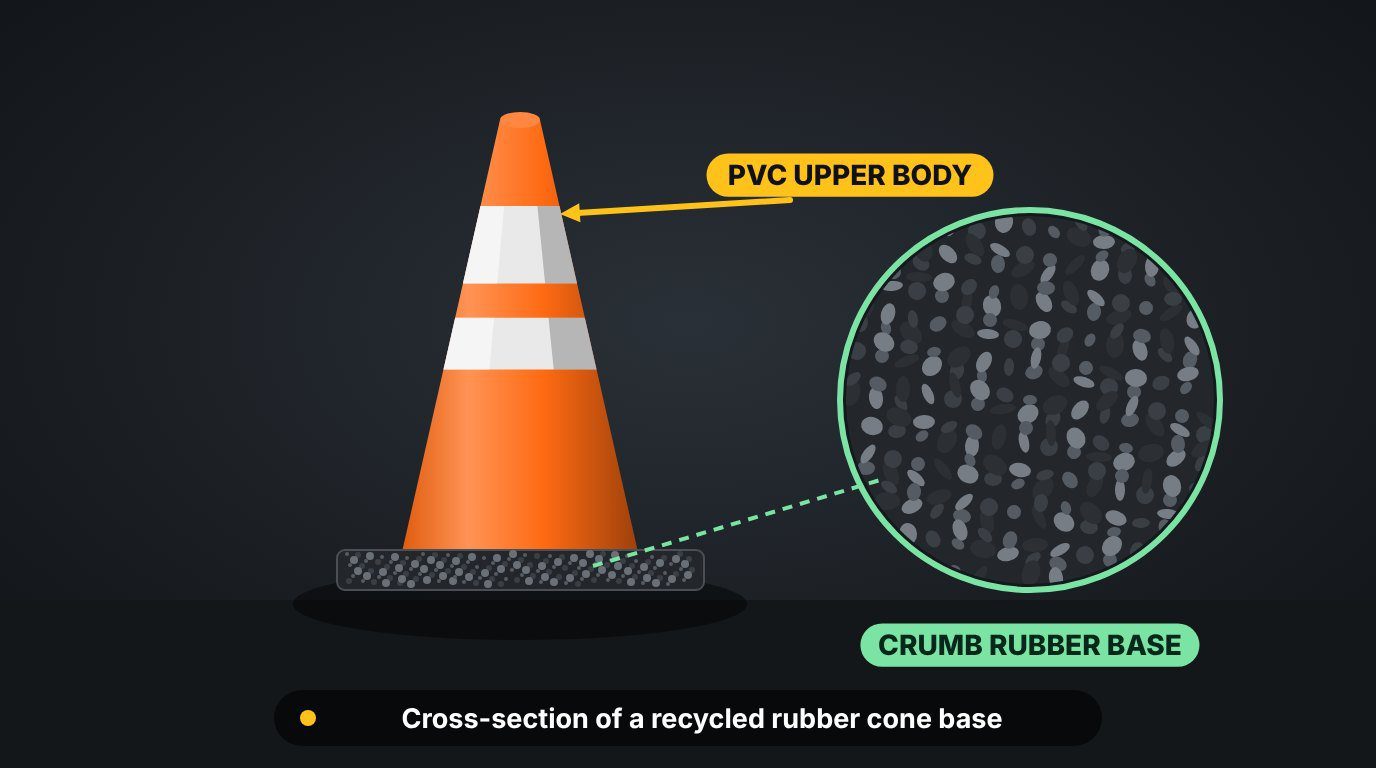
In a rubber-base cone, the recycled content is often concentrated in the heavy base, where crumb rubber is molded into the foot. The upper body may be PVC or another polymer, and it may contain little or no recycled material. Therefore a base with 70 percent recycled content does not make a cone that is 70 percent recycled. Ask for the percentage of the whole unit by weight and for the percentage in each component. This also protects you from a supplier who recycles only the cheapest part and markets the entire product as recycled.
3. Using Published Benchmarks to Set a Threshold
Benchmarks make a tender easier to defend. The EPA range of 50 to 100 percent for plastic and crumb rubber is a reasonable starting point for a base specification. Buyers who want a stricter standard can set a higher minimum for the base and a lower one for the body. Calculate the percentage on dry weight and exclude colorants and additives, as the EPA does, so every bidder follows the same method. Finally, write the minimum as a pass or fail requirement and score anything above it as a bonus.
Performance Trade-Offs Buyers Must Test Before Approving Recycled Cones
Recycled material should never reduce safety performance. A cone that falls over in light wind or cracks in cold weather creates cost and liability that outweigh any ESG benefit. Test every sample against the same criteria you use for virgin material cones, and compare the results side by side.
1. Base Weight, Stability and Wind Performance
Crumb rubber bases are popular because rubber is dense and grips pavement well. Check the actual weight of the base. A lighter base saves freight, but it may tip in wind or in the draft from passing trucks. Under MUTCD, cones for high-speed and nighttime work are generally 28 inches tall, and recycled rubber traffic cones should meet the same stability expectation as your current cones. Weigh at least ten samples from the sample lot and record the spread, because a wide range suggests inconsistent compounding.
2. Impact Recovery, Flexibility and Temperature Range
Cones are driven over, struck and stacked, so flexibility matters. Recycled compounds can be less elastic than virgin ones if the supplier uses too much filler or poorly sieved crumb. Run a simple recovery check: press or strike the cone body repeatedly and measure how fully it returns to its original shape. Repeat the check at the coldest and hottest temperatures you expect on site. Rubber and PVC behave differently at extremes, so ask for the tested temperature range of the compound instead of accepting a general durability claim.
3. Color, UV Exposure and Reflective Collar Adhesion
Dark recycled rubber can affect color consistency, and heavy recycled content in a colored body may dull the orange. UV exposure also speeds fading and cracking, a topic covered in our guide to UV degradation factors in traffic cone lifecycle management. Reflective collars must bond reliably to the surface of the cone. Ask for adhesion test results on the recycled surface, because collars that peel within a few months destroy the nighttime compliance of the cone.

Evidence and Documents to Request from Every Supplier
Recycled content is a claim, and every claim needs evidence. Procurement teams should treat the supplier’s documentation as part of the product itself. Request it at quotation stage, not after the purchase order is signed.
1. Declarations, Standards and Third-Party Verification
Start with a written declaration that states the recycled percentage, the material type and the calculation method, referenced to ISO 14021. A self-declaration may be acceptable for low-risk contracts, but public tenders often require third-party verification. Independent recycled content certification programs exist, so ask whether the supplier holds one and which products it covers. Also request the factory’s management system certificates, such as ISO 14001, which show how the site controls its environmental impact. A factory certificate does not prove a product claim, so ask for both.
2. Batch Traceability and Material Sourcing Records
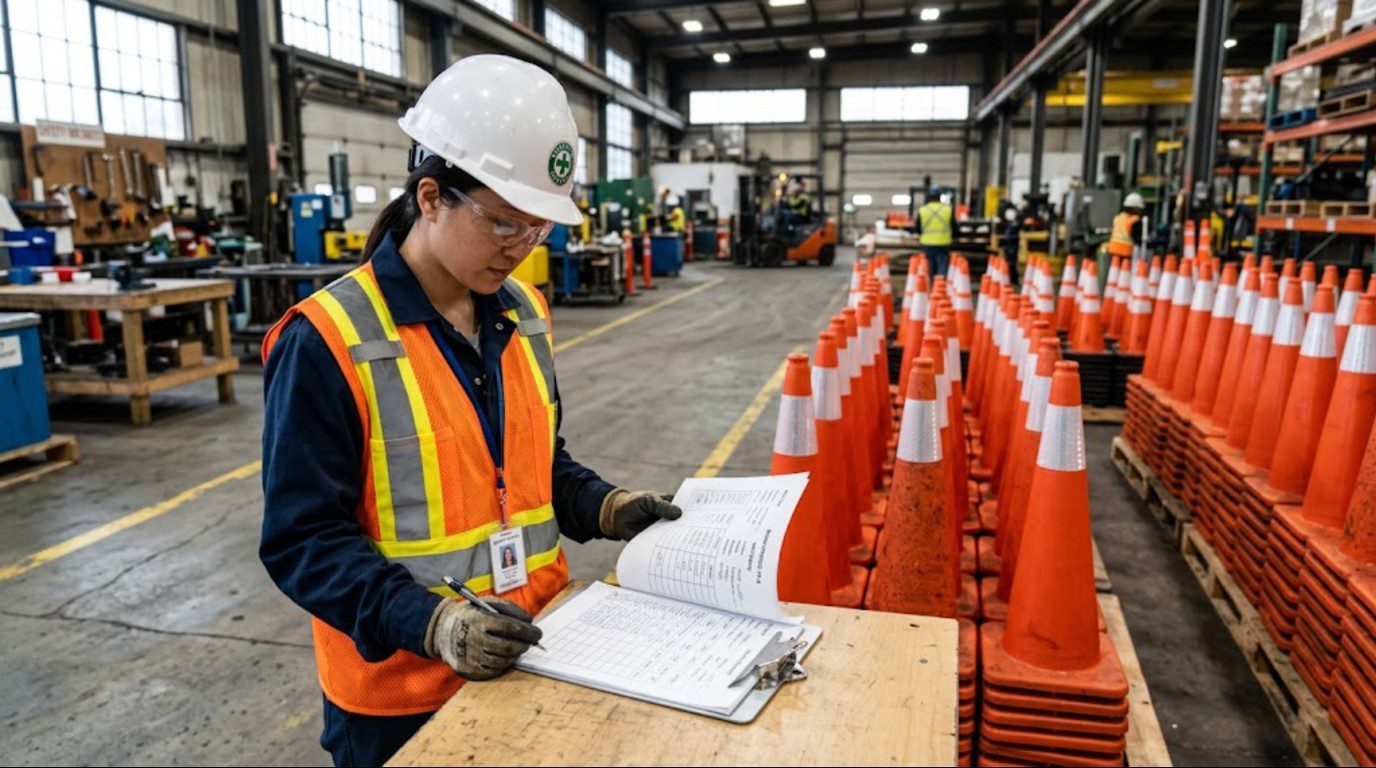
Ask how the supplier tracks recycled input from its source to the finished cone. Strong suppliers keep purchase records for crumb rubber or regrind, intake weights and batch numbers that link each production lot to its raw materials. This traceability allows an audit if a customer questions the claim later. Ask what happens when recycled supply runs short, because some suppliers quietly substitute virgin material. For that reason, state the minimum percentage per batch in the contract instead of as an annual average.
3. Product Testing and Sampling Rights
Include sampling rights in the purchase agreement. You should be able to pull cones from any shipment and send them to an independent laboratory. The lab can check weight, dimensions, collar performance and, where practical, material composition. Reflective collars should meet the retroreflective class required in your tender, for example under EN 13422 or MUTCD sheeting grades. Pay for the first test yourself, and make the supplier bear the cost of retesting and replacement if the results fail.
Commercial Terms: Price, MOQ and OEM Branding
Recycled content changes the commercial terms as well as the material. Buyers should expect different pricing logic, different lead times and different risk allocation. Understanding these points before you negotiate keeps the comparison with virgin material cones honest.
1. Price Premiums and Total Cost of Ownership
Recycled rubber can cost less than virgin compound by weight, but sorting, processing, quality control and testing may offset the saving. As a result, the price of recycled cones can be equal to or higher than standard models, and the difference varies by supplier and volume. Compare offers on cost per year of service instead of unit price. If a heavier recycled base survives longer because it resists tipping and traffic strikes, the real cost per deployment falls. Our comparison of PVC vs rubber traffic cones for long-term use explains this lifecycle logic in more detail.
2. MOQ, Color Options and Lead Time
Recycled formulations are usually produced in batches, and color matching takes time. Therefore the MOQ for a custom run of recycled rubber traffic cones can be higher than for stock virgin cones. The lead time can also be longer. Many manufacturers quote MOQs of around 1,000 pieces for standard models, so confirm whether recycled orders follow the same threshold. Order early for seasonal demand, and ask for a fixed color tolerance so that later shipments match the first one.
3. Private Label, OEM Branding and Claim Control
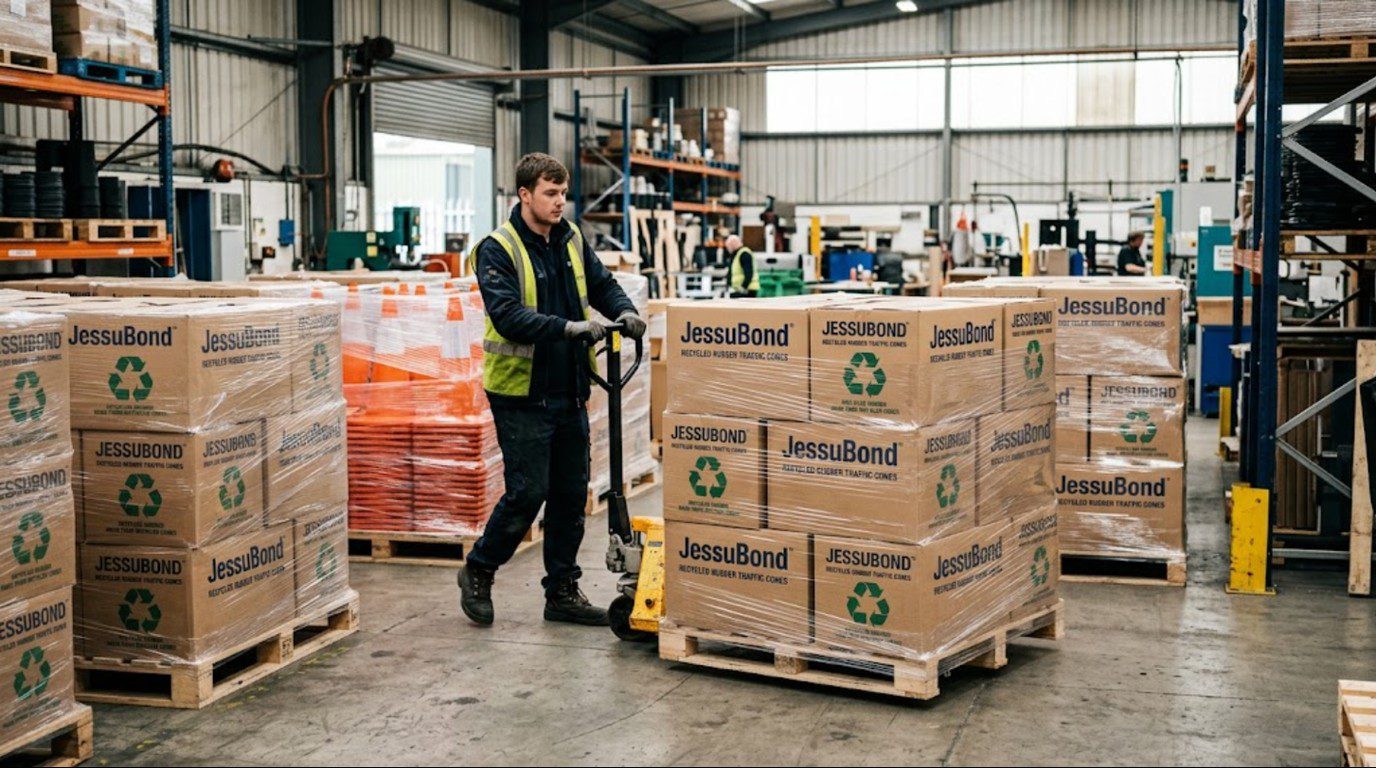
Distributors who sell recycled rubber traffic cones under their own brand take on the environmental claim as well. Make sure the OEM agreement states which recycled content figure may appear on packaging and in marketing material. Environmental marketing rules, such as the U.S. FTC Green Guides, expect recycled content claims to be specific and truthful. Agree approved wording with the manufacturer and attach the supporting declaration or test report. Municipal buyers apply the same scrutiny, as described in our guide on how municipalities evaluate and approve traffic cone suppliers.
Supplier Questions That Separate Verified Claims from Green Marketing
A short set of direct questions often reveals more than a long audit. Build the following themes into your request for quotation, and note whether answers arrive in writing and with evidence. Suppliers who respond clearly and quickly usually have a controlled process behind the claim.
1. Questions About Material Source and Percentage
Ask what percentage of the cone, by weight, is recycled and how that splits between pre-consumer and post-consumer material. Ask where the recycled input comes from, who supplies it and whether supply is continuous. Request the answer separately for the base and for the body. A supplier who hesitates on any of these points probably lacks a controlled process.
2. Questions About Quality Control and Consistency
Ask how the factory checks each batch, including incoming material inspection, weight tolerance, color matching and collar adhesion. Request the typical rejection rate and ask what happens to rejected units. Consistent recycled cones depend on sorted, clean input, so incoming inspection matters more than the final check. For a wider supplier review, use our standard traffic cone product range as the baseline for comparing materials and sizes.
3. Questions About Contract Terms and Remedies
Ask which warranty applies, whether the minimum recycled percentage is guaranteed per shipment and what remedy applies if testing shows a shortfall. Also ask about end of life, because some suppliers accept damaged cones for regrinding, which closes the loop and strengthens the ESG story. Put every answer into the purchase agreement. That way the commitment stays binding after the sales call ends.

Conclusion: Verified Recycled Rubber Traffic Cones Beat Unverified Green Claims
Recycled rubber traffic cones can meet ESG requirements without compromising field performance, provided the specification is precise. Define the type and location of recycled content. Benchmark the percentage against published guidance such as the EPA range, and test performance against your current cones. In addition, demand evidence for every claim and write sampling rights, per-batch minimums and approved marketing wording into the contract.
The supplier’s answers will quickly show who has a controlled process and who only has a marketing line. Buyers who ask these questions at quotation stage save time and avoid disputes. They also give their sustainability teams data they can actually report.
A recycled content claim is only as strong as the documents that prove it.
Looking for a manufacturer that supplies rubber and PVC traffic cones with custom colors, logo printing and reflective collars at flexible MOQ and transparent per-unit pricing at volume? At JessuBond, we produce traffic cones for contractors, municipalities and distributors with full customization support. Contact us here.