
Traffic cones are an essential part of modern safety management systems, used in everything from construction and logistics sites to road maintenance and emergency operations. But one of the most overlooked factors in cone performance is temperature stability. In regions that experience extreme heat, freezing cold, or drastic seasonal changes, cone materials must withstand harsh environmental stress without cracking, warping, fading, or losing flexibility.
For contractors, facility managers, and logistics operators who rely on cones for extended outdoor use, choosing the right material can mean the difference between reliable performance and costly replacements. This article explores temperature-stable materials used in traffic cones, how different environments affect cone durability, and the best deployment practices for extreme climates.
Why Temperature Stability Matters
Traffic cones are continuously exposed to outdoor conditions, including ultraviolet radiation, temperature swings, moisture, and surface friction from vehicles or equipment. Over time, these factors degrade conventional plastic cones, making them brittle or soft, and compromising their visibility and stability.
A temperature-stable material retains its physical properties, such as flexibility, color, and impact resistance, despite fluctuating temperatures. This ensures cones remain safe and effective in environments that experience both scorching summers and freezing winters.
Key performance goals include:
- Maintaining structural integrity under direct sunlight or cold exposure
- Preserving color brightness and reflective properties over time
- Ensuring base stability and balance on uneven or icy surfaces
- Reducing maintenance and replacement frequency in outdoor deployments
For municipalities, logistics companies, and industrial contractors, durable, temperature-resistant cones reduce operational downtime and improve long-term cost efficiency.
Material Options for Temperature-Stable Cones
The materials used in cone manufacturing vary significantly in performance depending on temperature range, UV exposure, and flexibility needs. Below are the primary materials used for temperature-stable traffic cones and how each performs in extreme climates.
1. PVC (Polyvinyl Chloride)
PVC is one of the most widely used materials for traffic cones because of its flexibility and resilience. High-quality PVC cones are engineered with UV inhibitors and plasticizers that allow them to flex rather than crack under impact, even in cold weather.
Advantages:
- Excellent resistance to sunlight and fading when treated with UV stabilizers
- Maintains flexibility in subzero temperatures
- Can be formulated for high-visibility color retention
- Easily recyclable for sustainable procurement programs
Best for: Regions with seasonal weather variations, such as temperate climates with moderate heat and cold.
Temperature range: Approximately -30°C to 60°C (-22°F to 140°F)
PVC cones are ideal for general use in municipalities, commercial properties, and logistics parks where conditions fluctuate but do not reach extremes on either end.
2. Thermoplastic Rubber (TPR)
Thermoplastic rubber cones combine the elasticity of rubber with the processability of plastic. This material offers outstanding impact absorption and temperature flexibility, making it a preferred option in regions with wide daily temperature variations.
Advantages:
- Resists cracking under freezing temperatures
- Softens less under heat compared to standard PVC
- Retains shape and flexibility for long-term outdoor use
- Can include additives for increased UV protection
Best for: High-altitude or desert regions where temperatures swing from hot days to cold nights.
Temperature range: -40°C to 70°C (-40°F to 158°F)
TPR’s durability under repeated expansion and contraction cycles makes it ideal for climates where thermal stress can degrade standard cones.
3. Low-Density Polyethylene (LDPE)
LDPE offers exceptional resistance to cold and mechanical stress. It remains flexible at low temperatures and resists brittleness, which makes it highly suitable for arctic or subzero environments.
Advantages:
- Maintains elasticity at extremely low temperatures
- Resistant to cracking, chipping, and abrasion
- Cost-effective compared to synthetic rubber materials
- Suitable for both permanent and temporary outdoor use
Best for: Cold storage areas, northern climates, and regions that experience consistent freezing.
Temperature range: -50°C to 80°C (-58°F to 176°F)
LDPE cones are often used in logistics hubs, ports, and mining operations in cold-weather zones where impact resistance at subzero conditions is crucial.
4. Vulcanized Rubber
Vulcanized rubber cones provide heavy-duty performance in both heat and cold. They are more expensive than standard plastic cones but excel in extreme climates, high-traffic zones, and industrial applications.
Advantages:
- Withstands prolonged exposure to UV rays without degradation
- Naturally flexible, even below freezing
- High weight prevents displacement from wind or passing vehicles
- Exceptional impact resistance for construction and road applications
Best for: Permanent installations, industrial yards, and regions with hot summers or cold winters.
Temperature range: -45°C to 90°C (-49°F to 194°F)
Vulcanized rubber cones offer the best performance for environments that demand long-lasting durability and stability, especially in heavy equipment or roadway applications.
5. Composite Polymers
Advanced manufacturers are now producing cones made from composite polymers, which combine different resins and elastomers for optimized strength and temperature tolerance.
Advantages:
- Designed for superior color stability and UV resistance
- Lightweight yet durable for outdoor environments
- Customizable for specific regional climates
- Resistant to deformation from both cold and heat
Best for: Multi-climate regions or municipalities seeking all-season cone solutions.
Temperature range: -40°C to 80°C (-40°F to 176°F)
Composite cones are becoming more common in global procurement due to their balance of cost efficiency and durability across different weather conditions.
How Extreme Temperatures Affect Cone Performance
Heat Exposure
In hot climates, materials without UV protection can soften or deform, especially if exposed to direct sunlight for long hours. Cones may:
- Lose shape and stability
- Fade, reducing visibility and compliance
- Stick to asphalt surfaces when softened
To counteract these effects, high-temperature cones use UV stabilizers, heat-resistant pigments, and thermally reinforced bases.
Cold Exposure
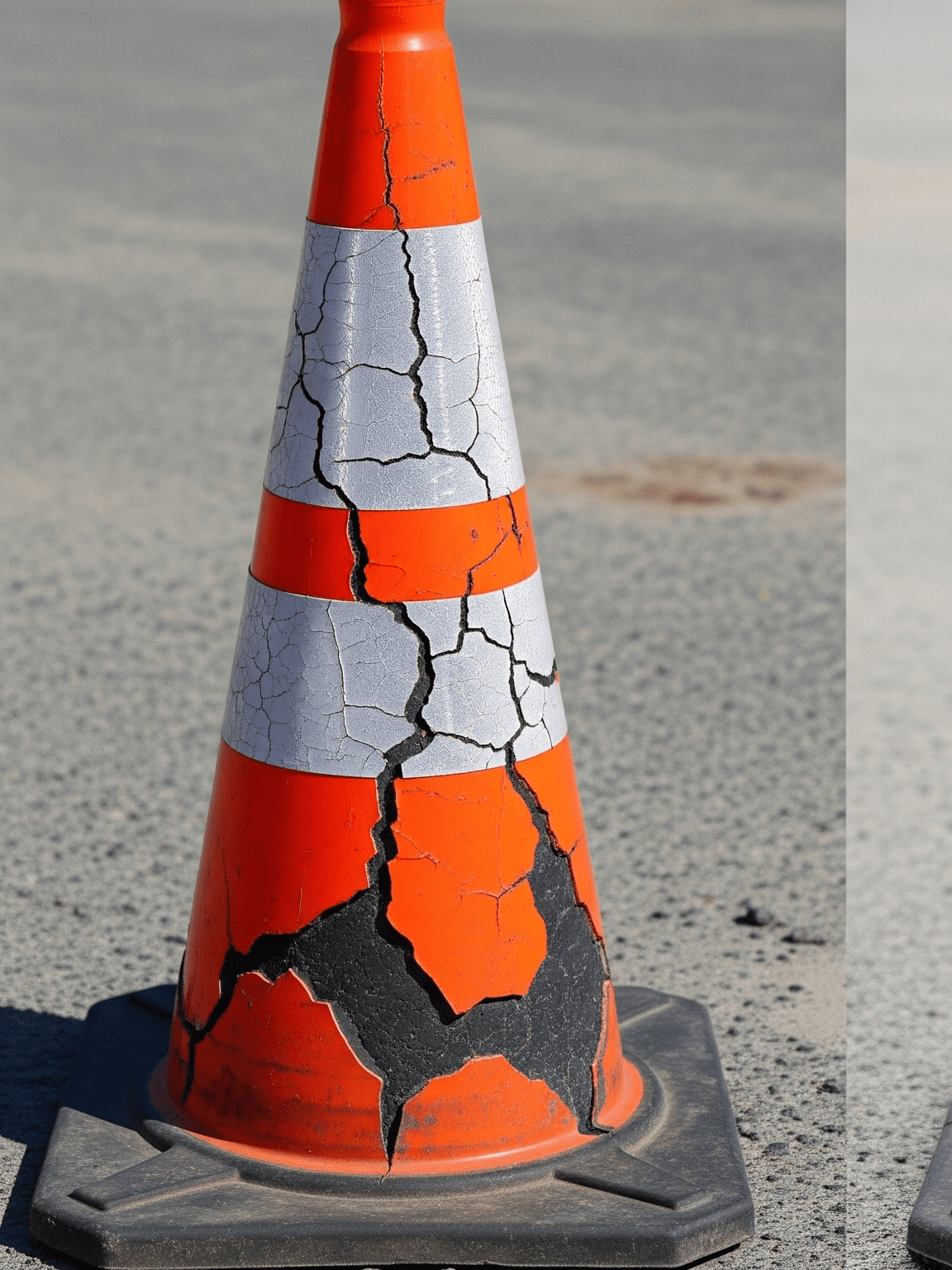
In subzero environments, conventional plastics become brittle and may crack when impacted by vehicles or equipment. Cones also risk becoming rigid, which makes them unsafe if struck.
To mitigate this, cold-weather cones include elastomeric additives that maintain flexibility and prevent shattering, even at -50°C.
Moisture and Freeze-Thaw Cycles
In areas that experience frequent freezing and thawing, moisture infiltration can damage the cone’s surface or cause base separation. Cones designed for such regions use sealed polymer structures that repel moisture and retain elasticity through repeated cycles.
Selecting the Right Material for Regional Conditions
When deploying traffic cones across multiple locations, it’s critical to match the material type to environmental conditions:
- Desert or Tropical Climates: Choose UV-stabilized PVC or composite polymer cones.
- Arctic or Cold-Weather Operations: Select LDPE or vulcanized rubber cones with flexible bases.
- High-Altitude or Mountainous Areas: Opt for TPR cones that handle wide temperature fluctuations.
- Coastal or Humid Regions: Use sealed polymer cones that resist corrosion and moisture.
In national or municipal contracts, specifying materials by climate zone ensures consistent performance and longer lifespan across varied regions.
Manufacturing Enhancements for Temperature Stability
Modern cone manufacturers employ several production enhancements to improve temperature stability:
- UV inhibitors to prevent fading and degradation from sunlight exposure
- Elastomer blends for flexibility across wide temperature ranges
- Dual-layer molding to combine flexible exteriors with rigid internal supports
- Colorfast pigments that maintain high-visibility orange under UV stress
- Weighted rubber bases designed for both hot and cold weather performance
These improvements ensure that cones remain functional, visible, and compliant year-round, reducing total cost of ownership.
Deployment and Maintenance Best Practices
Even with high-quality materials, proper deployment and maintenance practices are essential for long-term performance.
- Avoid prolonged direct sunlight storage: Store cones in shaded areas to extend color life.
- Inspect for cracks or softening: Replace cones showing material fatigue or discoloration.
- Use weighted bases in windy or icy conditions: Ensures stability and prevents toppling.
- Clean regularly: Dirt and salt buildup can degrade reflectivity and material finish.
- Rotate inventory: Periodically switch cones between indoor and outdoor use to balance wear.
Municipal and industrial facilities that follow these maintenance practices often extend cone life by 30% or more, especially in harsh weather zones.
The Future of Temperature-Stable Traffic Cones
The growing demand for durable, eco-friendly, and all-weather cones is driving innovation in material science. Future developments are likely to focus on:
- Biodegradable elastomers that maintain performance without environmental impact
- Self-healing polymers for minor surface damage recovery
- Smart cones with embedded temperature sensors for remote monitoring in industrial yards
Such innovations will allow organizations to deploy cones more efficiently, reduce waste, and ensure consistent safety standards in any climate.
Conclusion
Temperature-stable materials are the foundation of reliable traffic cone performance in extreme climates. Whether operating in blistering heat, freezing cold, or regions with constant weather fluctuations, the right material choice ensures consistent visibility, safety, and compliance.
PVC, thermoplastic rubber, LDPE, vulcanized rubber, and composite polymers each offer unique strengths for specific conditions, and selecting the right one depends on temperature range, UV exposure, and environmental demands.
By combining high-quality materials with proper deployment and maintenance practices, organizations can significantly extend the lifespan of their traffic cones while maintaining the highest standards of safety and operational efficiency across all commercial and industrial environments.
Looking for a custom traffic cones manufacturer or supplier? Struggling to find the right factory to bring your vision to life? We’ve got you covered! At our place, we craft top-quality traffic cones with precision and care. Big or small, your needs are our mission. Let’s launch your cones project and take your product line to the next level! Click here to contact