
Blind spots represent one of the most persistent and dangerous safety challenges in warehouse and industrial environments. Forklift operators navigate intersecting aisles without clear visibility of approaching traffic, pedestrians emerge from behind stacked inventory into vehicle pathways, and equipment operators maneuver in congested spaces where structural columns and machinery obstruct sight lines. These visibility limitations contribute to thousands of workplace accidents annually, resulting in injuries, equipment damage, operational disruptions, and significant financial losses. Convex safety mirrors offer proven solutions for eliminating blind spots and creating safer industrial workplaces.
Understanding Blind Spot Hazards in Industrial Environments
Industrial facilities present unique visibility challenges that don’t exist in typical office or retail settings. Warehouse layouts feature long aisles separated by tall racking systems that create perpendicular intersections where collisions frequently occur. Manufacturing floors include production equipment, material storage areas, and quality control stations positioned in ways that create numerous blind corners and obstructed sight lines.
The consequences of blind spot accidents extend far beyond immediate injury risks. A forklift collision with a pedestrian can result in catastrophic injuries, extended worker’s compensation claims, OSHA citations, and potential litigation. Equipment damage from vehicle-to-vehicle impacts disrupts operations, requires costly repairs, and may trigger insurance rate increases. Even near-miss incidents consume management time, require incident reporting, and erode workplace confidence in safety systems.
Convex blind spot mirror installations address these hazards by providing visual information about areas that would otherwise remain invisible. A properly positioned mirror transforms a dangerous blind intersection into a monitored zone where operators receive advance warning of approaching traffic, pedestrians, or equipment. This advance warning creates opportunity for defensive action that prevents accidents rather than simply reacting to emergencies after they develop.
Strategic Mirror Placement for Maximum Effectiveness
Effective blind spot elimination requires systematic facility assessment to identify all locations where visibility limitations create accident risks. This assessment should involve facility managers, safety personnel, equipment operators, and warehouse workers who understand real-world traffic patterns and historical near-miss locations. Their insights reveal blind spots that might not be apparent during management walkthroughs.
Warehouse aisle intersections represent the most obvious mirror installation locations. Where perpendicular aisles meet, neither forklift operators nor pedestrians can see approaching traffic until they’re already committed to the intersection. A convex safety mirror positioned to show both approach directions gives operators clear visibility before entering the intersection, allowing them to yield appropriately or proceed safely based on actual conditions rather than assumptions.
Loading dock areas create multiple blind spot scenarios requiring mirror coverage. Trucks backing into dock positions cannot see pedestrians, other vehicles, or dock equipment positioned behind them. Interior dock workers need visibility of approaching trucks and adjacent dock positions to coordinate activities safely. Convex traffic safety mirrors positioned to cover these sight lines provide the visual information necessary for safe coordination of complex loading and unloading operations.
Manufacturing floor environments present more complex placement challenges due to varied equipment layouts and dynamic workflow patterns. Production lines, assembly stations, and material handling areas each create unique blind spots requiring customized mirror solutions. A comprehensive installation program might include mirrors at equipment corners, near material handling crossings, and at transitions between production zones where different types of traffic intersect.
Parking and vehicle circulation areas within industrial facilities need mirror coverage at exit points, blind curves, and locations where vehicle traffic crosses pedestrian pathways. Outdoor facilities with limited lighting particularly benefit from convex mirror installations that provide visibility without requiring powered systems or complex infrastructure.
Sizing and Positioning Considerations for Industrial Applications
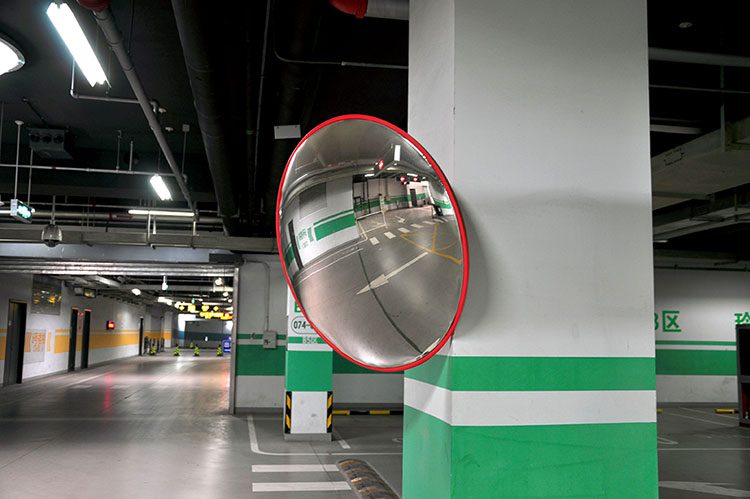
Industrial blind spot elimination requires careful attention to mirror sizing and positioning. The viewing distances typical in warehouse environments influence appropriate mirror diameters. A narrow aisle intersection might require only a 12-inch mirror, while wider facilities with longer sight lines may need 18-inch or 24-inch models to ensure clear visibility.
Mounting height significantly affects mirror effectiveness. Positioning mirrors too high places them outside typical operator sight lines, while mounting too low risks damage from passing equipment. Most industrial installations place mirrors at 7-10 feet height, balancing visibility with protection from impact.
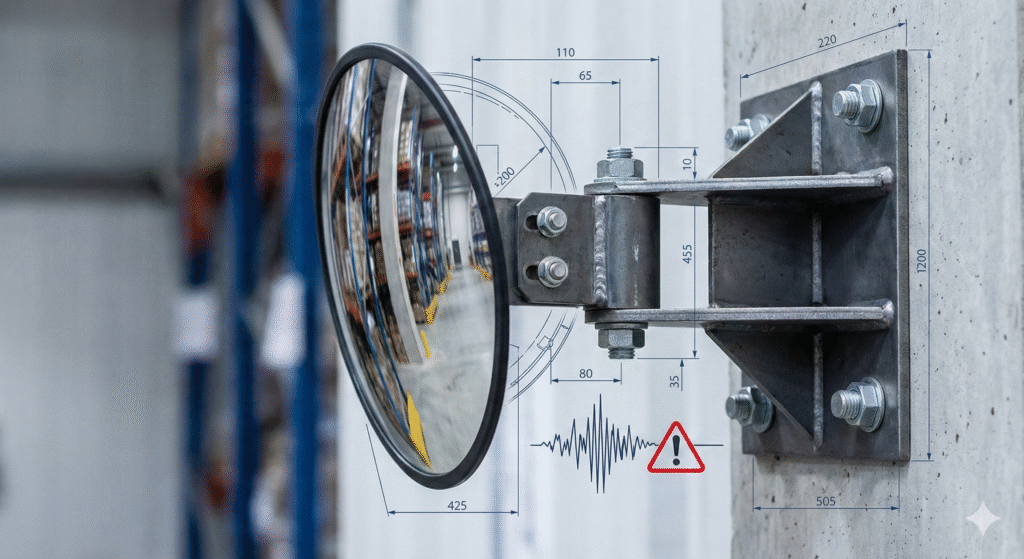
Angle adjustment capabilities allow fine-tuning of mirror coverage after installation. Quality convex security mirror products feature adjustable mounting brackets that permit repositioning without complete reinstallation, accommodating operational changes while maintaining optimal coverage.
Multiple-mirror installations may be necessary at complex intersections where a single mirror cannot adequately cover all approach vectors. Installing two or three smaller mirrors positioned for specific sight lines often delivers superior results, ensuring complete coverage while optimizing each mirror’s contribution.
Addressing Common Industrial Blind Spot Scenarios
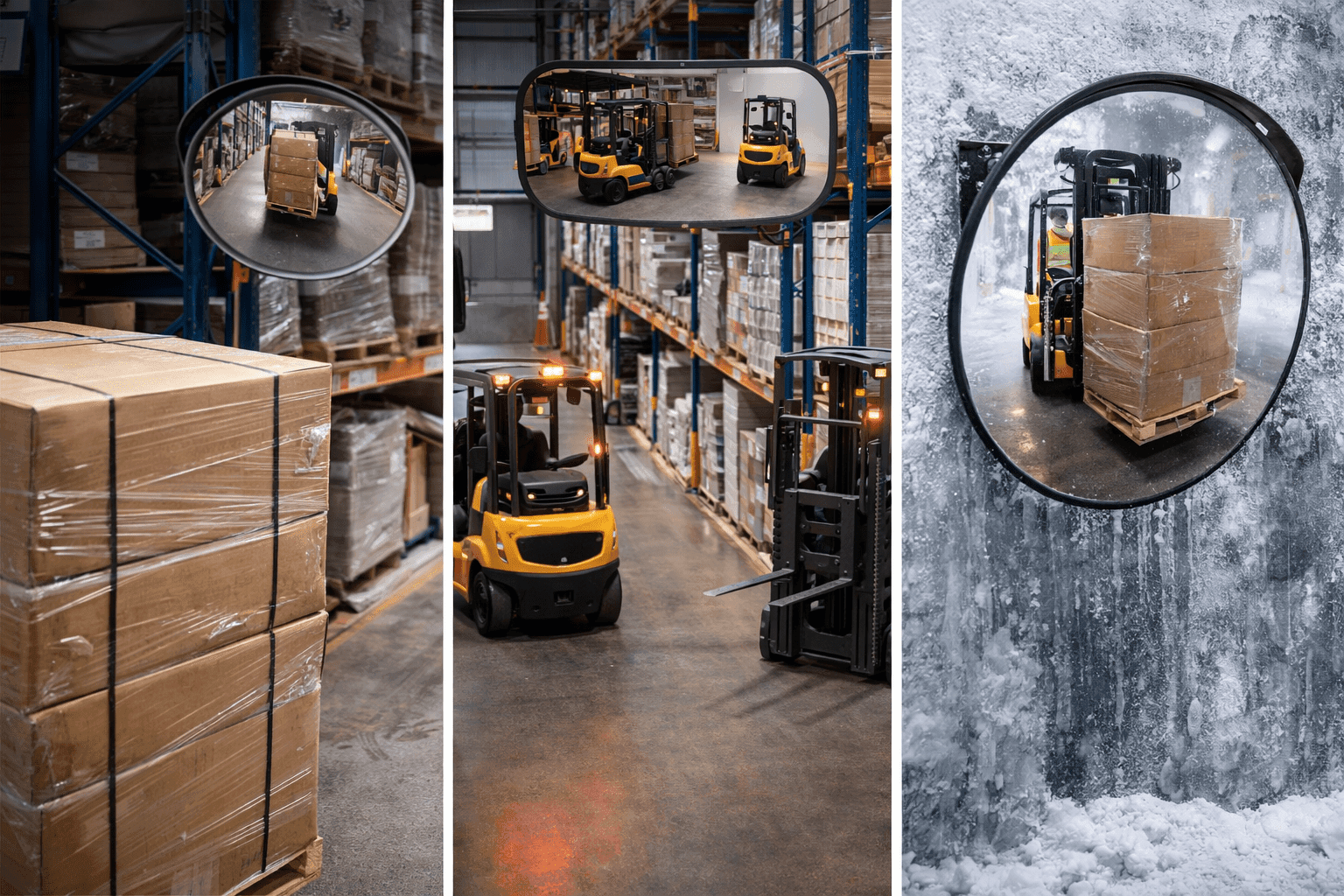
Forklift operations create some of the most dangerous blind spot situations in industrial settings. When forklifts carry loads, the load itself often obstructs the operator’s forward view, requiring backward travel with extremely limited visibility. A convex traffic mirror positioned to show the backup path allows operators to monitor their travel direction while maintaining awareness of obstacles and pedestrians.
Warehouse racking systems create perpendicular aisle intersections that represent frequent accident locations. Operators traveling down main aisles cannot see forklifts or personnel emerging from cross aisles until collision becomes unavoidable. Installing safety mirror convex units at these intersections gives operators visibility down cross aisles before committing to the intersection.
Cold storage and freezer facilities present particular challenges due to condensation, frost buildup, and temperature extremes. These environments require specialized outdoor convex safety mirror models engineered for temperature extremes and condensation resistance. Anti-fog treatments and robust construction ensure mirrors maintain visibility despite environmental challenges.
Material handling equipment transitions between facility zones often cross pedestrian pathways or intersect with different equipment types. Mirrors positioned to provide mutual visibility between material handlers and pedestrians create awareness that allows safe coordination through shared spaces.
Integration with Comprehensive Safety Programs
While convex safety mirrors effectively eliminate blind spots, they deliver maximum value when integrated into comprehensive safety programs. Combining mirrors with clear signage, designated traffic lanes, speed limits, and operator training creates layered safety systems that address visibility challenges through multiple mechanisms.
Employee training should specifically address mirror usage and interpretation. Operators need to understand that the wide-angle view provided by convex mirrors compresses distance, making objects appear farther away than they actually are. Training programs that explain this optical effect help operators use mirrors effectively.
Maintenance protocols ensure mirrors maintain effectiveness over time. Dirty or damaged mirrors provide degraded visibility that defeats their safety purpose. Regular cleaning schedules, periodic inspection for damage or misalignment, and prompt replacement should be incorporated into facility maintenance programs.
Signage integration reinforces mirror effectiveness by directing attention to mirrors and reminding operators to check before proceeding. Simple “Check Mirror” signs positioned before intersections remind operators to actively look rather than passively proceeding without verification.
Quantifying Safety Improvements and ROI
Organizations implementing comprehensive convex mirror programs consistently document significant reductions in blind spot accidents and near-miss incidents. Facilities tracking safety metrics before and after mirror installation typically report 40-70% reductions in intersection-related incidents within the first year. These improvements translate directly to reduced injury claims, lower insurance costs, and decreased equipment damage expenses.
The return on investment for industrial mirror programs often becomes positive within months. Consider a warehouse experiencing frequent forklift-pedestrian near-misses. Even incidents without injuries require investigation and remedial action consuming management time. A comprehensive mirror program costing $5,000-$10,000 that eliminates 80% of these incidents delivers immediate operational value beyond direct cost savings.
Insurance providers recognize the risk reduction value of properly implemented mirror systems. Many carriers offer premium reductions for facilities demonstrating proactive safety measures including blind spot elimination programs. These premium reductions continue year after year, providing ongoing financial benefits.
Productivity improvements represent an often-overlooked benefit of eliminating blind spots. When operators confidently navigate facilities without constant concern about unseen hazards, they maintain more consistent workflow patterns. The cumulative effect adds up to measurable throughput improvements that enhance operational performance.
Technology Integration and Advanced Solutions
Modern industrial facilities increasingly combine traditional convex mirrors with complementary technologies that create redundant safety layers. Proximity sensors detect approaching vehicles or pedestrians and trigger warning lights or alarms, providing audible alerts that supplement visual information from mirrors.
Some organizations implement LED-illuminated mirror frames that enhance visibility during low-light conditions. Solar-powered LED systems eliminate wiring requirements while ensuring mirrors remain visible during evening and overnight shifts.
Camera systems provide alternatives to mirrors in some applications, particularly where viewing angles or distances exceed mirror capabilities. However, cameras require power, maintenance, and monitoring infrastructure that mirrors don’t need. Many facilities find that strategic camera deployment at challenging locations, combined with comprehensive mirror coverage, optimizes both effectiveness and cost-efficiency.
Selecting Appropriate Mirror Products for Industrial Use
Industrial environments demand robust mirror construction capable of withstanding impacts, vibration, temperature variations, and exposure to chemicals or contaminants. Industrial-grade convex safety mirrors feature reinforced construction, impact-resistant materials, and mounting systems engineered for warehouse and manufacturing challenges.
Polycarbonate or acrylic reflective surfaces resist shattering from impacts that would destroy glass mirrors. This impact resistance proves essential in environments where equipment contacts or dropped materials might strike mirrors. The flexibility of these materials allows them to absorb impact energy without catastrophic failure.
Mounting bracket design significantly affects long-term reliability. Industrial mirrors experience constant vibration from passing equipment and machinery. Quality mounting systems feature locking mechanisms that prevent gradual position drift, maintaining optimal viewing angles throughout years of service.
For facilities with overhead material handling systems or areas where objects might fall onto mirrors, protective cages or guards shield mirrors from damage while maintaining visibility.
Implementation Planning and Execution
Successful industrial mirror programs begin with comprehensive facility assessment that identifies all significant blind spots requiring coverage. This assessment should document specific locations, viewing distance requirements, environmental conditions, and any special challenges that might influence product selection.
Prioritizing installation locations allows facilities to address the highest-risk areas first while spreading implementation costs across multiple budget periods if necessary. Locations with documented accident history should receive priority, followed by areas with similar risks.
Professional installation ensures optimal mirror positioning and secure mounting. While simple installations may be appropriate for in-house maintenance teams, complex mounting locations often benefit from professional installers who understand the relationship between mounting position and effective coverage.
Post-installation verification confirms that mirrors provide intended coverage and that operators can effectively use them during normal operations. This verification should involve actual equipment operators traveling typical pathways and confirming that mirrors provide clear visibility. Adjustments identified during verification ensure installations deliver maximum effectiveness.
Continuous Improvement and System Evolution
Industrial facilities evolve constantly through layout modifications, equipment changes, and operational adjustments. Mirror systems must evolve alongside these changes to maintain comprehensive blind spot coverage. Regular facility safety audits should reassess mirror effectiveness and identify new blind spots that emerge from operational changes.
Employee feedback provides valuable insight into mirror system performance. Operators who use mirrors daily often identify coverage gaps or positioning issues that aren’t apparent during management inspections. Creating mechanisms for employees to report mirror concerns ensures that operational knowledge informs ongoing improvements.
The investment in convex blind spot mirror systems represents one of the most cost-effective safety improvements available to industrial facilities. By systematically eliminating visibility hazards and providing operators with visual information necessary for safe navigation, comprehensive mirror programs protect employees while delivering measurable operational and financial benefits that justify implementation costs many times over.
Looking for a custom convex mirror manufacturer or supplier? Struggling to find the right factory to bring your vision to life? We’ve got you covered! At our place, we craft top-quality convex mirrors with precision and care. Big or small, your needs are our mission. Let’s launch your mirror project and take your product line to the next level! Click here to contact