
Government agencies at federal, state, and municipal levels invest millions and sometime billions annually in traffic safety equipment, facility infrastructure, and public safety systems. Convex mirrors represent essential components within these safety ecosystems, deployed across transportation departments, military installations, correctional facilities, and public works operations. Procurement officers and contracting specialists responsible for acquiring convex mirror systems must navigate complex testing standards, performance specifications, and compliance requirements that ensure taxpayer funds purchase equipment meeting rigorous quality benchmarks while satisfying regulatory mandates and operational durability expectations.
Regulatory Framework Governing Government Mirror Procurement
Federal acquisition regulations establish the foundational requirements for government purchasing, with supplementary standards from transportation agencies, defense departments, and facility management divisions providing sector-specific guidance. The Federal Acquisition Regulation (FAR) mandates that agencies procure products meeting applicable consensus standards developed by organizations including ASTM International, the American National Standards Institute (ANSI), and the Manual on Uniform Traffic Control Devices (MUTCD) where traffic safety equipment is concerned.
State departments of transportation maintain approved product lists requiring manufacturers to demonstrate compliance with established testing protocols before products qualify for procurement consideration. These qualification processes protect government buyers from substandard equipment while streamlining vendor evaluation by confirming baseline performance capabilities. Purchasing departments benefit from referencing these pre-qualified product lists when developing solicitation documents, reducing the technical evaluation burden while maintaining quality standards.
Military specifications (MIL-SPEC) and federal specifications (FED-SPEC) provide detailed performance criteria for equipment destined for defense installations and federal facilities. These specifications address environmental exposure conditions, impact resistance requirements, and operational lifespan expectations that exceed commercial standards. Contracting officers procuring mirrors for defense applications must verify that proposed products have undergone testing according to relevant military specifications or possess documented equivalency determinations from qualified testing laboratories.
Optical Performance Testing and Quality Assurance
The fundamental purpose of convex mirrors, providing expanded fields of view to eliminate blind spots, depends on precise optical characteristics that must be verified through standardized testing protocols. Government procurement specifications should define acceptable ranges for key optical parameters including focal length, distortion characteristics, and image clarity that ensure mirrors deliver intended safety benefits throughout their service life.
Reflective Surface Quality and Distortion Metrics
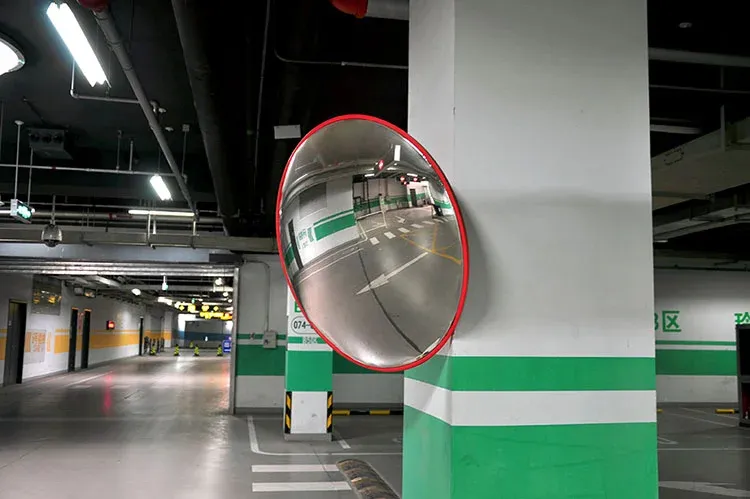
High-quality convex mirrors maintain consistent curvature across the reflective surface, producing uniform image magnification without localized distortion that could mislead drivers about approaching vehicle positions or speeds. Testing protocols measure surface regularity using optical profilometry equipment that detects variations in curvature exceeding specified tolerances. Government specifications typically require surface variations not exceeding 2% from nominal radius across the mirror face, with tighter tolerances of 1% specified for high-precision applications including military security checkpoints and controlled access facilities.
Optical distortion testing evaluates how accurately mirrors reproduce real-world geometry, particularly at mirror edges where curvature transitions create the greatest potential for image warping. Test methodologies position calibrated grid patterns at specified distances from mirrors, photographing the reflected images and analyzing geometric relationships between grid intersections. Acceptable mirrors demonstrate minimal distortion with grid lines appearing uniformly spaced and perpendicular throughout the reflected image. Procurement specifications should require distortion analysis documentation from independent testing laboratories accredited under ISO/IEC 17025 standards, ensuring measurement validity and reproducibility.
Reflectivity Standards and Light Transmission
Mirror effectiveness depends on adequate reflectivity that produces bright, clearly visible images under diverse lighting conditions encountered in field applications. Specular reflectance testing measures the percentage of incident light returned from the mirror surface, with government standards typically requiring minimum reflectivity of 85% for first-surface mirrors and 90% for second-surface mirrors used in protected environments. Testing protocols follow ASTM E1651 standard test methods for reflectance, utilizing calibrated spectrophotometers that measure reflectivity across visible wavelengths.
Acrylic mirrors commonly specified for government applications undergo additional testing for light transmission characteristics, ensuring adequate image brightness despite the optical medium between the reflective coating and viewer. Procurement officers should specify minimum light transmission of 92% for new acrylic substrates, with testing conducted according to ASTM D1003 procedures that quantify both total and diffuse light transmission. These metrics verify that mirror materials maintain optical clarity without internal defects or manufacturing imperfections that degrade image quality.
Durability Testing and Environmental Resistance
Government installations subject convex mirrors to harsh environmental conditions including temperature extremes, moisture exposure, wind loading, and potential impact from vehicles or equipment. Comprehensive testing protocols verify that mirrors maintain structural integrity and optical performance throughout their expected service life, typically specified as 10 to 15 years for exterior installations.

Weathering Resistance and UV Stability
Extended outdoor exposure subjects mirror materials to ultraviolet radiation that degrades many polymers, causing discoloration, embrittlement, and surface crazing that compromises optical performance. Accelerated weathering tests simulate years of UV exposure in compressed timeframes, exposing mirror samples to controlled radiation intensities while monitoring changes in reflectivity, color stability, and mechanical properties. ASTM G154 and ASTM G155 define standardized accelerated weathering protocols utilizing fluorescent UV lamps or xenon arc sources that reproduce solar radiation spectra.
Government procurement specifications should require mirrors to demonstrate less than 5% reflectivity loss after 2,000 hours of accelerated weathering exposure, equivalent to approximately 5 years of outdoor service in moderate climates. Color stability testing ensures that acrylic substrates do not yellow significantly, maintaining neutral color reproduction that accurately represents approaching vehicles and environmental conditions. Delta E color change measurements should remain below 3.0 after weathering exposure, indicating minimal perceptible color shift.
Temperature Cycling and Thermal Shock Resistance
Government facilities across diverse climate zones expose mirrors to extreme temperature variations, from arctic conditions at northern installations to desert heat at southwestern facilities. Thermal cycling tests subject mirrors to repeated temperature fluctuations between -40°F and 140°F, evaluating material stability, adhesive bond integrity, and mounting hardware performance across operational temperature ranges. Test protocols specify minimum cycle counts of 100 complete temperature transitions, with post-test inspection verifying no delamination, cracking, or optical degradation.
Mounting hardware undergoes separate thermal evaluation, particularly for dissimilar metal assemblies where differential thermal expansion creates stress at fastener interfaces. Bolted connections must maintain pre-load across temperature cycles without loosening, while welded joints resist cracking from thermal fatigue. Contracting specialists procuring mirror systems for extreme climate applications should require thermal cycling certification from manufacturers, documenting testing procedures and pass/fail criteria.
Impact Resistance and Vandalism Mitigation
Public installations face deliberate vandalism and accidental impact that can render mirrors inoperative or create hazardous conditions from shattered materials. Government testing standards evaluate impact resistance using standardized projectiles and impact energies that simulate real-world damage scenarios, ensuring mirrors either withstand impacts without damage or fail in controlled manners that minimize injury risk.
Projectile Impact Testing Protocols
ANSI Z97.1 establishes standardized impact testing methods for safety glazing materials, protocols that translate directly to convex mirror evaluation. Testing procedures specify impact energies and projectile characteristics based on mirror installation height and anticipated exposure conditions. Mirrors mounted below 60 inches above floor level face higher impact risk, requiring testing at elevated energy levels to verify adequate resistance.
Acrylic mirrors designated for government procurement should demonstrate resistance to 400-inch-pound impacts without penetration, producing minimal fragmentation if failure occurs. Polycarbonate alternatives offer superior impact resistance, withstanding multiple impacts at the same location without catastrophic failure. Procurement specifications should define required impact resistance levels based on installation location risk assessment, with high-security applications including correctional facilities and military installations requiring the most stringent impact performance.
Vandal-Resistant Coatings and Surface Treatments
Anti-graffiti coatings and scratch-resistant surface treatments extend mirror service life in public environments where vandalism represents ongoing maintenance challenges. Testing protocols evaluate coating adhesion, scratch resistance, and cleanability using standardized procedures that simulate typical vandalism methods and cleaning responses. Taber abraser testing (ASTM D4060) quantifies coating resistance to surface scratching, measuring weight loss and optical clarity degradation after specified abrasion cycles.
Chemical resistance testing exposes coated samples to common graffiti materials including spray paint, permanent markers, and adhesive labels, followed by cleaning with approved solvents to verify that coatings withstand repeated cleaning without degradation. Government specifications should require coatings to survive minimum 25 graffiti application and removal cycles without visible damage, ensuring reasonable service intervals before requiring replacement due to accumulated surface damage.
Mounting Hardware Verification and Load Testing
The most sophisticated mirrors deliver no safety benefit if mounting systems fail under operational loads or environmental stresses. Government procurement must address hardware testing requirements separately from mirror optical performance, ensuring complete systems meet safety and durability standards throughout their service life.
Structural Load Capacity Testing
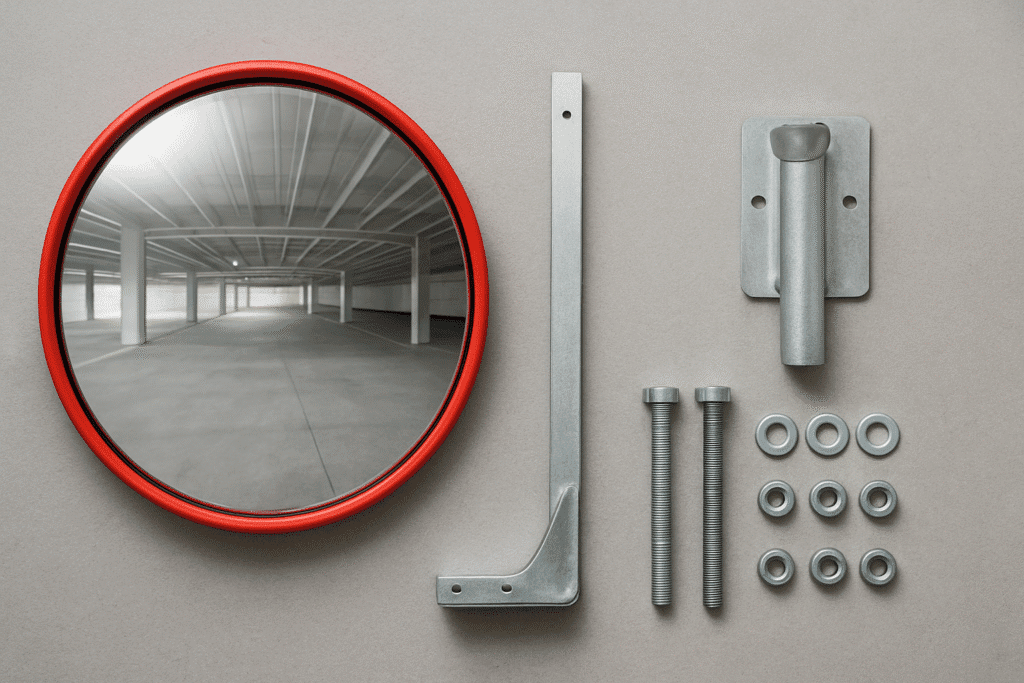
Mounting brackets, poles, and fastening systems undergo static load testing that applies forces exceeding maximum anticipated service loads, typically specified as 1.5 to 2.0 times calculated wind loads for the installation location. Load testing fixtures apply measured forces to mounting assemblies while monitoring deflection and permanent deformation. Acceptable hardware systems withstand ultimate test loads without failure, returning to original geometry when loads are removed without permanent deformation exceeding specified limits.
Wind load calculations for mirror installations must account for both frontal area and the drag coefficient of curved reflective surfaces, which capture wind more effectively than flat surfaces. Civil engineering analysis determines site-specific wind pressures based on local wind speed data and structural exposure categories, with procurement specifications requiring mounting hardware certified for calculated design loads. Testing documentation should reference ASCE 7 wind load provisions and demonstrate adequate safety factors for anticipated exposure conditions.
Fatigue Testing and Cyclic Loading
Repeated wind gusts, vehicle-induced vibration, and thermal cycling subject mounting hardware to cumulative fatigue damage that can precipitate sudden failures without visible warning. Fatigue testing protocols apply cyclic loads simulating years of operational stress in compressed test periods, identifying potential failure modes and validating design life predictions. Test regimens typically specify 100,000 to 1,000,000 load cycles at stress levels representing typical service conditions, with periodic inspection documenting crack initiation or propagation.
Welded mounting assemblies require particular scrutiny for fatigue resistance, as weld defects concentrate stress and accelerate crack growth. Non-destructive testing including dye penetrant inspection, magnetic particle testing, or radiographic examination verifies weld quality before fatigue testing, ensuring that test results reflect actual production quality rather than anomalous test article conditions. Government contracting officers should require manufacturers to maintain welding procedure specifications certified by the American Welding Society, documenting qualified welding processes and welder certifications.
Compliance Documentation and Certification Requirements
Government procurement regulations demand comprehensive documentation demonstrating product compliance with applicable standards. Manufacturers responding to solicitations must provide test reports, material certifications, and quality system documentation that enable contracting officers to verify specification conformance without independent testing of each procurement lot.
Third-Party Testing Laboratory Accreditation
Testing validity depends critically on laboratory competence and measurement accuracy, factors verified through third-party accreditation programs administered by organizations including the American Association for Laboratory Accreditation (A2LA) and the ANSI-ASQ National Accreditation Board (ANAB). Procurement specifications should require testing by laboratories holding ISO/IEC 17025 accreditation for specific test methods cited in specifications, ensuring testing personnel possess appropriate qualifications and laboratories maintain calibrated equipment traceable to national standards.
Test reports accompanying proposals must identify the performing laboratory, testing standards followed, sample identification linking tested items to proposed products, and complete test results including raw data supporting pass/fail determinations. Incomplete test documentation represents grounds for proposal rejection, as contracting officers cannot verify compliance without adequate supporting evidence. Procurement offices should maintain checklists documenting required certification elements, ensuring consistent evaluation across competing proposals.
Material Traceability and Quality Management Systems
Government contracts frequently require manufacturers to maintain material traceability systems documenting the origin and properties of raw materials incorporated in delivered products. Material certifications from suppliers verify that acrylic sheet, stainless steel hardware, and coating systems meet specified grades and compositions. ISO 9001 quality management system certification provides additional assurance that manufacturers maintain documented processes controlling production quality and enabling identification of nonconforming products before shipment.
Defense contracts and critical infrastructure applications may require manufacturers to implement supply chain risk management programs verifying that materials and components originate from approved sources. These counterfeit prevention measures protect government agencies from substandard materials substituted into supply chains, which could compromise product performance in safety-critical applications. Contracting officers procuring mirrors for sensitive applications should verify manufacturer participation in relevant supply chain security programs appropriate to the specific government sector.

Performance-Based Specifications and Life-Cycle Testing
Progressive government procurement strategies emphasize performance-based specifications that define required outcomes rather than prescriptive design requirements, encouraging innovation while maintaining quality standards. Performance specifications for convex mirrors might define minimum service life, maintenance intervals, and warranted performance characteristics, with manufacturers proposing solutions meeting these functional requirements through diverse technical approaches.
Accelerated Life Testing Protocols
Life cycle testing condenses years of operational stress into abbreviated test periods, enabling validation of predicted service life before full-scale deployment. Combined environmental testing exposes mirror assemblies to simultaneous temperature cycling, humidity exposure, UV radiation, and mechanical vibration that simulate accumulated field stress. Test articles undergo periodic functional evaluation throughout exposure periods, documenting any performance degradation and identifying incipient failure modes requiring design modification.
Government agencies implementing performance-based procurement should specify minimum acceptable service life, typically 10 years for exterior mirror installations, with manufacturers required to demonstrate compliance through accelerated testing or documented field performance data from similar applications. This approach shifts risk to suppliers while enabling innovative solutions that may exceed prescriptive specification requirements through advanced materials or novel construction methods.
Vendor Qualification and Approved Product Lists
Many government agencies maintain approved product lists or qualified manufacturer lists that streamline procurement by pre-qualifying suppliers meeting established performance standards. These qualification programs require manufacturers to submit products for independent testing, provide quality system documentation, and demonstrate production capacity adequate for government contract requirements. Once qualified, manufacturers gain access to multiple procurement opportunities without repeatedly demonstrating compliance for each individual solicitation.
Procurement officers benefit from leveraging existing qualification programs when available, reducing evaluation workload while accessing products proven to meet stringent government standards. Federal supply schedules administered by the General Services Administration provide another vehicle for accessing pre-qualified suppliers, with contract holders having already negotiated pricing and demonstrated regulatory compliance. State cooperative purchasing programs extend these benefits to local government agencies, enabling smaller municipalities to access favorable pricing and qualified suppliers without independent solicitation processes.
Sustainable Procurement Considerations
Federal and state sustainability initiatives increasingly influence government purchasing decisions, with mandates requiring consideration of environmental impacts throughout product lifecycles. Convex mirror procurement specifications should address recyclable content, manufacturing energy consumption, and end-of-life disposal characteristics that minimize environmental footprints while meeting operational requirements.
Recycled content requirements specify minimum percentages of post-consumer or post-industrial recycled materials incorporated in products, with manufacturers providing certifications documenting compliance. However, recycled content mandates must be balanced against performance requirements, as some recycled materials may not meet optical quality or durability standards required for safety-critical applications. Procurement officers should engage environmental specialists and technical advisors to develop specifications integrating sustainability objectives with operational performance requirements.
Conclusion (Rigorous Standards Protecting Public Investment)
Government procurement of convex mirror systems demands attention to comprehensive testing standards that verify optical performance, environmental durability, and structural integrity throughout extended service lives. Contracting officers who specify appropriate testing requirements, demand credible certification documentation, and leverage qualified supplier programs protect taxpayer investments while ensuring deployed equipment delivers intended safety benefits. As testing methodologies evolve and new materials emerge, government procurement professionals must maintain awareness of current standards and best practices, adapting specifications to incorporate proven innovations while maintaining rigorous quality expectations that serve the public interest.
Looking for a custom convex mirror manufacturer or supplier? Struggling to find the right factory to bring your vision to life? We’ve got you covered! At our place, we craft top-quality convex mirrors with precision and care. Big or small, your needs are our mission. Let’s launch your mirror project and take your product line to the next level! Click here to contact