
Most speed bump sales do not end with the bump. A contractor who buys center sections also needs ends, anchors, reflectors and often a sign. If the distributor cannot supply them, the customer goes elsewhere and takes the next order too. Speed bump end caps are the clearest example, because every installed run needs two of them.
This guide is written for distributors, importers, contractors and procurement officers who buy modular rubber speed bumps in volume. It explains what each accessory does, how to match parts to bumps and surfaces, and how to plan stock. It also covers MOQ, OEM and quality checks, so your accessory range supports sales instead of creating returns.
What Speed Bump End Caps Do and Why Distributors Should Stock Them
Accessories look like small items, but they decide whether an installation looks finished and performs well. They also lift the value of each order. A distributor with a complete range sells more per customer, while one without it sells only the bump.
1. The Function of an End Cap
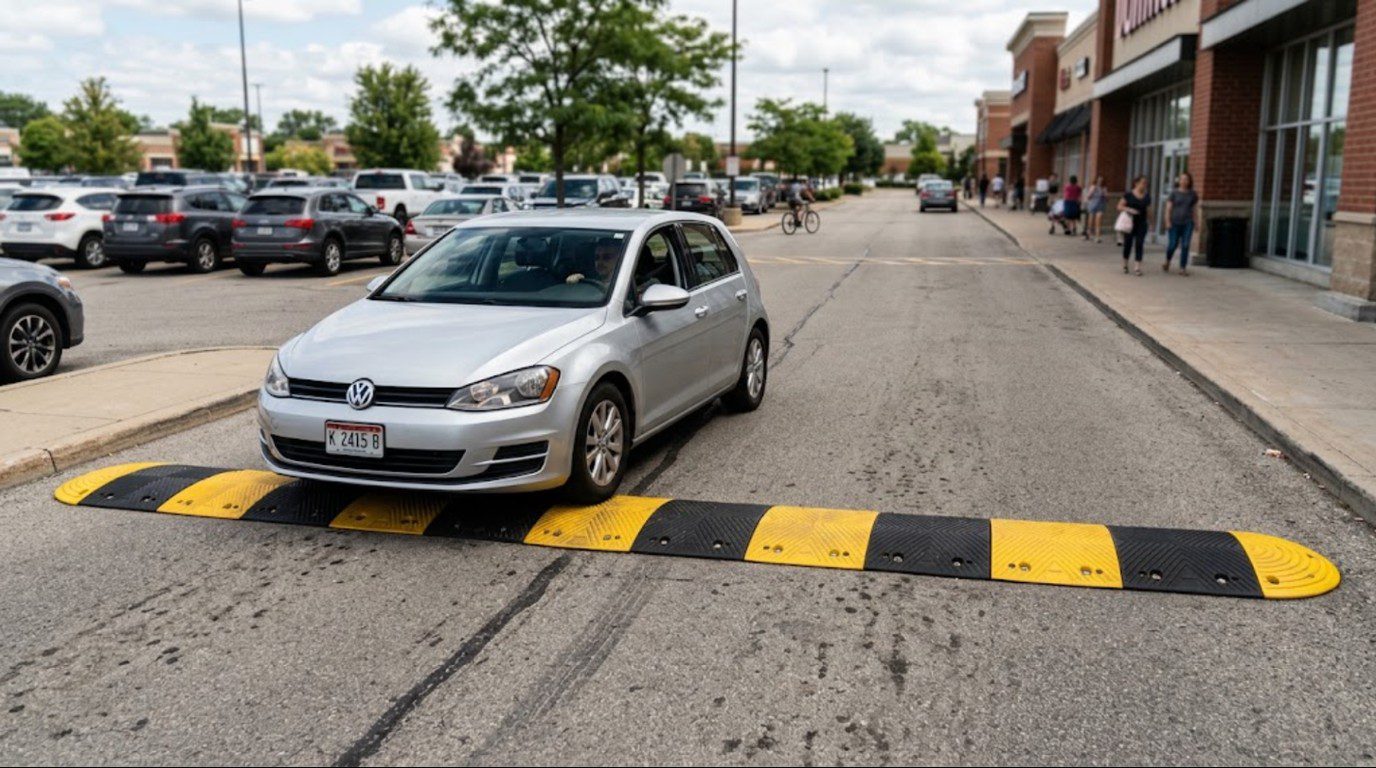
A rubber speed bump end cap finishes the end of a run with a tapered or rounded profile. It gives vehicles a smoother entry onto the bump, and it reduces the risk of a snag or trip at the edge. In addition, it provides extra anchor points at the end of the run, where forces are highest. One retailer notes that its end cap has a raised edge that helps protect the reflective tape from peeling. This is a real benefit, because an exposed tape edge can peel under traffic.
2. The Attach-Rate Logic
The arithmetic is simple. Every run of speed bumps has two ends, so every run needs two speed bump end caps. A customer who buys ten runs needs twenty caps, regardless of how many center sections each run uses. This makes end caps a predictable companion product. As a result, distributors can forecast them directly from bump sales.
3. Customer Expectations and Fewer Returns
Contractors and facility managers want a complete installation in one delivery. If caps or anchors are missing, the crew waits, and the customer blames the supplier. Therefore, a distributor who offers matched kits avoids these delays. Matched kits also reduce returns caused by wrong parts. Our complete installation guide for rubber speed bumps in commercial facilities shows what a full installation requires.
Core Accessory Range: End Caps, Corner Pieces and Joiners
A good accessory range covers the finishing parts, the connecting parts and the visibility parts. Each product type has its own demand pattern. Knowing the range helps you choose where to invest. The sections below describe the main items.
1. Speed Bump End Caps in Different Styles
End caps come in several styles, and some are sold as left and right pieces while others are sold as male and female pieces that interlock with the center sections. Some have a rounded outline and others a straight taper. The choice depends on the bump design and the preferred finish. Check which style your bump range uses before you stock caps. Order a few of each style first, and test the fit on the real bump sections before you place a bulk order for speed bump end caps.
2. Corner and Angled Pieces
Corner or angled pieces help where runs meet at an angle, such as around a loading bay or a gate. However, not every supplier offers them, and designs vary. Where a manufacturer does supply corner pieces, they usually serve special projects instead of everyday orders. Ask about availability, lead time and compatibility before you promise them to customers. Stock them in small quantities, unless you have recurring project demand.
3. Center Sections and Extension Modules
Center sections let customers extend a run to the length they need. Modular systems allow standard sections to cover many road widths. Selling extra center sections along with end caps raises the order value. For longer runs, see our article on when and where to deploy 10-foot rubber speed bumps, which explains how length affects traffic speed.
4. Reflectors, Tape and Warning Signs
Reflective features help drivers see the bump at night. Some bumps include cat-eye reflectors, while others use reflective tape. Replacement reflectors, spare tape and a speed bump sign complete the package. One distributor lists a separate reflective speed bump sign alongside its accessories. Signs help customers meet site rules and reduce liability.
Anchoring and Hardware Kits by Surface
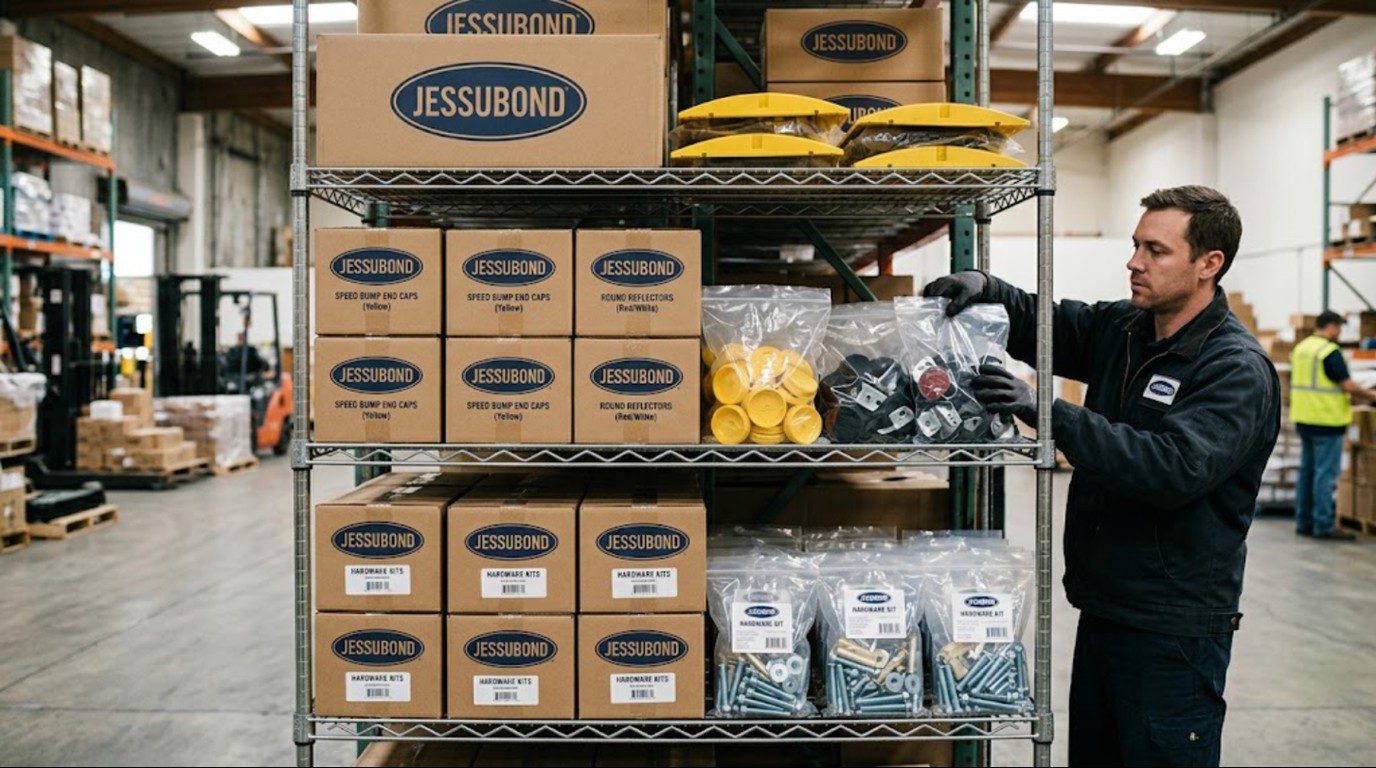
The surface decides the hardware. Fastening a bump to asphalt is different from fastening it to concrete. Distributors who stock the right kits avoid improvised fixings and failed installations. Match every accessory to the surfaces your customers use most.
1. Concrete Surfaces
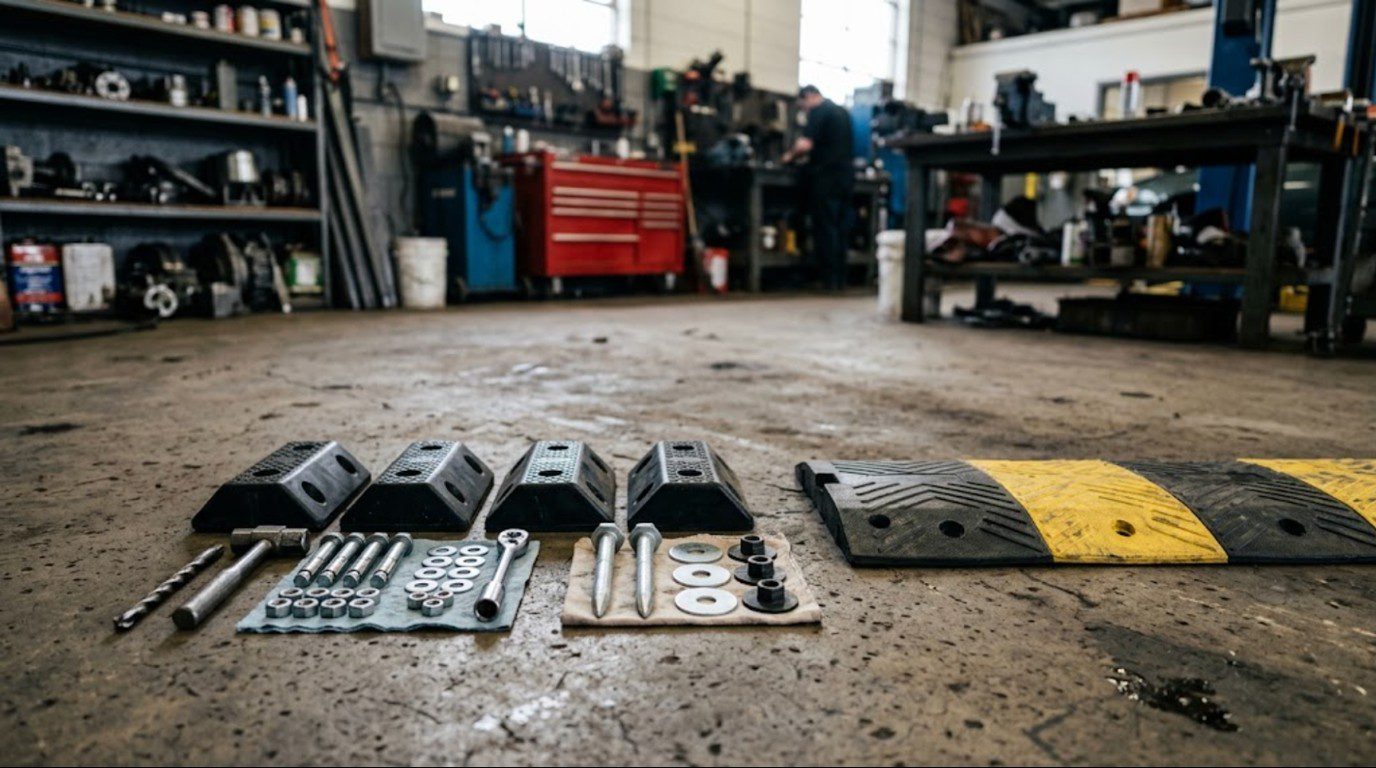
Concrete usually takes lag bolts with anchors or dedicated concrete bolts. The anchor length depends on the thickness of the bump and the depth of the concrete. Some end cap kits come in versions for concrete only, and others suit both concrete and asphalt. Check hole size and depth with the manufacturer. For example, wrong anchors loosen quickly under traffic.
2. Asphalt, Gravel and Dirt
Asphalt and unbound surfaces often use longer anchors, such as galvanized steel spikes or rebar spikes. One retailer lists end cap kits with 12-inch, 14-inch and 18-inch spike options for asphalt, gravel and dirt. Heavy traffic needs stronger fixings, so confirm the anchor type for each site. For soft surfaces, check that the bump does not creep over time.
3. Glue-Down and Temporary Installations
Some customers need temporary or removable installations, such as events or construction sites. Glue-down kits and short fixings serve these cases. They are faster to install, but they may hold less strongly. Our article on selecting temporary speed bumps for events and construction site safety explains when this approach makes sense.
4. Kit or Bare Cap
Many buyers prefer a kit that includes the hardware, while others buy caps alone and use their own fixings. Offer both options. Label kits clearly with the surface type, the number of anchors and the matching bump size. Clear labeling reduces wrong orders. A retailer example of end cap kits with different anchor versions shows how the market lists these options.
Compatibility and Specification Matrix
Compatibility is the main source of accessory problems. A cap that is a few millimeters wrong in width or height will not sit flush with the bump. Customers then return it or install it badly. A clear specification and a simple matrix prevent these errors. Build the matrix before you place your first order.
1. Match by Length, Width and Height
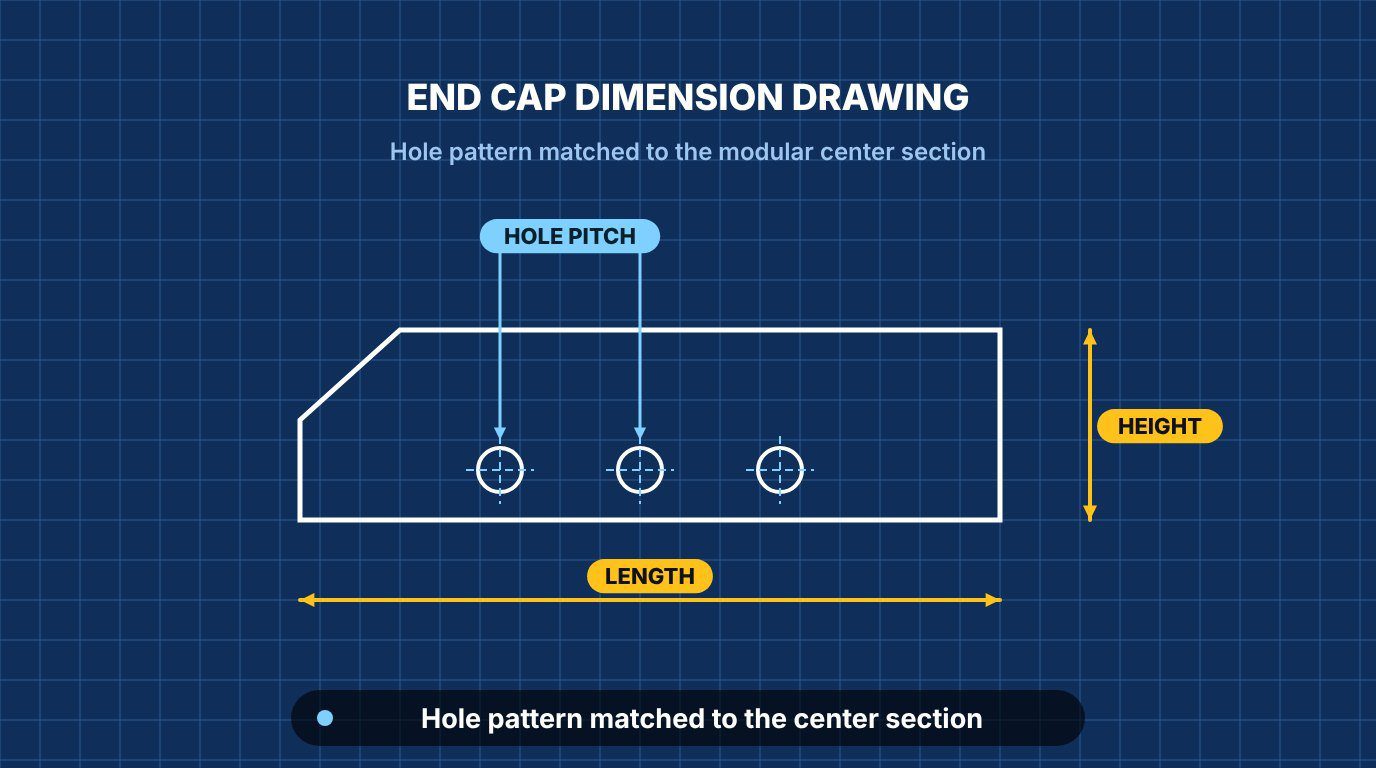
List each bump model with its dimensions and the matching end cap. Include the length of the center section, the width of the base and the height at the crown. Note whether the cap is for a standard or a reflective series. A retailer lists separate end caps for different bump lengths and series, which shows how specific the match can be. Share the matrix with your sales team.
2. Hole Pattern and Anchor Compatibility
End caps have a set number of anchor holes, and the hole spacing must match the hardware kit. Confirm the hole diameter and depth for each model. Check that washers and anchors fit the recess in the cap. A mismatch in hole size is a common installation problem. Ask the manufacturer for drawings with dimensions.
3. Color, Material and Hardness Consistency
Caps should match the bump in color and material. Rubber hardness affects how the cap sits against the bump and how it wears. Color differences between batches look careless on the road. Therefore, ask the manufacturer to use the same compound and pigment across all parts. Approve samples before you accept bulk shipments.
4. Part Numbers and Documentation
Give every accessory a clear part number and a short description. Provide an installation sheet with each kit. Photos of the finished installation help customers choose correctly. Good documentation reduces support calls and returns, and it makes your catalog easier to use online. Finally, list which speed bump end caps fit which bump series, so that customers can check compatibility before they order.
Inventory Planning for Distributors
Accessories are small and easy to store, but they still need planning. Too few parts delay projects, and too many tie up cash. A simple inventory approach keeps stock balanced. It also supports faster delivery to customers.
1. Stock Depth by Product Type
Keep the deepest stock on the parts that every run needs, such as speed bump end caps and the most common anchor kits. Hold moderate stock of center sections and reflectors. Keep corner pieces and special kits in small quantities or order them per project. Review sales every quarter and adjust, because fast movers should never run out. Also record how long each lot takes to arrive, so that reorder points reflect real lead times.
2. Packing and Pallet Configuration
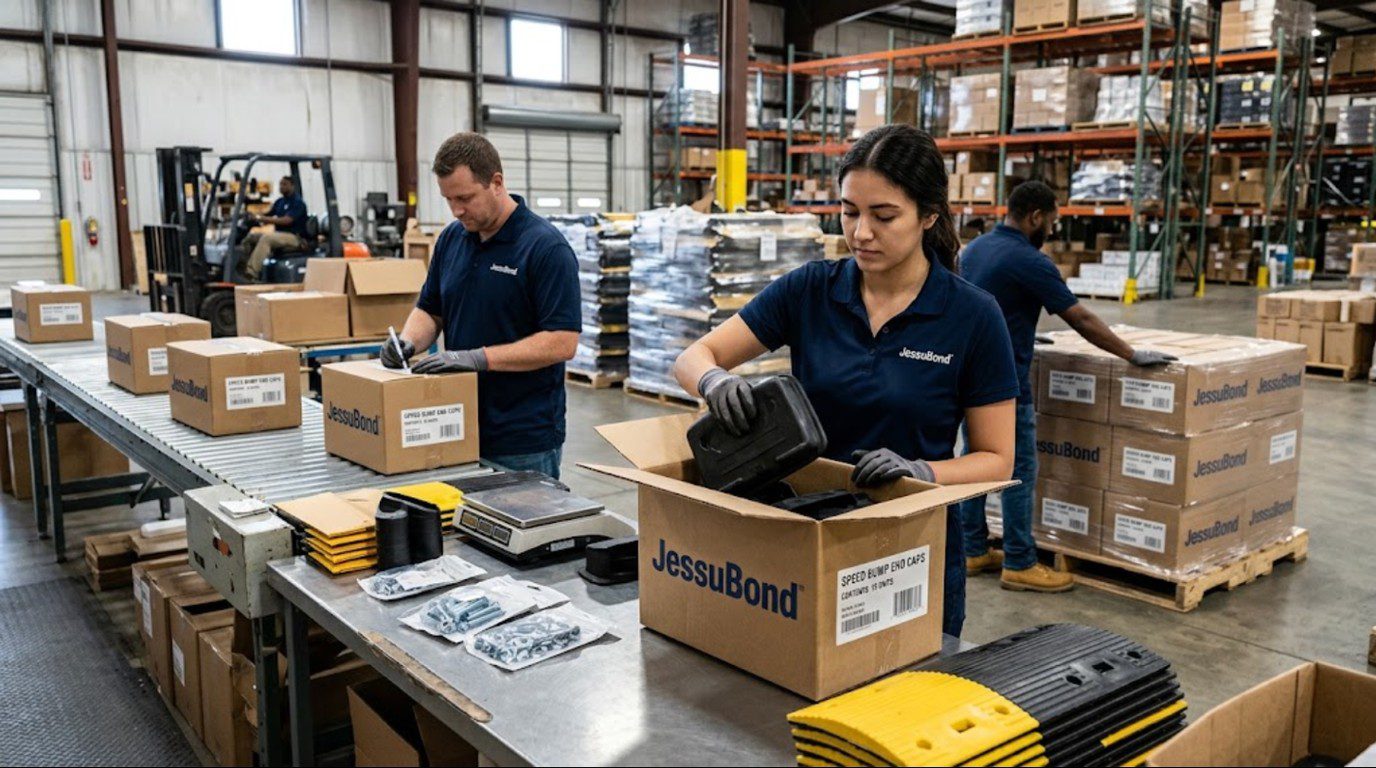
Pack accessories so that they are easy to count and pick. Use cartons with a standard quantity and clear labels. Build mixed pallets for common orders, such as one pallet with caps, anchors and signs. Check the weight of each carton, because rubber parts are heavy. Good packing lowers handling time.
3. Project Demand and Seasonal Peaks
Demand often rises before construction season and ahead of major events. Municipal and contractor projects may arrive with short deadlines. Our guide to speed bump procurement strategies for municipal contractors explains how these buyers plan purchases. Build extra stock before the busy period and agree on lead times with the manufacturer.
4. Handling Mismatches and Returns
Set a simple policy for wrong parts and damaged goods. Photograph shipments before they leave. Keep a record of the batch for each order. When a return arrives, check whether the cause was a wrong order or a defect. This process shows where to improve your catalog or your supplier.
Wholesale Terms: MOQ, OEM and Quality Control
Accessories are best bought together with the bumps they fit. Your terms with the manufacturer should reflect this. Clear terms also protect your margin. Confirm each point before you place the first order.
1. MOQ and Mixed Orders
Typical MOQs range from a few hundred pieces to around 1,000 pieces, depending on the product and the factory. Ask whether you can mix end caps, center sections and hardware inside one MOQ. Mixed orders let you test demand without overstocking. Confirm lead times for each part, because molded parts and hardware kits may come from different production lines.
2. OEM, Private Label and Packaging
OEM programs let you add your brand to products, labels and cartons. Private label kits help you stand out from competing distributors. Share artwork and drawings early, and confirm tooling costs for any custom shape. Ask whether the factory can keep your approved samples and packaging files for reorders. A clear brand and part number system makes your range easier to sell.
3. Quality Checks Before Shipment
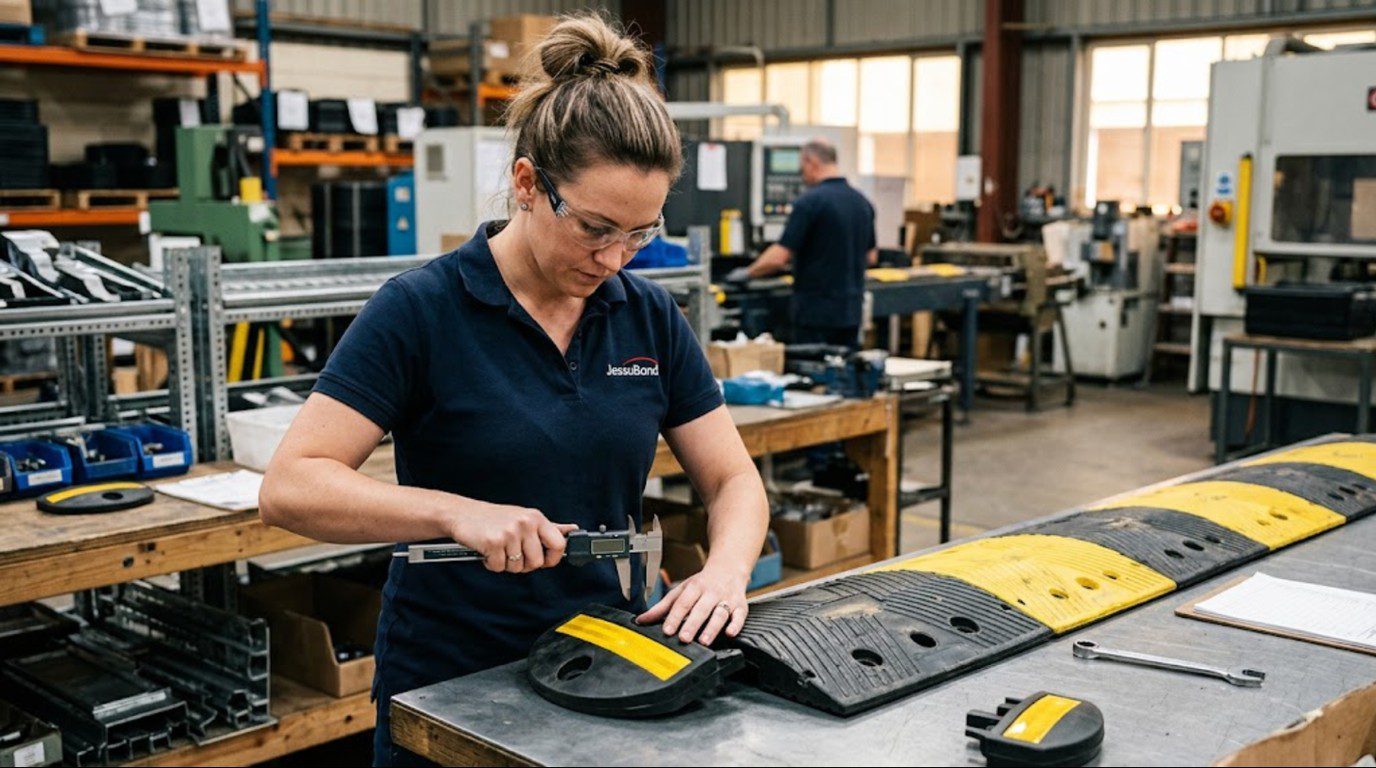
Check a sample from each batch for dimensions, hole alignment, weight and color. Compare caps against the matching bump section and check that they sit flush. Test the anchor fit with the supplied hardware. Reject parts with cracks, flash or surface defects. Keep inspection photos with your order record.
Conclusion: Stock Speed Bump End Caps First, Then Build the Range Around Them
Speed bump end caps are the most predictable accessory, because every run needs two. Build the range outward from there, with anchor kits for each surface, center sections, reflective parts and signs. Create a compatibility matrix so that every cap, anchor and bump matches. Offer both kits and bare parts, and label them clearly.
Wholesale buyers should confirm MOQ, OEM options and quality checks before they commit. A complete accessory range lifts order value, reduces returns and keeps customers coming back for the next project. The bump sells once, but the accessories keep the customer.
Sell the bump, and stock everything the installer will ask for next.
Looking for a manufacturer that supplies rubber speed bumps with matching end caps, center sections and anchor kits at flexible MOQ and transparent per-unit pricing at volume? At JessuBond, we produce speed bumps and accessories with full customization support. Contact us here.