
The strategic deployment of extended-length traffic calming devices requires understanding both the technical capabilities of these systems and the specific traffic control challenges they address most effectively. Ten-foot rubber speed bumps represent a specialized category of traffic calming equipment designed for applications where standard six-foot sections prove inadequate or where installation efficiency and coverage optimization drive equipment selection. Understanding the unique advantages, appropriate applications, and deployment best practices for these extended units enables facility managers, traffic engineers, and safety professionals to implement speed control solutions that deliver maximum effectiveness while optimizing installation resources and long-term performance.
Understanding 10-Foot Rubber Speed Bump Design and Construction
The fundamental construction of 10 ft. rubber speed bumps follows similar engineering principles as shorter modular units, utilizing recycled rubber compounds or virgin rubber formulations engineered for durability, weather resistance, and appropriate vehicle deflection characteristics. However, the extended length creates unique structural requirements addressing the increased span, weight, and installation considerations that longer sections demand. Quality 10-foot units feature reinforced internal structures preventing sagging or deflection along the extended span, ensuring consistent height profiles across the entire length that deliver uniform speed reduction regardless of where vehicle wheels contact the device.
Manufacturing processes for extended-length rubber speed bumps typically employ compression molding or extrusion techniques creating monolithic structures without seams or joints that might become failure points under traffic loads. This continuous construction proves particularly important for 10-foot sections where mid-span joints would create vulnerability to separation or height inconsistencies that compromise performance. The molding process also allows integration of features such as reflective striping, drainage channels, and mounting points within the rubber structure rather than requiring post-manufacturing additions that might detach or degrade over time.
Weight considerations become more significant with extended-length units, as 10-foot rubber speed bumps typically weigh 80-120 pounds depending on specific design and material density. This substantial weight contributes to installation stability by resisting displacement from vehicle impacts and wind effects, but also creates handling challenges requiring two-person installation teams and potentially mechanical assistance for positioning. Organizations specifying 10-foot units should ensure installation crews understand handling requirements and have appropriate equipment available to safely manage these heavier components during installation and any subsequent repositioning needs.
Anchoring systems for extended-length units require more mounting points than shorter sections to prevent mid-span lifting or rotation under traffic loads. Quality 10-foot rubber speed bumps typically specify mounting points spaced 24-30 inches along the length, translating to four or five anchor locations per unit. This increased anchoring requirement affects installation labor and hardware costs compared to shorter sections, though the overall efficiency of covering wider areas with fewer total pieces often offsets these incremental expenses. The anchoring pattern must ensure uniform compression against mounting surfaces preventing gaps that might allow water infiltration potentially leading to substrate deterioration beneath the speed bump.
Optimal Applications for Extended-Length Speed Bumps
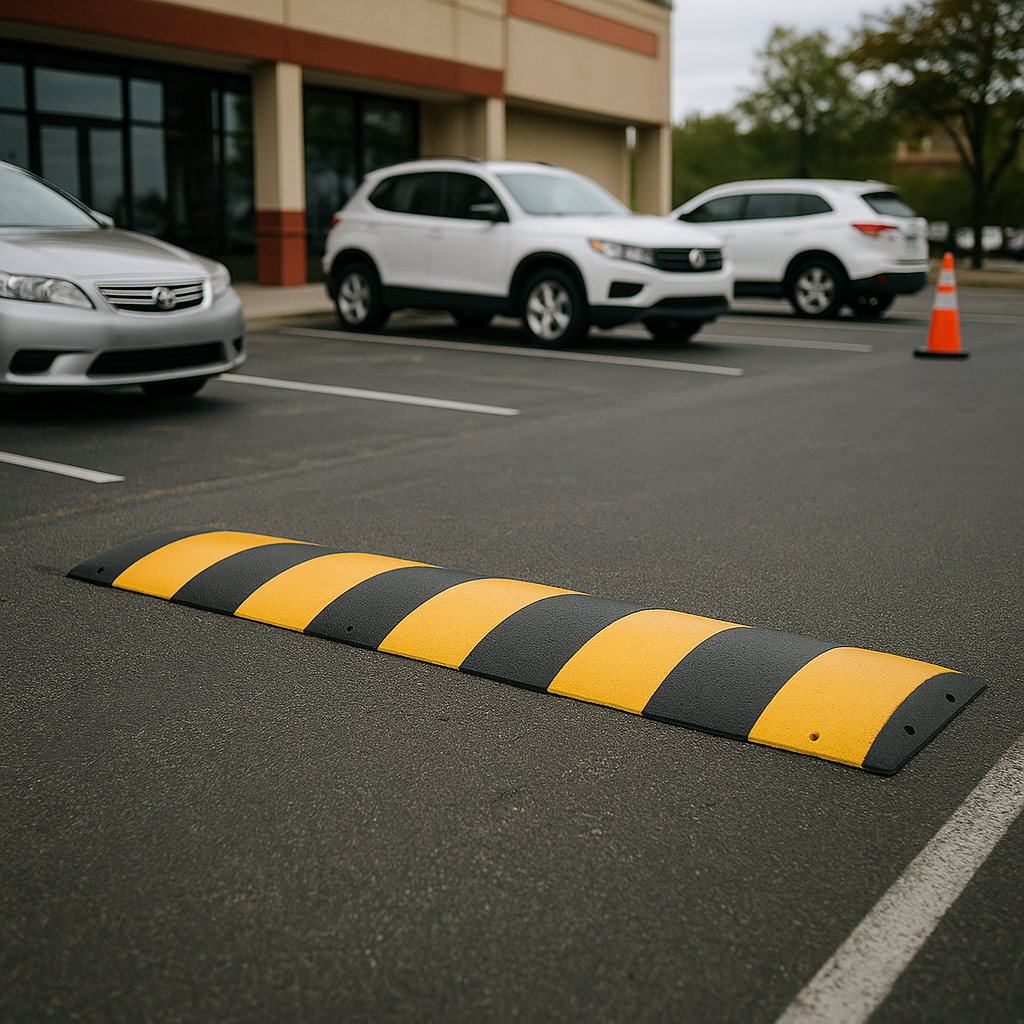
Wide roadway applications represent the primary scenario where 10 ft. rubber speed bumps deliver distinct advantages over standard six-foot sections. Commercial parking lot aisles serving multiple rows of parking spaces, industrial facility roadways accommodating truck traffic and equipment movements, and campus circulation routes with lane widths exceeding standard dimensions all benefit from extended-length units that span full roadway widths with fewer individual pieces. This reduced piece count simplifies installation, creates fewer potential separation points between sections, and delivers more uniform visual appearance than assemblies of multiple shorter sections.
Multi-lane applications where speed control must span two adjacent travel lanes simultaneously find 10-foot units particularly effective. Rather than installing separate speed bumps in each lane or attempting to align multiple shorter sections across both lanes, single 10-foot units can span both lanes creating synchronized speed reduction for vehicles in either lane. This synchronized reduction proves important for preventing drivers from swerving between lanes to avoid speed bumps, a dangerous behavior that multiple shorter sections positioned separately in each lane might inadvertently encourage.
Parking lot entrance and exit points benefit from 10-foot rubber speed bump installations that span the full entrance width ensuring all entering or exiting vehicles encounter speed control. These critical transition points between parking areas and adjacent roadways require consistent speed enforcement preventing drivers from accelerating prematurely as they exit parking facilities or entering at unsafe speeds that create hazards for pedestrians and other vehicles within parking areas. The visual impact of a single substantial speed bump spanning the full entrance width also provides psychological reinforcement that drivers are entering a controlled zone requiring reduced speeds.
Loading dock approaches and warehouse vehicle circulation routes where forklift traffic, delivery vehicles, and pedestrian workers converge require robust speed control that heavy commercial vehicles cannot easily circumvent. Extended-length units spanning the full width of these circulation routes prevent drivers from steering toward roadway edges attempting to minimize speed bump encounters, a common avoidance behavior that defeats traffic calming purposes and can create edge deterioration from concentrated vehicle paths. The 10-foot coverage forces compliant crossing by all vehicles regardless of driver intentions or attempts to avoid speed reduction.
Fire lanes and emergency access routes that must remain passable for emergency vehicles while controlling everyday traffic speeds utilize extended-length speed bumps strategically positioned to enforce safe speeds during normal operations without creating unacceptable delays for emergency responders. The substantial width coverage ensures fire trucks and ambulances encounter speed bumps uniformly across their full wheelbase, creating manageable but unavoidable speed reduction that balances everyday safety with emergency access requirements. Some jurisdictions specifically approve certain speed bump profiles for fire lane applications while prohibiting others based on emergency vehicle compatibility testing.
Strategic Placement for Maximum Speed Control Effectiveness
The effectiveness of any speed control device depends heavily on strategic placement that considers traffic flow patterns, sight distances, driver psychology, and the specific hazards requiring speed management. For 10-foot rubber speed bumps, placement decisions should identify locations where the extended coverage creates distinct advantages over alternative traffic calming approaches. Mid-block locations along straight roadway sections where drivers tend to accelerate inappropriately represent ideal deployment points, particularly when positioned to create visual rhythm that conditions drivers to maintain consistent lower speeds rather than repeatedly accelerating and braking between speed control points.
Advance of pedestrian crossings represents another high-priority placement location ensuring drivers reduce speeds before reaching conflict zones where pedestrian crossings occur. The speed reduction should occur sufficiently in advance of crosswalks that drivers have completed deceleration and regained vehicle stability before reaching the crossing zone, typically requiring speed bump placement 30-50 feet before marked crosswalks depending on target speeds and roadway characteristics. This advance placement prevents the dangerous situation where drivers remain unsettled from speed bump crossings while simultaneously encountering pedestrians in crosswalks.
Curve approaches where geometry naturally creates speed control can be reinforced with speed bump placement ensuring drivers enter curves at safe speeds rather than relying solely on curve geometry and warning signage. Many single-vehicle departure crashes occur when drivers enter curves at excessive speeds discovering too late that the curve radius requires lower speeds than they’re traveling. Strategic speed bump placement before curves enforces appropriate entry speeds while the visual presence of speed bumps provides advance warning of the curve ahead, creating both physical speed control and psychological cueing that enhances overall curve negotiation safety.
Parking aisle intersections within large parking facilities benefit from speed bump placement controlling speeds where vehicles from perpendicular aisles merge or cross paths. These intersection points represent high-conflict zones where drivers focused on finding parking spaces may fail to adequately check for crossing traffic. Speed bumps positioned in advance of intersections slow vehicles to speeds allowing adequate time for visual scanning and reaction to conflicts, reducing collision risks that create insurance claims, vehicle damage, and customer dissatisfaction with facility safety.
School zone approaches during arrival and dismissal periods experience concentrated pedestrian activity creating heightened safety needs that extended-length speed bumps effectively address. The substantial visual presence of 10-foot units clearly communicates to drivers that they’re entering a special zone requiring enhanced caution and reduced speeds. Multiple speed bumps positioned in series along school zone approaches create progressive speed reduction bringing vehicles from approach speeds down to school zone limits through staged enforcement that proves more effective than expecting single-stage deceleration from posted speed limits alone.

Comparing 10-Foot Units to Alternative Speed Bump Configurations
Understanding when 10-foot rubber speed bumps represent the optimal choice versus alternative configurations helps organizations specify appropriate solutions rather than defaulting to familiar options regardless of actual requirements. Standard six-foot modular sections offer flexibility advantages for narrow roadways, applications requiring curves or custom configurations, and situations where future modification needs might require reconfiguring speed bump layouts. The smaller section size also simplifies storage and transportation for organizations maintaining mobile speed bump inventories deployed across multiple locations.
However, 10 ft. rubber speed bumps deliver installation efficiency advantages that prove compelling for wide roadway applications. Covering a 20-foot roadway width requires four six-foot sections with three connection points versus two 10-foot sections with one connection point. This reduced connection count decreases installation time, minimizes potential separation points that might allow water infiltration or create tripping hazards, and creates cleaner visual appearance without visible seams across the roadway width. The labor savings can prove substantial for large-scale deployments involving dozens or hundreds of speed bumps.
Concrete speed bumps represent permanent alternatives to rubber systems, offering durability advantages and visual permanence that influences driver compliance psychology. However, concrete installations require professional installation, permanent attachment to pavement substrates, and essentially irreversible commitment to specific locations. Organizations uncertain about long-term speed control needs, operating in leased facilities where permanent modifications prove undesirable, or requiring flexibility to relocate speed bumps as traffic patterns evolve find rubber systems, including 10-foot sections, more appropriate than concrete alternatives despite concrete’s superior longevity.
Speed cushions and speed tables represent alternative traffic calming approaches creating different speed reduction characteristics and driver experiences than traditional speed bumps. Speed cushions allow emergency vehicles to straddle devices while still slowing passenger cars, making them appropriate for emergency response routes where traditional speed bumps might create unacceptable delays. Speed tables with longer ramps and flatter tops create less abrupt speed reduction suitable for higher-volume roadways where extreme discomfort might prove unacceptable. Organizations should evaluate whether these alternatives better serve specific applications rather than assuming traditional speed bumps represent the only traffic calming option.
Installation Considerations and Best Practices
Successful 10-foot rubber speed bump installations begin with thorough surface preparation ensuring mounting substrates provide adequate strength and smoothness for secure attachment. Asphalt and concrete surfaces should be inspected for deterioration, potholes, or significant irregularities that might prevent proper contact between speed bump bases and pavement surfaces. Repairing substrate deficiencies before installation prevents premature speed bump failure from inadequate support and ensures mounting hardware achieves specified retention strength. The extended length of 10-foot units makes them particularly sensitive to substrate irregularities since any mid-span gaps compromise structural integrity across the full section.
Marking installation locations with chalk lines or paint ensures proper alignment and positioning before committing to drilling anchor holes. The visual impact of misaligned speed bumps proves particularly pronounced with extended-length units where even slight angular deviations become obvious across the 10-foot span. Taking time to verify alignment, ensure perpendicularity to traffic flow, and confirm positioning relative to reference points prevents installation errors requiring complete reinstallation. Professional installers understand that proper layout represents the foundation of quality installations and that rushing this phase to accelerate overall project timelines ultimately proves counterproductive.
Drainage considerations affect installation positioning and substrate preparation, particularly in areas experiencing significant rainfall or snowmelt. Speed bumps create dams that prevent surface water sheet flow across roadways, potentially causing ponding that accelerates pavement deterioration and creates hazardous ice patches during freezing conditions. Many rubber speed bump designs incorporate drainage channels allowing water passage beneath or through devices, but these channels only function effectively when installations account for natural drainage patterns and potentially include supplementary measures such as edge drains or modified cross-slopes directing water around speed bump installations.
Hardware selection and installation techniques significantly impact long-term performance and retention strength. Quality installations specify hardened steel fasteners appropriate for the substrate type, with expansion anchors for concrete substrates and specialized asphalt anchors or lag bolts for asphalt installations. The torque specifications during installation affect anchor retention, with under-tightening failing to achieve adequate grip and over-tightening potentially causing substrate damage or anchor stripping. Professional installers use calibrated torque wrenches ensuring consistent, appropriate tightening across all mounting points rather than relying on subjective feel that introduces variability potentially compromising some anchors while over-stressing others.
Maintenance Requirements and Long-Term Performance
Rubber speed bump maintenance requirements prove modest compared to concrete alternatives, but regular inspection and timely intervention prevent minor issues from developing into major failures requiring complete replacement. Quarterly inspections should verify that all mounting hardware remains tight, no anchor points show signs of working loose, and the rubber material maintains structural integrity without cracking, significant wear, or degradation from weather exposure or chemical contact. Organizations should document inspection findings creating records that demonstrate proactive maintenance supporting liability defense if accidents occur and speed bump condition becomes questioned during investigations.
Anchor retightening represents the most common maintenance intervention, as vibration from repeated vehicle crossings gradually loosens mounting hardware even when originally installed to proper torque specifications. Annual retightening of all mounting points prevents progressive loosening that eventually allows speed bumps to shift position or develop gaps beneath sections that concentrate stresses leading to accelerated deterioration. The extended length of 10-foot units makes them particularly vulnerable to loosening-related problems since mid-span lifting or rotation creates leverage that exacerbates anchor stress beyond what shorter sections experience.
Reflective striping degradation affects nighttime visibility requiring periodic restoration or replacement ensuring speed bumps remain conspicuous after dark. The reflective materials applied to rubber speed bumps during manufacturing experience gradual degradation from UV exposure, vehicle contact, and weather effects, typically requiring replacement or enhancement every 3-5 years to maintain adequate nighttime visibility. Some organizations apply supplemental reflective tape to aging speed bumps as a cost-effective alternative to complete unit replacement when rubber structural integrity remains sound but original reflective properties have degraded below acceptable levels.
Winter maintenance in cold climates requires special attention preventing damage from snowplow contact and freeze-thaw cycles. Rubber compounds become more brittle in extreme cold, increasing vulnerability to impact damage from snowplow blades striking speed bumps during snow removal operations. Some organizations remove rubber speed bumps before winter season, storing them indoors to prevent both plow damage and cold-related material degradation. Facilities unable to seasonally remove speed bumps should mark them with tall reflective markers ensuring plow operators can identify and avoid them during snow removal operations.
Cost-Effectiveness and Return on Investment Analysis
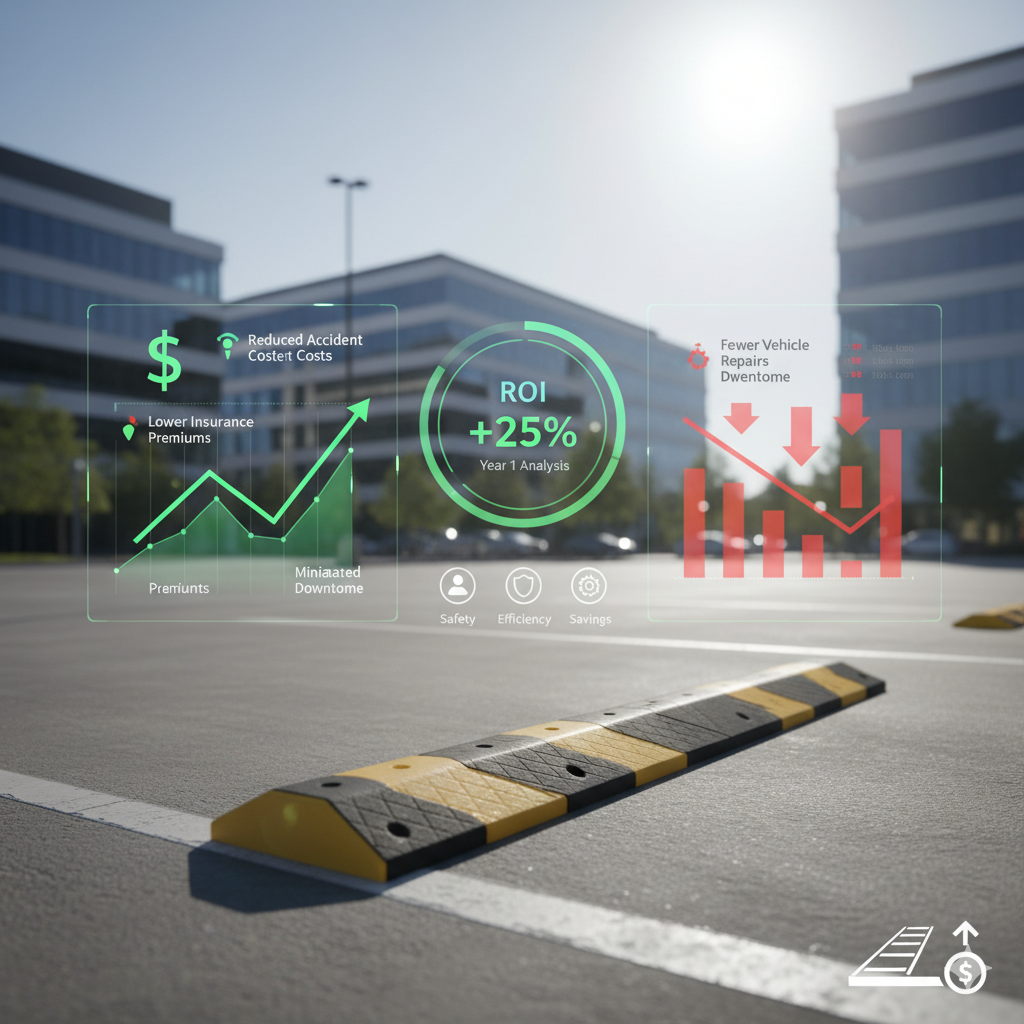
The economic justification for 10-foot rubber speed bumps extends beyond simple purchase price comparisons to encompass installation efficiency, maintenance costs, expected service life, and the indirect value of speed-related accident prevention. While 10-foot units typically carry higher per-unit costs than six-foot sections, perhaps $300-500 per 10-foot unit versus $200-350 for comparable six-foot sections, the reduced piece count and installation labor for equivalent coverage often makes 10-foot configurations more economical on a total-installed-cost basis.
Installation labor savings prove particularly significant for large facilities requiring numerous speed bumps. A parking facility installing speed control across 20 locations with average roadway widths of 20 feet would require 80 six-foot sections versus 40 ten-foot sections for equivalent coverage. If installation labor costs $50 per section for layout, drilling, anchoring, and final inspection, the labor differential reaches $2,000 favoring 10-foot configurations despite potentially higher unit material costs. This installation efficiency creates compelling economics for new construction or major renovation projects where extensive speed bump deployment occurs simultaneously.
Maintenance cost advantages also favor extended-length configurations through the reduced connection count and fewer total pieces requiring inspection and hardware retightening. Annual maintenance involving inspection and retightening of 40 speed bump units requires substantially less time than equivalent maintenance for 80 units, translating to lower ongoing labor costs throughout the 10-15 year service life quality rubber speed bumps typically deliver. While the per-occurrence savings may seem modest, cumulative maintenance cost differences over multi-decade facility lifespans justify careful configuration selection during initial procurement.
The accident prevention value of effective speed control proves difficult to quantify precisely but represents the most significant economic benefit justifying speed bump investments. A single parking lot accident involving injuries might generate insurance claims, legal fees, and reputational damage costing tens of thousands of dollars. If strategic 10-foot rubber speed bump deployment prevents even one such accident over its service life, the return on investment exceeds 1000% regardless of whether 10-foot or six-foot configurations were selected. This accident prevention value argues for selecting configurations optimizing effectiveness rather than minimizing upfront costs, since the difference between mediocre and excellent speed control proves economically trivial compared to accident costs.
Regulatory Compliance and Accessibility Considerations
Speed bump deployment on public property or within public accommodations triggers various regulatory frameworks addressing traffic control devices, accessibility requirements, and potentially local ordinances governing traffic calming measures. While regulations rarely specify equipment dimensions as precisely as “10-foot sections,” understanding how extended-length configurations affect compliance with applicable standards prevents specification errors that could necessitate costly remediation. The Americans with Disabilities Act establishes requirements for accessible routes that must remain usable by individuals using wheelchairs, walkers, or other mobility assistance devices, and speed bumps potentially affect accessibility depending on profiles and placement.
Most ADA compliance concerns focus on speed bump height and profile rather than length, with excessively aggressive profiles creating barriers that mobility device users cannot safely traverse. The extended length of 10-foot units doesn’t inherently create accessibility issues provided the profile specifications follow guidance for accessible speed bumps. Organizations should specify products explicitly designed for ADA compliance rather than assuming all rubber speed bumps satisfy accessibility requirements. Some manufacturers offer specific “accessible” product lines with gentler profiles appropriate for routes serving individuals with mobility limitations.
Fire marshal approval may be required before installing speed bumps on designated fire lanes or emergency access routes, as these devices potentially delay emergency vehicle response during critical incidents. The extended width coverage of 10-foot units ensures emergency vehicles cannot avoid speed bumps by steering toward roadway edges, which fire officials may view either positively as ensuring all vehicles experience consistent speed reduction, or negatively as eliminating any possibility for emergency vehicles to minimize delays. Organizations planning speed bump installations affecting emergency access should consult with local fire marshals during planning stages rather than installing devices and subsequently discovering fire department objections requiring removal.
Municipal permits or approvals often prove necessary for speed bump installations on private property within commercial developments, particularly when installations might affect traffic flow on roadways serving multiple properties. Shopping centers, office parks, and similar multi-tenant developments typically require property owner association approval before individual tenants or property managers install traffic calming devices affecting common areas. The permanent or semi-permanent nature of rubber speed bump installations, even though technically removable unlike concrete speed bumps, triggers approval requirements that temporary traffic cones or similar devices might avoid.
Maximizing Long-Term Value and Effectiveness
Organizations realizing maximum value from 10-foot rubber speed bump investments approach deployment systematically with clear objectives, appropriate product selection, professional installation, and ongoing performance evaluation. Rather than viewing speed bumps as simple commodities where any product serving basic functions proves adequate, sophisticated buyers recognize that specification details, installation quality, and maintenance commitment significantly affect long-term performance and value realization. This systematic approach begins during planning when organizations clearly define the specific traffic control objectives speed bumps must achieve.
Performance monitoring following installation validates whether speed bumps deliver intended results and identifies any modifications necessary to optimize effectiveness. Simple before-and-after speed studies measuring actual vehicle speeds at deployment locations quantify the speed reduction achieved and reveal whether target speeds are being met. Organizations discovering that initial installations fail to achieve desired speed reductions can add supplementary speed bumps, adjust spacing, or implement complementary measures such as signage or enforcement ensuring objectives are met rather than accepting inadequate performance from initial installations.
User feedback from facility occupants, workers, or customers provides qualitative insights complementing quantitative speed measurements. Comments about excessive discomfort might indicate overly aggressive profiles inappropriate for the application, while observations about drivers avoiding speed bumps could reveal installation alignment issues or inadequate width coverage. Organizations should create feedback mechanisms encouraging users to report concerns and respond to feedback with investigation and remediation demonstrating commitment to both safety and user experience.
Technology integration represents an emerging opportunity for enhancing traditional speed bump effectiveness through supplementary systems providing data collection or driver alerting capabilities. Speed feedback signs positioned in advance of speed bump installations provide real-time speed displays encouraging voluntary compliance before drivers reach enforcement points. Pavement sensors embedded near speed bumps can collect traffic volume and speed data informing decisions about whether additional traffic calming measures prove necessary. While these technologies add costs beyond basic speed bump investments, they create opportunities for sophisticated traffic management that passive devices alone cannot achieve.
Strategic deployment of 10-foot rubber speed bumps requires understanding their unique characteristics, identifying applications where extended length creates distinct advantages, and implementing comprehensive programs encompassing proper installation, ongoing maintenance, and continuous performance evaluation. Organizations approaching these decisions systematically, with thorough analysis of site-specific requirements and commitment to professional implementation, consistently achieve superior outcomes protecting pedestrians, controlling vehicle speeds, and creating safer environments while managing costs effectively over equipment lifecycles spanning decades of service.
Looking for a Custom Speed Bumps Manufacturer or Supplier? Struggling to find the right factory to bring your vision to life? We’ve got you covered! At our place, we craft top-quality Speed Bumps with precision and care. Big or small, your needs are our mission. Let’s launch your Speed Bumps project and take your product line to the next level! Click here to contact