
Construction sites represent some of the most hazardous work environments in American industry, with worker safety depending heavily on proper implementation of traffic control measures that protect personnel from vehicle strikes, equipment collisions, and other movement-related hazards. The Occupational Safety and Health Administration establishes comprehensive requirements governing construction site safety, including specific provisions addressing traffic control devices and their proper deployment. Understanding how construction traffic cones fit within OSHA’s regulatory framework enables contractors to maintain compliance, protect workers, and avoid citations that carry both financial penalties and reputational consequences affecting future bidding opportunities and insurance costs.
OSHA’s Regulatory Framework for Construction Site Traffic Control
OSHA regulations addressing construction site traffic control appear primarily in 29 CFR 1926, the agency’s construction industry standards. Subpart G covering signs, signals, and barricades establishes fundamental requirements for warning devices and traffic control equipment deployed to protect workers from vehicular traffic hazards. Section 1926.200 specifically addresses accident prevention signs and tags, while Section 1926.201 covers signaling requirements, and Section 1926.202 deals with barricades. These provisions create the regulatory foundation that construction traffic cones must satisfy to achieve OSHA compliance.
The general duty clause contained in the Occupational Safety and Health Act provides additional authority under which OSHA can cite employers for inadequate traffic control even when specific standards don’t explicitly address particular situations. This broad authority means that simply deploying some traffic cones doesn’t automatically ensure compliance if the overall traffic control program proves inadequate for the specific hazards present. Employers must evaluate site-specific conditions and implement traffic control measures, including appropriate traffic cone deployment, that genuinely protect workers from realistic hazards rather than simply checking boxes to claim technical compliance.
OSHA frequently references industry consensus standards when interpreting its own requirements and evaluating whether employers have met their obligations. The Manual on Uniform Traffic Control Devices, while primarily a Federal Highway Administration standard rather than an OSHA regulation, often provides the technical specifications that OSHA compliance officers use when evaluating construction site traffic control adequacy. Understanding MUTCD requirements for traffic cone specifications, placement patterns, and application contexts helps employers implement programs that satisfy both explicit OSHA requirements and the broader safety obligations that general duty clause enforcement creates.
State-level OSHA programs in the 22 states operating under federal approval may establish requirements more stringent than federal standards. Contractors operating in multiple states must understand the specific requirements applicable in each jurisdiction rather than assuming federal standards represent the only compliance obligations. Some state plans include specific provisions addressing construction zone traffic control that exceed federal requirements, creating compliance complexity for multi-state operators who must adapt practices to varying regulatory frameworks.
Traffic Cone Specifications and Standards
OSHA doesn’t typically specify detailed technical requirements for traffic cone construction, instead deferring to industry standards and practices. However, compliance officers evaluating construction sites expect to see traffic cones meeting recognized performance standards appropriate for their intended applications. Orange traffic cones remain the standard color for construction applications, with the bright fluorescent orange providing maximum visibility across diverse lighting and weather conditions. While OSHA regulations don’t explicitly require orange, deploying non-standard colors without documented justification could draw scrutiny during inspections if compliance officers question whether alternative colors provide equivalent safety performance.
Construction traffic cone height requirements vary based on application context, with roadway work zones typically requiring minimum 28-inch cones and many situations benefiting from 36-inch models. The MUTCD establishes specific size requirements based on roadway classifications and traffic speeds, and OSHA compliance officers often reference these specifications when evaluating whether deployed cones provide adequate visibility. Contractors working on or adjacent to public roadways should ensure cone sizes meet or exceed MUTCD minimums for the specific roadway classification and speed limit involved.
Reflective striping represents a critical cone specification affecting nighttime visibility and OSHA compliance. Quality construction traffic cones feature retroreflective bands using materials that reflect vehicle headlight beams back toward drivers, making cones visible from extended distances during darkness. OSHA’s requirement for adequate illumination of work areas extends to traffic control devices that must remain visible during nighttime operations. Cones lacking adequate reflective properties may prove non-compliant during night work, even if they provide acceptable daytime visibility. Contractors should specify cones with reflective striping meeting ASTM standards for retroreflectivity to ensure nighttime compliance.
Base weight and stability affect cone performance in windy conditions or when subjected to vehicle wash effects from passing traffic. While OSHA doesn’t mandate specific cone weights, unstable cones that frequently tip over fail to provide the continuous hazard delineation that compliance requires. Construction sites experiencing cone stability problems should consider weighted bases, larger base diameters, or heavier cone materials that maintain upright positioning despite environmental challenges. The compliance obligation extends beyond simply deploying cones to ensuring they remain effective throughout the duration they’re needed.

Proper Traffic Cone Deployment Patterns
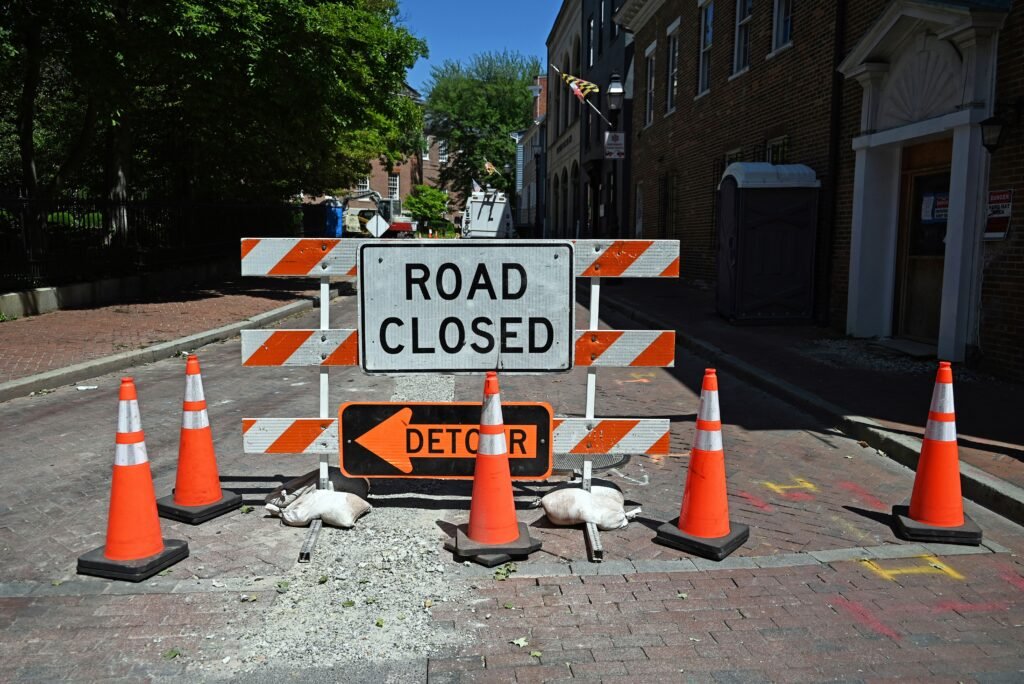
OSHA requires that traffic control devices be positioned to provide adequate warning and protection based on actual site hazards and traffic conditions. For construction zones affecting roadways, this typically means deploying traffic cones on a road in patterns that create advance warning areas, transition zones, and work space protection that guides traffic safely around or through work areas while protecting workers from vehicle intrusions. The specific spacing between cones depends on roadway speeds, with higher speeds requiring greater cone spacing to create visual continuity that drivers can easily follow.
The MUTCD provides detailed guidance on taper lengths, buffer distances, and cone spacing appropriate for various roadway classifications and work zone configurations. While these MUTCD specifications technically apply to public roadway work zones rather than private construction sites, OSHA compliance officers often reference them when evaluating whether construction site traffic control provides adequate worker protection. Contractors should familiarize themselves with MUTCD spacing requirements and apply them on construction sites where vehicle traffic presents worker hazards, even when not explicitly required by OSHA regulations.
Internal construction site roadways and equipment travel paths require traffic cone deployment protecting workers from vehicle and equipment strikes. Where workers must work adjacent to active traffic lanes, construction traffic cones should delineate clear boundaries separating work areas from travel paths. The spacing and pattern should create obvious visual guidance that equipment operators can easily follow even when operating in reverse or navigating congested site conditions. Inadequate separation between workers and equipment travel paths represents a frequent OSHA citation category, with proper cone deployment serving as a key control measure preventing these violations.
Temporary lane closures or traffic pattern modifications within construction sites demand clear cone delineation ensuring all site personnel understand current traffic configurations. Construction sites evolve constantly as projects progress, with traffic patterns changing to accommodate different work phases. Each configuration change requires corresponding updates to traffic cone deployments, ensuring that cones accurately reflect current conditions rather than obsolete patterns that might confuse operators and create hazards. OSHA expects employers to maintain traffic control devices in current, accurate configurations that genuinely protect workers rather than simply installing cones once and leaving them regardless of changing site conditions.
Documentation and Training Requirements
OSHA requires that employers provide workers with training on recognizing construction site hazards, including those related to vehicle and equipment traffic. This training obligation extends to ensuring workers understand traffic control systems including the meaning of traffic cone deployments and their responsibility to remain within protected zones. Simply deploying construction traffic cones without training workers on their purpose and the behaviors expected proves insufficient for OSHA compliance. Employers should document traffic control training including specific instruction on cone delineation systems used at the particular construction site.
Site-specific safety plans should address traffic control measures including cone deployment strategies, maintenance responsibilities, and procedures for modifying traffic control as site conditions evolve. OSHA increasingly expects contractors to demonstrate proactive safety planning rather than reactive responses to hazards identified during inspections. A documented traffic control plan that includes provisions for construction traffic cone deployment, inspection, and maintenance demonstrates the systematic approach to safety that OSHA compliance officers look for when evaluating employer safety programs.
Inspection and maintenance records for traffic control devices provide evidence of ongoing attention to safety system integrity. OSHA expects employers to maintain traffic control equipment in functional condition, replacing damaged cones, repositioning displaced devices, and ensuring continued effectiveness throughout deployment periods. While OSHA doesn’t mandate specific recordkeeping for routine cone inspections, documentation of systematic inspection programs supports compliance claims if questions arise during OSHA investigations following accidents or complaint-driven inspections.
Competent person designations represent another documentation requirement affecting traffic control implementation. OSHA requires that competent persons, individuals capable of identifying hazards and authorized to take corrective action, oversee various construction activities including those involving vehicle traffic hazards. Documenting the designation of competent persons responsible for traffic control inspections and modifications demonstrates organizational commitment to maintaining effective systems rather than simply installing traffic cones and hoping they remain adequate without ongoing oversight.
Common OSHA Citations Related to Traffic Control
Inadequate separation between workers and vehicle traffic represents one of the most frequent OSHA citation categories at construction sites. Citations under 1926.21 for failure to provide adequate safety training, 1926.200 for insufficient accident prevention signage, and general duty clause violations for exposing workers to vehicle strike hazards all relate to traffic control deficiencies that proper construction traffic cone deployment helps prevent. Understanding these common citation patterns allows contractors to focus traffic control efforts on the specific deficiencies that most frequently result in enforcement actions.
Failure to maintain traffic control devices in effective condition generates citations when compliance officers observe displaced, damaged, or faded cones that no longer provide adequate hazard delineation. OSHA expects employers to inspect traffic control systems regularly and promptly correct deficiencies that compromise effectiveness. A work zone with numerous tipped-over or missing cones demonstrates inadequate maintenance that supports citations even if the original installation properly protected workers. Contractors should establish daily inspection routines ensuring traffic cone deployments remain intact and effective throughout each work shift.
Nighttime work operations face particular scrutiny regarding traffic control visibility and illumination. Citations for inadequate lighting frequently extend to traffic control devices that lack sufficient reflectivity or illumination for nighttime visibility. Construction traffic cones deployed during night work must feature reflective striping adequate for the specific visibility distances and approach speeds involved. Some situations may require supplementary lighting beyond reflective striping alone, particularly when ambient lighting is minimal and traffic approaches at higher speeds. Contractors conducting significant night work should invest in premium reflective cones and evaluate whether additional lighting measures are necessary for OSHA compliance.
Temporary traffic control during material deliveries and equipment movements often receives less attention than permanent work zone configurations, yet these temporary situations generate citations when workers are exposed to vehicle hazards without adequate protection. Delivery truck access, concrete truck positioning, and crane operations all create temporary traffic situations requiring appropriate cone deployment protecting workers during these brief but high-risk activities. OSHA expects employers to recognize these transient hazards and implement traffic control measures proportional to the actual risks involved, even for operations lasting only minutes rather than hours or days.
Integration with Comprehensive Site Safety Programs
Traffic cone deployment represents just one component of comprehensive construction site safety programs addressing vehicle and equipment hazards. Effective programs combine traffic control devices including cones with designated traffic routes, speed limits, spotter personnel, backup alarms, and operator training creating layered protection that addresses hazards through multiple mechanisms. OSHA increasingly emphasizes systems-based approaches to safety rather than reliance on single control measures, making integration of construction traffic cones with complementary safety measures essential for both regulatory compliance and genuine hazard reduction.
Site layout planning should incorporate traffic control considerations from the earliest design stages rather than treating traffic control as an afterthought once construction begins. Thoughtful site layout can minimize conflicts between workers and vehicle traffic, reducing the traffic control burden and creating inherently safer operational configurations. Where conflicts cannot be eliminated through layout design, early identification during planning stages allows for sophisticated traffic control solutions including appropriately positioned traffic cone deployments integrated with signage, barriers, and designated traffic routes.
Pre-task planning processes should include traffic control evaluation for each work activity potentially exposing workers to vehicle hazards. Job hazard analyses that identify vehicle strike risks should specify traffic control measures including construction traffic cone deployments necessary to mitigate identified hazards. This systematic pre-task evaluation ensures that traffic control receives appropriate attention rather than being overlooked during the rush to commence productive work. OSHA expects employers to identify hazards before exposing workers, making pre-task planning documentation valuable evidence of proactive safety management.
Incident investigation procedures should examine traffic control adequacy when accidents or near-misses involve vehicle or equipment movements. Even when traffic cones were deployed, investigations should evaluate whether deployment patterns, cone conditions, and supplementary measures proved adequate for the actual hazards present. This critical examination of traffic control effectiveness following incidents demonstrates organizational commitment to continuous improvement and provides learning opportunities that prevent future incidents through enhanced traffic control practices.

Multi-Employer Worksite Considerations
Construction sites typically involve multiple employers working simultaneously, creating complexity for OSHA compliance responsibility allocation. The controlling employer, typically the general contractor, bears responsibility for ensuring that common areas maintain adequate traffic control protecting all workers regardless of which subcontractor employs them. This means general contractors must either directly implement traffic control including construction traffic cone deployments in common areas or verify that subcontractors assigned this responsibility execute it adequately. OSHA can and does cite general contractors for traffic control deficiencies affecting subcontractor employees when the general contractor failed to exercise appropriate oversight.
Subcontractors retain responsibility for protecting their own employees from traffic hazards and cannot simply assume that general contractor traffic control eliminates their obligations. Where subcontractor activities create unique traffic hazards not addressed by general site traffic control, subcontractors must implement supplementary measures including additional traffic cone deployments protecting their specific work locations. The multi-employer citation policy creates potential for both general contractors and subcontractors to face citations for the same traffic control deficiency, making clear communication and responsibility allocation essential for compliance.
Construction site access points where public traffic interacts with construction vehicles require careful traffic control attention from whoever exercises control over site access. Traffic cones on a road approaching construction entrances, within site driveways, and at the intersection between public roadways and construction access points must provide adequate protection for both construction workers and the traveling public. Jurisdictional questions about whether OSHA or transportation authorities have primary regulatory authority sometimes arise at these interface points, but contractors should assume OSHA compliance obligations extend to protecting workers at these locations regardless of jurisdictional ambiguities.
Coordination between adjacent projects or between construction activities and ongoing operations within existing facilities creates additional traffic control complexity. Multiple contractors working in proximity must coordinate traffic control measures ensuring that one contractor’s activities don’t compromise another’s traffic control effectiveness. Orange traffic cones and other devices must create coherent, understandable traffic patterns rather than conflicting or confusing arrays that leave workers and equipment operators uncertain about safe travel paths. Regular coordination meetings between contractors and facility operators help prevent traffic control conflicts that could create hazards and compliance issues.
Advanced Traffic Control Solutions Beyond Basic Cones
While construction traffic cones represent the foundation of most construction site traffic control, some situations require supplementary devices providing capabilities beyond what cones alone deliver. Channelizing devices such as drums, vertical panels, and temporary barriers offer greater impact resistance and visibility for high-speed approaches or long-term installations where durability proves critical. OSHA doesn’t necessarily require these more robust devices, but their deployment may prove necessary for adequate hazard protection in demanding applications where basic cones prove insufficient.
Portable changeable message signs provide dynamic warnings and driver instructions supplementing the static delineation that traffic cones provide. For complex traffic control situations requiring driver actions beyond simply following cone-delineated paths, message signs communicate specific instructions ensuring drivers understand expectations. OSHA compliance officers evaluating sophisticated work zones expect to see traffic control systems providing clear, unambiguous guidance, and supplementing construction traffic cones with message signs can demonstrate the comprehensive approach that satisfies OSHA expectations for complex situations.
Flagger operations represent another traffic control measure that may supplement or replace cone deployments in certain situations. OSHA’s requirements for flagger training, equipment, and procedures appear in 1926.201, and proper flagger operations can provide dynamic traffic control more responsive to changing conditions than static cone deployments alone. However, flaggers and cones typically work in combination rather than as alternatives, with cones providing advance warning and channelization while flaggers control traffic flow through work areas. Understanding how to properly integrate flaggers with construction traffic cone deployments ensures cohesive traffic control systems meeting OSHA requirements.
Technology-enhanced traffic control including automated flagger assistance devices, portable traffic signals, and vehicle detection systems represents the cutting edge of construction zone traffic management. While OSHA regulations don’t specifically address these emerging technologies, they can enhance traffic control effectiveness beyond what traditional methods achieve. Contractors should evaluate whether advanced systems provide safety benefits justifying their costs for particularly challenging traffic control situations, while recognizing that proper construction traffic cone deployment remains the foundation of effective traffic control regardless of what supplementary technologies may be added.
Maintaining Compliance During Project Evolution
Construction site conditions change constantly as projects progress through different work phases, requiring corresponding evolution of traffic control measures. Traffic cone deployments that properly protected workers during foundation work may prove inadequate once vertical construction commences and new traffic patterns emerge. OSHA expects employers to reassess hazards and adjust control measures as conditions change rather than maintaining static traffic control configurations throughout multi-phase projects. Regular traffic control reviews should identify when cone deployments require modification to match evolving site conditions.
Seasonal weather changes affect traffic control requirements and device performance. Winter conditions with snow, ice, and reduced visibility may necessitate enhanced traffic control beyond summer minimums, including additional construction traffic cones, increased reflectivity, or supplementary lighting. Conversely, high summer temperatures can accelerate cone degradation requiring more frequent replacement to maintain compliance. Contractors operating in regions with significant seasonal variation should anticipate these effects and plan traffic control programs that maintain effectiveness despite weather challenges.
Project schedule pressures frequently create tension between maintaining effective traffic control and meeting production goals. OSHA makes clear that production demands never justify reducing safety measures, including traffic control, below levels necessary for adequate worker protection. Supervisory personnel must understand that preserving traffic cone deployments and other safety measures takes precedence over schedule pressures, and that removing or degrading traffic control to expedite work creates both compliance violations and genuine hazards that no responsible contractor should accept.
The role of construction traffic cones in OSHA compliance extends far beyond simply scattering orange cones around work areas. Effective compliance requires understanding OSHA’s regulatory framework, implementing traffic control measures that genuinely protect workers from realistic hazards, maintaining devices in functional condition, training workers on traffic control systems, and continuously adapting traffic control as site conditions evolve. Contractors who approach traffic cone deployment with this comprehensive perspective consistently achieve OSHA compliance while creating safer work environments that protect their most valuable asset, the skilled workers whose safety depends on thoughtful, professional traffic control implementation.
Looking for a Custom Traffic Cones Manufacturer or Supplier? Struggling to find the right factory to bring your vision to life? We’ve got you covered! At our place, we craft top-quality traffic cones with precision and care. Big or small, your needs are our mission. Let’s launch your cones project and take your product line to the next level! Click here to contact