
Selecting the appropriate traffic cone size represents a critical decision that significantly impacts project safety, regulatory compliance, and cost-effectiveness. While all traffic cones serve the fundamental purpose of delineating hazards and controlling traffic flow, the size differential between big traffic cones and mini traffic cones creates distinct performance characteristics that make each optimal for specific applications. Understanding these differences enables contractors, facility managers, municipal departments, and event coordinators to specify cone sizes that genuinely meet project requirements rather than defaulting to whatever size happens to be readily available or familiar.
Understanding Traffic Cone Size Classifications and Standards
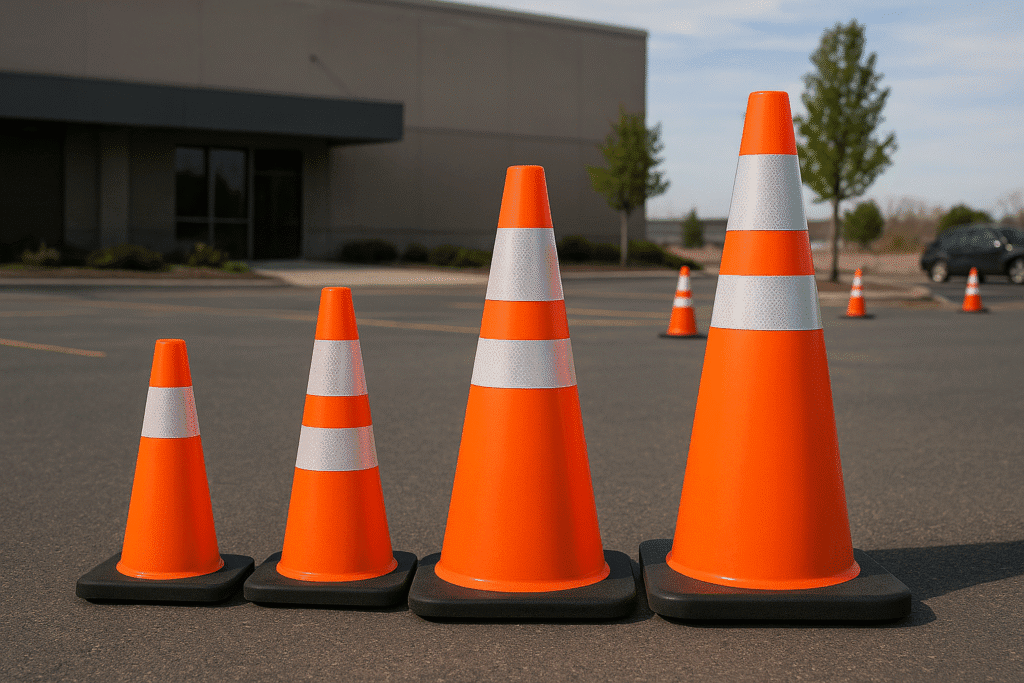
The traffic cone industry recognizes several standard size categories, though terminology varies somewhat between manufacturers and regions. Mini traffic cones typically range from 12 to 18 inches in height, designed for applications requiring conspicuity without the visual dominance or footprint of larger cones. These compact units excel in controlled environments where space constraints, pedestrian-scale operations, or temporary indoor applications drive equipment selection.
Standard-sized cones measuring 28 to 36 inches represent the most common category for general construction and roadway applications. These mid-range sizes balance visibility, stability, and transportability for typical traffic control scenarios. However, big traffic cones extending 42 inches or taller serve specialized high-visibility applications where standard sizes prove inadequate for the operational environment or regulatory requirements.
The physical differences between mini traffic cones and big traffic cones extend beyond simple height measurements. Base diameter, weight, wind resistance, and material thickness all scale with cone size, affecting stability, durability, and handling characteristics. A 12-inch mini cone might weigh less than two pounds with a 10-inch square base, while a 42-inch big cone could exceed eight pounds with an 18-inch base, creating substantially different deployment and performance characteristics.
Regulatory frameworks sometimes mandate specific cone sizes for particular applications. The Manual on Uniform Traffic Control Devices specifies minimum cone heights for various roadway applications based on speed limits and traffic volumes. High-speed roadways typically require 36-inch minimum cones, while lower-speed environments may permit smaller sizes. Understanding these requirements prevents specification errors that could result in non-compliant installations, regulatory citations, or liability exposure if accidents occur in work zones using undersized traffic control devices.
Applications Ideal for Mini Traffic Cones
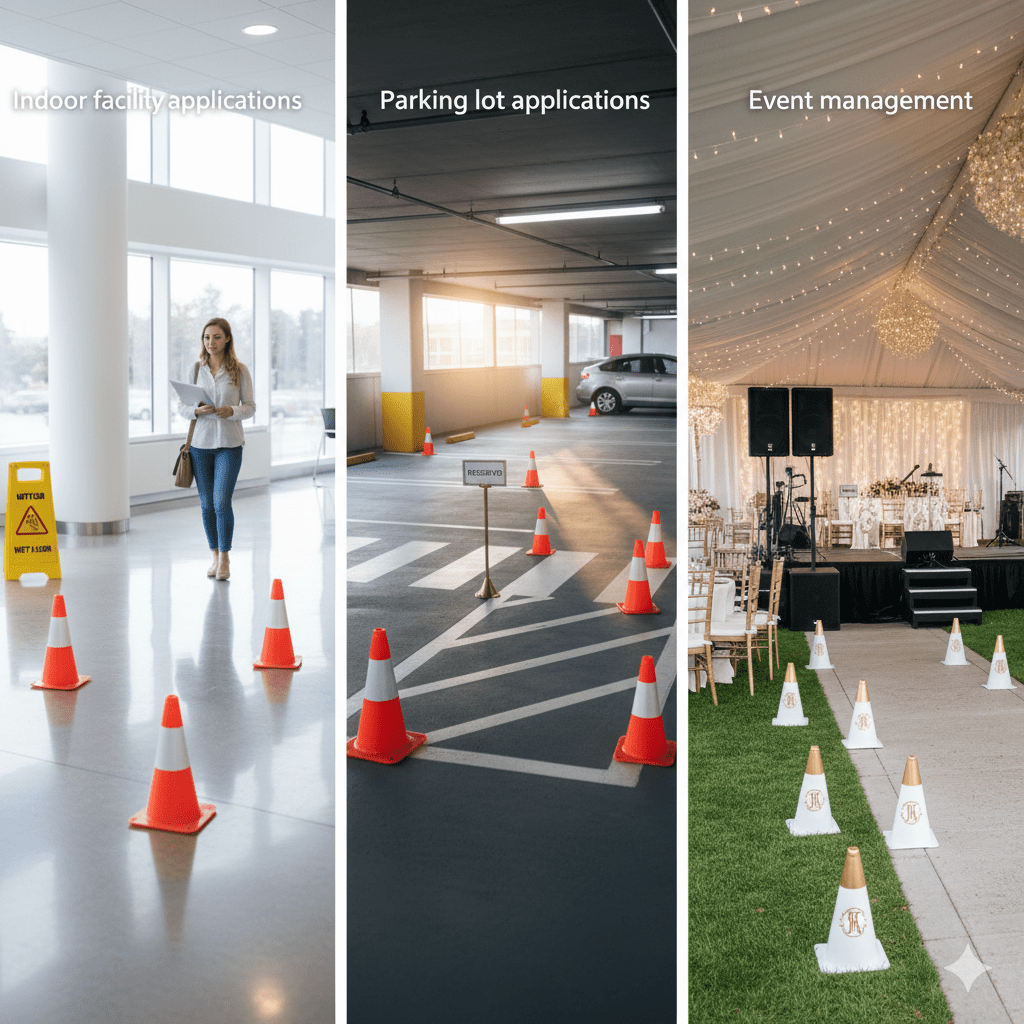
Mini traffic cones excel in environments where full-sized cones would prove impractical, visually overwhelming, or unnecessarily expensive. Indoor facility applications represent the most common use case for smaller cones. Retail stores directing customers around wet floors, office buildings marking maintenance areas, or healthcare facilities designating temporary pathway closures all benefit from mini cones that provide adequate visibility without dominating interior spaces or creating navigation obstacles for pedestrians.
Parking lot applications within controlled facilities often utilize mini traffic cones effectively. Reserved parking space designation, temporary closure of individual spaces for maintenance or special events, and delineation of pedestrian walkways through parking areas all represent scenarios where 12 to 18-inch cones provide sufficient visibility given the low-speed, controlled environment. The smaller footprint reduces storage space requirements and transportation costs when facilities maintain cone inventories for periodic deployment.
Event management professionals frequently deploy mini traffic cones for crowd control, pathway designation, and equipment protection during indoor or outdoor events. Conference centers, wedding venues, and festival organizers use smaller cones to guide attendees, protect audio-visual equipment, or designate restricted areas without creating the industrial appearance that larger orange traffic cones might introduce. The ability to customize smaller cones with event branding or color schemes enhances their appeal for applications where aesthetics matter alongside functionality.
Educational institutions find mini traffic cones valuable for various campus applications. Physical education programs use them for athletic drills and training exercises, while facilities teams deploy them for minor maintenance projects or temporary pathway modifications that don’t warrant full-sized cone deployment. The lighter weight and easier handling make mini cones particularly suitable when non-maintenance personnel need to deploy temporary traffic control for short-duration needs.
Warehouse and manufacturing facilities sometimes utilize mini traffic cones for designating specific work zones, marking equipment placement areas, or creating temporary boundaries around maintenance activities. In environments where forklift traffic and pedestrian movement require management but don’t involve high-speed travel, smaller cones provide adequate visibility while consuming less floor space than larger alternatives. However, facilities must carefully evaluate whether mini cones provide sufficient conspicuity given the specific operational environment and traffic patterns.
When Big Traffic Cones Become Essential
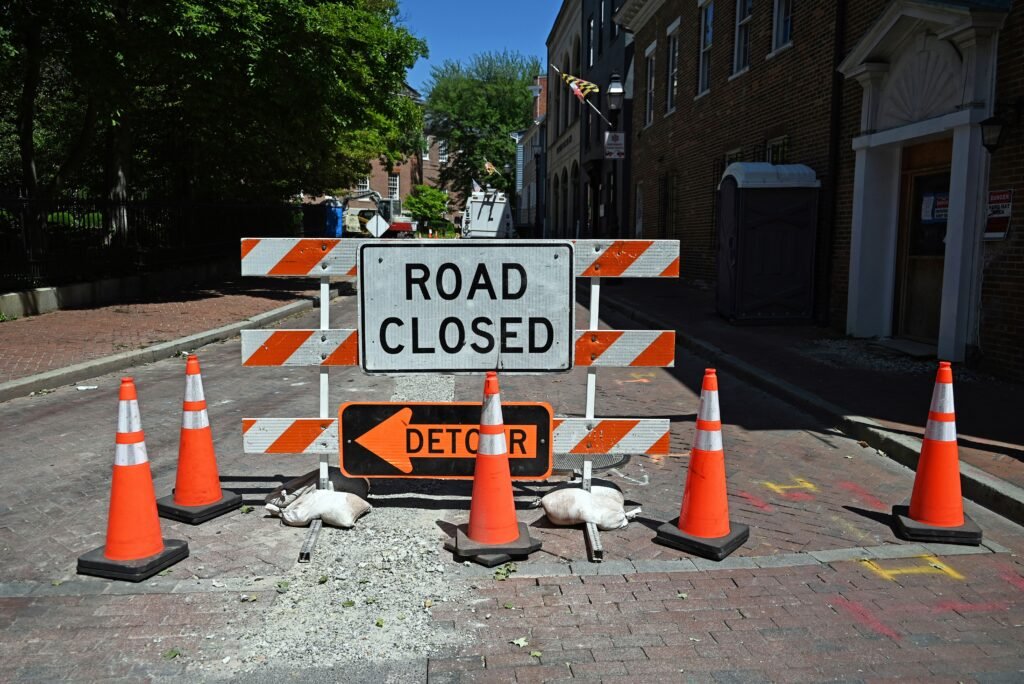
Big traffic cones become necessary when visibility requirements, regulatory mandates, or environmental conditions exceed the capabilities of standard-sized alternatives. High-speed roadway applications represent the most obvious scenario requiring larger cones. Interstate highways, limited-access expressways, and arterial roadways with speed limits exceeding 45 mph typically demand 36-inch minimum cone heights, with many applications benefiting from 42-inch or taller cones that provide visibility from extended distances necessary for safe driver response at highway speeds.
Construction zones in high-traffic urban environments often specify big traffic cones even when lower speeds might technically permit smaller sizes. The visual dominance of taller cones helps ensure driver attention in complex, distraction-rich environments where competing visual stimuli might cause smaller cones to be overlooked. Major infrastructure projects, utility work affecting primary roadways, and long-duration construction requiring robust traffic control systems all benefit from the enhanced visibility and professional appearance that larger cones provide.
Adverse weather conditions may necessitate bigger cones than would otherwise be required. Heavy rain, fog, or snow reduces visibility distances, making smaller cones difficult to see until drivers are dangerously close to work zones. Projects in regions prone to adverse weather should consider specifying larger cone sizes that remain visible despite environmental challenges. The incremental cost of larger cones proves negligible compared to accident costs that inadequate visibility might precipitate.
Airport and seaport applications frequently require big traffic cones due to the large-scale operational environments and specialized visibility requirements. Aircraft taxiways, cargo handling areas, and runway maintenance projects all involve massive open spaces where standard-sized cones would appear insignificant. The 42-inch and taller cones used in these contexts ensure visibility across the extended distances typical of aviation and maritime facilities while withstanding wind conditions that might topple smaller, lighter alternatives.
Emergency response scenarios sometimes demand rapid deployment of highly visible traffic control. Fire departments, law enforcement agencies, and emergency medical services maintaining cone inventories for accident scene management often specify larger sizes that maximize visibility during chaotic, time-critical situations where traffic control must be established rapidly and function effectively despite suboptimal placement or environmental conditions.
Visibility and Safety Performance Comparison
The fundamental safety justification for selecting larger cones centers on visibility performance across varying conditions and distances. Big traffic cones provide greater visual mass that catches driver attention more effectively than smaller alternatives, particularly at extended distances or when drivers approach at high speeds with limited attention available for detecting traffic control devices. Research demonstrates that larger cones reduce the incidence of cone strikes and work zone intrusions compared to smaller cones in equivalent applications.
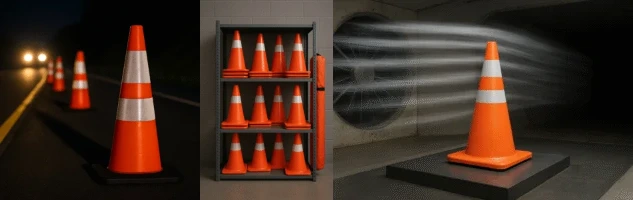
Nighttime visibility differences between cone sizes prove particularly significant. While reflective striping enhances visibility for all cone sizes during darkness, the greater surface area of big traffic cones provides more reflective material to catch and return vehicle headlight beams. This expanded reflective surface area increases detection distances, giving drivers more time to recognize work zones and adjust speed or lane position appropriately. Projects involving substantial nighttime work should strongly consider larger cone sizes even if daytime visibility might seem adequate with smaller alternatives.
Peripheral vision detection represents another visibility advantage for larger cones. Drivers monitoring primary traffic flow while simultaneously maintaining awareness of roadside conditions detect larger objects more readily through peripheral vision than smaller ones. This peripheral detection capability proves valuable when drivers must identify work zones while navigating complex traffic situations requiring their primary visual attention elsewhere. The enhanced peripheral detectability of big traffic cones contributes to earlier driver recognition and more appropriate behavioral responses.
However, mini traffic cones provide adequate visibility for many applications where viewing distances remain short and operating speeds stay low. Indoor facilities, parking lots, and pedestrian-scale environments typically feature sight lines under 100 feet and movement speeds below 15 mph. In these contexts, 12 to 18-inch cones deliver sufficient visibility without the space consumption, storage challenges, or expense associated with larger alternatives. Proper application assessment ensures cone sizes match actual visibility requirements rather than reflexively selecting the largest available size regardless of need.
Practical Considerations Beyond Visibility
Stability differences between cone sizes significantly impact performance in outdoor applications. Big traffic cones feature larger base diameters and greater weight that resist tipping from wind, vehicle wash effects, or incidental contact. This stability proves essential for deployments in high-traffic areas where passing vehicles create substantial air turbulence, or in exposed locations where natural wind conditions might topple lighter cones. Projects anticipating extended deployment durations or exposure to challenging environmental conditions should prioritize cone stability through appropriate size selection.
Conversely, the lighter weight of mini traffic cones facilitates rapid deployment and frequent repositioning for applications requiring flexibility. Event management scenarios where cone positions change throughout the day, or facility maintenance projects involving multiple short-duration deployments, benefit from the easier handling that smaller, lighter cones provide. Single personnel can efficiently transport and deploy dozens of mini cones, while equivalent deployment of big traffic cones might require multiple workers or mechanical assistance for transport.
Storage and transportation logistics favor mini traffic cones for organizations maintaining large cone inventories or operating from vehicles with limited storage capacity. A standard pickup truck might accommodate 50-75 mini cones versus perhaps 25-30 big cones in the same space. This storage efficiency proves particularly valuable for organizations conducting numerous small projects rather than fewer large-scale deployments. However, organizations should resist specifying mini cones solely for storage convenience when safety requirements genuinely demand larger sizes.
Durability and expected service life vary between cone sizes based on construction standards and typical use patterns. Big traffic cones generally feature heavier-duty construction with thicker polymer walls and reinforced bases designed to withstand the demanding conditions of highway work zones. While this robust construction increases initial costs, the extended service life often justifies the investment compared to cheaper, lighter mini cones that may require more frequent replacement in demanding applications. Organizations should evaluate total cost of ownership rather than simply comparing purchase prices when selecting between cone sizes.
Cost Analysis and Budget Implications
Purchase price differences between mini and big traffic cones reflect the substantial material and manufacturing cost differentials. Mini traffic cones might cost $8-15 per unit for basic models, while big traffic cones typically range from $25-45 depending on construction quality and features. This 200-300% price differential creates significant budget implications for large-scale procurements, potentially influencing organizations toward smaller sizes even when larger cones would provide superior performance.
However, comprehensive cost analysis should extend beyond unit purchase prices to encompass deployment labor, replacement frequency, regulatory compliance risks, and potential liability exposure from inadequate traffic control. A project requiring 200 cones faces a $2,000-3,000 cost differential between mini and standard sizes, or $5,000-8,000 between mini and big cones. While these amounts seem substantial, they represent modest percentages of typical construction project budgets and prove insignificant compared to accident costs, regulatory fines, or liability exposure that inadequate traffic control might precipitate.
Replacement costs accumulate over time as cones suffer damage from vehicle strikes, weather exposure, or normal wear. Mini traffic cones used in demanding applications beyond their design intent may require replacement every 6-12 months, while appropriately specified big traffic cones in highway applications often deliver 3-5 years of service. The apparently economical mini cone purchase becomes expensive when frequent replacement needs are considered, potentially costing more over multi-year periods than initially pricier but more durable larger alternatives.
Organizations maintaining permanent cone inventories for ongoing operations should evaluate size selection from a fleet management perspective. Municipal public works departments, utility companies, and large contractors benefit from standardizing on cone sizes appropriate for their most common applications rather than maintaining multiple size categories requiring separate storage, inventory management, and deployment planning. This standardization simplifies procurement, reduces training complexity, and ensures personnel consistently deploy appropriate sizes rather than making ad-hoc decisions potentially compromising safety or compliance.
Regulatory Compliance and Liability Considerations
Regulatory frameworks governing traffic control device selection create non-negotiable requirements in many applications. The MUTCD and equivalent state or local regulations specify minimum cone heights based on roadway classifications, speed limits, and work zone characteristics. Contractors and agencies working on public roadways must comply with these requirements regardless of personal preferences or budget constraints. Deploying undersized cones in applications requiring larger sizes exposes organizations to regulatory citations, project delays, and potential liability if accidents occur in non-compliant work zones.
Professional engineering standards and industry best practices establish cone size expectations even where explicit regulations may not mandate specific sizes. Organizations deviating from these established practices without documented justification may face challenges defending their decisions if accidents occur and traffic control adequacy becomes questioned during investigations or litigation. This liability exposure extends beyond regulatory fines to potentially include negligence claims arguing that substandard traffic control contributed to accident causation.
Insurance considerations influence cone size selection for risk-conscious organizations. Commercial general liability and professional liability insurance policies often include provisions requiring adherence to industry standards and applicable regulations. Policy exclusions might apply if insurers determine that inadequate traffic control contributed to accidents and that traffic control deficiencies violated industry norms. Organizations should consult with insurance advisors and legal counsel when establishing traffic control standards to ensure practices align with coverage requirements and liability management objectives.
Professional certifications and qualifications for traffic control personnel often address proper equipment selection based on project characteristics. Certified work zone traffic control supervisors receive training on cone size selection criteria and understand the regulatory frameworks governing these decisions. Organizations employing certified personnel should ensure internal procurement and deployment practices align with professional standards these certifications represent, avoiding situations where purchasing departments specify inadequate equipment that certified supervisors must then deploy against their professional judgment.
Making Informed Size Selection Decisions
Systematic evaluation of project requirements provides the foundation for appropriate cone size selection. Organizations should assess roadway classifications, traffic speeds, sight distances, environmental conditions, deployment duration, and applicable regulations before specifying cone sizes. This analysis might reveal that different project components require different cone sizes, with high-speed approaches demanding big traffic cones while internal work zones in lower-speed areas can appropriately utilize smaller alternatives.
Consultation with traffic engineering professionals proves valuable for complex projects or organizations lacking in-house expertise. Traffic engineers can evaluate site-specific conditions, interpret applicable regulations, and recommend cone sizes that balance safety requirements, regulatory compliance, and cost considerations. The modest expense of professional consultation often proves justified through optimized equipment specifications that avoid both over-specification increasing costs unnecessarily and under-specification compromising safety or compliance.
Supplier partnerships can provide technical guidance complementing engineering consultation. Reputable traffic control equipment suppliers maintain technical knowledge about appropriate product applications and can advise on size selection based on project descriptions. While suppliers naturally prefer selling higher-value larger cones, established professional suppliers understand that recommending inappropriate products damages long-term customer relationships and industry reputation. Organizations should seek suppliers demonstrating genuine technical competence rather than those simply offering lowest prices without application expertise.
Pilot programs or phased implementations allow organizations to evaluate cone performance before committing to large-scale procurements. Acquiring small quantities of both mini traffic cones and big traffic cones for trial deployments provides practical experience with handling, visibility, and stability characteristics under actual operating conditions. This hands-on evaluation often reveals considerations that specification reviews alone might miss, informing larger procurement decisions with real-world performance data.
The choice between big traffic cones and mini traffic cones ultimately reflects a balance between safety requirements, regulatory obligations, operational needs, and budget constraints. Organizations approaching size selection systematically, with thorough understanding of application requirements and applicable standards, consistently achieve superior outcomes compared to those making arbitrary decisions based solely on availability, familiarity, or initial purchase price. Proper cone sizing represents a modest investment that yields substantial returns through enhanced safety, regulatory compliance, and professional project execution that protects workers, the public, and organizational interests.
Looking for a Custom Traffic Cones Manufacturer or Supplier? Struggling to find the right factory to bring your vision to life? We’ve got you covered! At our place, we craft top-quality traffic cones with precision and care. Big or small, your needs are our mission. Let’s launch your cones project and take your product line to the next level! Click here to contact