
Aerospace manufacturing facilities operate under stringent safety protocols where precision, quality control, and operational visibility directly impact both worker safety and product integrity. Manufacturing engineers, plant safety managers, and operations directors within aerospace production environments face unique challenges in maintaining comprehensive situational awareness across expansive factory floors where high-value components, precision machinery, and specialized material handling equipment converge. Convex mirrors serve as critical visual aids that enhance operational safety by eliminating blind spots at intersections, near large equipment, and in areas where line-of-sight limitations create collision risks or compromise quality oversight. The aerospace sector’s demanding regulatory environment and zero-defect culture necessitate careful consideration of mirror specifications, placement strategies, and maintenance protocols that align with industry safety standards and quality management requirements.
Aerospace Manufacturing Environment and Safety Requirements
Aerospace production facilities differ substantially from general manufacturing environments due to the complexity of manufactured components, the precision required in assembly processes, and the regulatory oversight governing all aspects of production. Federal Aviation Administration (FAA) regulations, International Traffic in Arms Regulations (ITAR) requirements for defense contractors, and AS9100 quality management standards create a comprehensive framework that influences facility design, safety systems, and operational procedures. While convex mirrors themselves may not be directly regulated by aerospace-specific standards, their integration into facility safety systems must align with overall safety management approaches and complement other engineered controls.
Manufacturing operations encompass diverse processes including precision machining, composite layup and curing, large-scale assembly of airframe sections, engine assembly and testing, and final aircraft integration. Each operational area presents distinct visibility challenges requiring tailored mirror deployment strategies. Plant safety directors must consider the interaction between mirror installations and other facility elements including overhead cranes, automated guided vehicles, cleanroom protocols, and foreign object debris (FOD) prevention programs that are fundamental to aerospace quality assurance.
Strategic Mirror Placement for Material Movement Safety
Aerospace components often possess substantial physical dimensions and significant value, requiring careful material handling protocols that prevent damage to parts, equipment, or personnel. Overhead crane operations, forklift traffic, and automated material transport systems create dynamic environments where enhanced visibility prevents costly incidents and maintains production flow.
Crane Operation Blind Spot Mitigation
Overhead bridge cranes moving large airframe sections or engine assemblies operate in three-dimensional space where crane operators’ direct line of sight may be obstructed by the load itself, structural building elements, or adjacent manufacturing equipment. Convex mirrors strategically positioned to provide crane operators with views around suspended loads and into adjacent work areas supplement existing crane safety systems including load moment indicators, anti-collision devices, and radio communication protocols.
Mirror placement for crane operations requires coordination with rigging supervisors and crane operators to identify specific sight line obstructions that occur during typical lifting operations. Mirrors must be positioned at elevations visible from crane operator stations while remaining clear of potential interference with crane hooks, cables, or suspended loads during their full range of motion. Facility engineers should document mirror locations on facility drawings and incorporate mirror positions into crane operation risk assessments and standard operating procedures.
Intersection Visibility at Manufacturing Aisles
Manufacturing facilities utilize defined traffic lanes and pedestrian walkways to segregate personnel from material handling equipment. Intersections where these pathways cross or where equipment exits from work cells into main aisles create collision risk points requiring enhanced visibility. Convex mirrors positioned to provide approaching traffic with advance warning of crossing vehicles or pedestrians supplement other intersection safety measures including signage, floor marking, and audible warning devices.
Mirror sizing and positioning calculations should account for the approach speeds of material handling equipment, stopping distances on industrial floor surfaces, and the reaction time required for operators to perceive and respond to reflected images. Conservative design assumptions ensure adequate warning time under actual operational conditions including situations where operators may be fatigued or distracted. Safety engineers should validate mirror effectiveness through operational observation and solicit feedback from equipment operators during commissioning to confirm that installed systems provide intended visibility improvements.
Quality Control and Inspection Area Applications
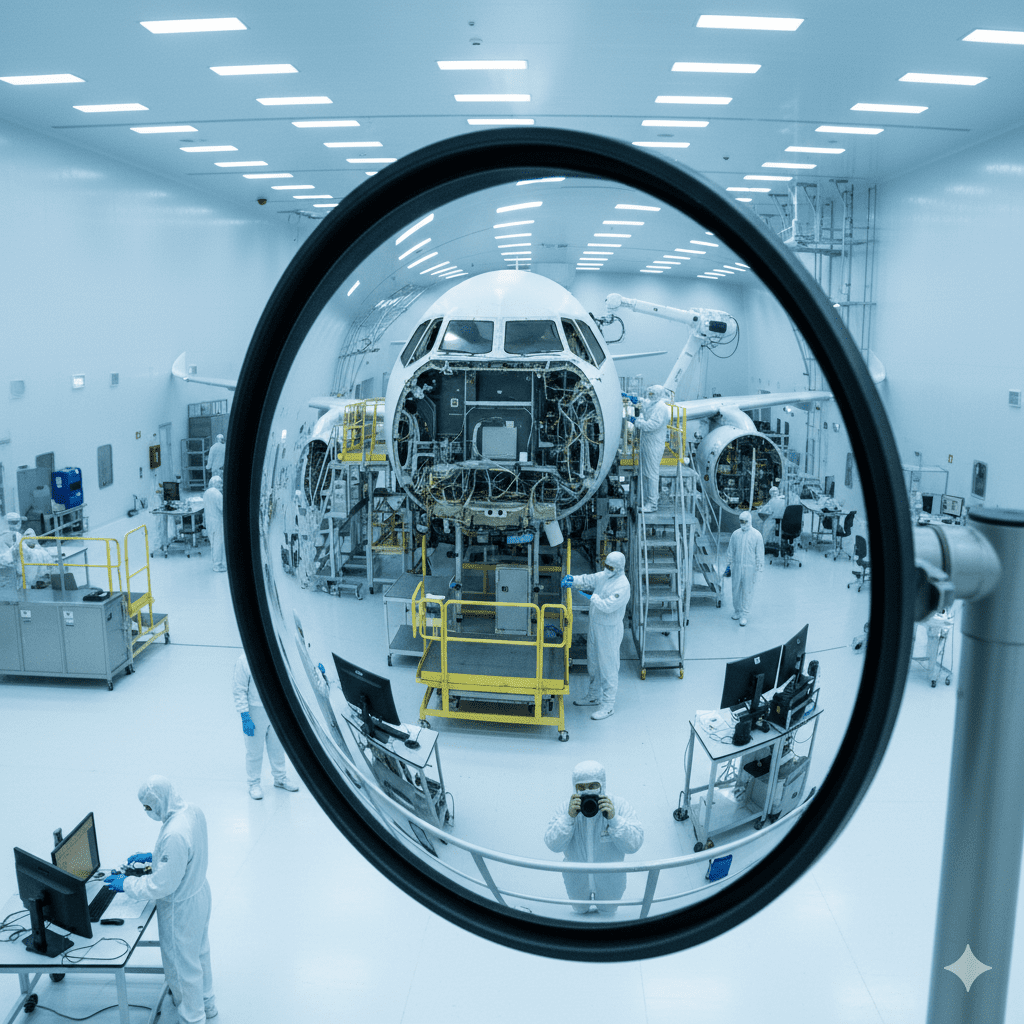
Aerospace manufacturing quality assurance processes require detailed visual inspection of components, assemblies, and production processes. Convex mirrors support quality control objectives by enabling inspectors to view component features from multiple angles without requiring physical repositioning of large or delicate parts, and by allowing supervisory personnel to maintain oversight of production areas from remote observation stations.
Non-Destructive Testing Support
Non-destructive testing (NDT) operations including visual inspection, fluorescent penetrant inspection, and ultrasonic testing require technicians to carefully examine component surfaces for defects, cracks, or manufacturing anomalies. Large aerospace components such as wing skins, fuselage sections, or engine casings present inspection challenges due to their physical dimensions and the difficulty of accessing all surface areas for direct viewing. Convex mirrors enable NDT technicians to view reflected images of surface areas that would otherwise require awkward positioning, ladders, or scaffolding to inspect directly.
Mirror applications in inspection areas must not interfere with actual NDT processes or introduce foreign object debris risks. Mirrors should be permanently mounted to facility structures rather than positioned as portable equipment that could be inadvertently left in production areas. Inspection area mirrors require regular cleaning to maintain optical clarity, with cleaning protocols integrated into facility housekeeping procedures and performed using lint-free materials compatible with cleanroom environments where applicable.
Production Monitoring and Supervision
Manufacturing supervisors and quality engineers benefit from mirror installations that provide visual oversight of multiple workstations or production cells from centralized observation points. This passive monitoring capability complements digital manufacturing systems and allows experienced personnel to detect process variations, safety concerns, or quality issues through direct observation. Mirrors supporting supervisory functions should be positioned to provide clear views of critical work areas while respecting employee privacy and avoiding the perception of excessive surveillance that could negatively impact workforce relations.
Cleanroom and Controlled Environment Considerations
Certain aerospace manufacturing processes including composite bonding, precision coating applications, and assembly of sensitive electronic systems occur within cleanroom environments or other controlled atmospheric conditions. Mirror installations in these areas must satisfy additional requirements beyond standard industrial applications to avoid compromising environmental controls or introducing contamination risks.
Material Selection for Cleanroom Compatibility
Mirrors installed in cleanroom environments require materials that do not shed particles, outgas volatile organic compounds, or harbor microbial growth. Acrylic mirror substrates with sealed edges prevent particle generation from exposed material edges, while stainless steel mounting hardware eliminates corrosion and particle generation from ferrous metals. All materials should be evaluated for compatibility with cleanroom protocols, including the cleaning chemicals and methods used to maintain environmental controls.
Mounting hardware should minimize horizontal surfaces where particles could accumulate, with designs incorporating sloped surfaces that prevent dust settling. Installation procedures must align with cleanroom protocols, with installers following gowning procedures and using approved tools and materials that do not introduce contamination. Post-installation cleaning should be performed according to cleanroom standards before the area is returned to operational status.
Integration with Positive Pressure Environments
Cleanrooms and controlled atmosphere work areas maintain positive pressure relative to surrounding spaces to prevent infiltration of contaminated air. Mirror mounting systems must not compromise pressure barriers or create air leakage paths that would degrade environmental controls. Wall-mounted mirrors in pressure boundary walls require appropriate sealing of mounting penetrations, with gaskets or sealants maintaining air barrier integrity. Facility engineers should coordinate mirror installations with environmental control system designers to ensure pressure differentials are maintained within specified tolerances.
Foreign Object Debris Prevention Integration
Foreign object debris (FOD) prevention programs are fundamental to aerospace manufacturing quality assurance, as even small particles or dropped items can cause catastrophic failures in aerospace systems. Mirror installations must support rather than compromise FOD prevention objectives through appropriate design, installation, and maintenance practices.
Secure Mounting and Anti-Loosening Measures
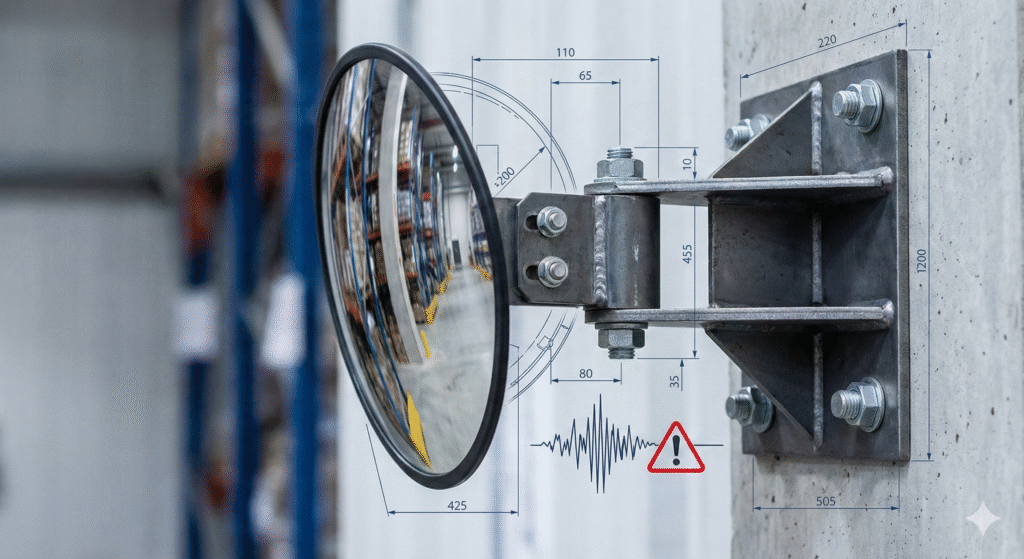
All mirror mounting hardware must be secured against loosening from vibration, thermal cycling, or accidental contact. Locking fasteners including nylon-insert locknuts, safety wire, or thread-locking compounds prevent fasteners from backing out and falling into production areas. Regular inspection protocols should verify mounting security and identify any signs of loosening or degradation requiring corrective action.
Mirrors positioned above production areas where falling components could contact sensitive parts or assemblies require additional security measures or protective barriers ensuring that mirror failure cannot create FOD incidents. Risk assessments should evaluate the consequences of mirror failure and implement controls proportionate to the potential impact on product quality or safety.
Maintenance Procedures and FOD Control
Mirror cleaning and maintenance activities must incorporate FOD prevention protocols including the use of tethered tools, drop cloths to capture cleaning materials, and post-maintenance area inspections verifying that no foreign materials remain. Maintenance procedures should be documented in standard work instructions that specify approved cleaning materials, required personal protective equipment, and inspection criteria for identifying mirrors requiring replacement due to damage or degradation.
Cleaning materials including cloths, spray bottles, and cleaning solutions should be inventoried before and after maintenance activities to ensure all items are accounted for and none have been inadvertently left in production areas. This disciplined approach aligns with the broader FOD prevention culture essential to aerospace manufacturing quality.

Electromagnetic Compatibility Considerations
Certain aerospace manufacturing operations involve electromagnetic fields from welding equipment, heat-treating furnaces, or electromagnetic inspection devices. While passive convex mirrors do not generate electromagnetic interference, metallic mirror components and mounting structures can potentially interact with electromagnetic environments in ways that could affect sensitive manufacturing processes or measurement equipment.
Equipment Placement Relative to Sensitive Operations
Mirrors installed near electromagnetic welding operations, radio frequency sealing equipment, or electromagnetic testing stations should be evaluated for potential interference with these processes. Consultation with manufacturing engineers and equipment specialists ensures mirror installations do not inadvertently affect production operations. In most cases, the small mass and non-ferromagnetic properties of properly specified mirror materials prevent significant interaction, but verification through operational testing or electromagnetic modeling provides assurance.
Material Selection for Minimal EM Interaction
Stainless steel mounting hardware typically specified for industrial applications possesses low magnetic permeability and minimal interaction with electromagnetic fields at frequencies relevant to manufacturing processes. Aluminum mounting components offer even lower electromagnetic signature and may be preferred for installations immediately adjacent to sensitive equipment. Material selection decisions should be coordinated with process engineers familiar with specific equipment requirements and electromagnetic compatibility concerns.
Integration with Automated Manufacturing Systems
Advanced aerospace manufacturing facilities increasingly incorporate automated systems including robotic assembly equipment, automated guided vehicles (AGVs), and computer numerical control (CNC) machining centers. Mirror installations must complement these automated systems without interfering with their operation or creating hazards from human-automation interaction.
Clearance Verification for Robotic Work Envelopes
Industrial robots operate within defined work envelopes, sweeping through three-dimensional space as they perform programmed tasks. Mirrors must be positioned outside robotic work envelopes to prevent contact that could damage mirrors, robots, or workpieces. Facility layout drawings should document robotic work envelopes and incorporate appropriate clearances ensuring mirrors remain outside these zones with adequate safety margins accounting for potential robot positioning errors or unexpected motion.
AGV Navigation and Sensor Compatibility
Automated guided vehicles navigate using various sensing technologies including laser guidance, magnetic tape following, or vision systems. Mirrors installed in areas where AGVs operate should not interfere with navigation sensors or create confusing visual patterns that could affect vision-based guidance systems. Coordination with AGV system integrators during facility design ensures mirror placements are compatible with automated material handling operations.
Lighting Interaction and Glare Prevention
Aerospace manufacturing facilities typically maintain high illumination levels to support precision work and detailed quality inspections. Convex mirrors can potentially create glare or distracting reflections if positioned where they reflect bright light sources directly toward worker positions or into areas where visual acuity is critical. Careful attention to lighting-mirror interaction during placement planning prevents these issues.
Luminaire Position and Mirror Orientation
Facility lighting designers and safety engineers should collaboratively evaluate proposed mirror locations relative to overhead lighting fixtures, skylights, and windows that could create reflected glare. Computer-aided lighting analysis tools can predict reflected light patterns and identify problematic configurations during design phases when adjustments are easily implemented. Operational validation after installation verifies that mirrors do not create unanticipated glare or reflections affecting work quality or safety.
Where mirror positions necessary for safety purposes unavoidably create some reflection of light sources, anti-glare coatings or alternative mirror locations should be considered. In some cases, adjusting mirror mounting angles or slightly relocating lights provides acceptable solutions that maintain both intended visibility benefits and comfortable visual conditions for workers.
Compliance with Workplace Safety Standards
Aerospace manufacturing facilities must comply with Occupational Safety and Health Administration (OSHA) regulations and industry consensus standards addressing workplace safety. While OSHA does not mandate specific mirror installations, convex mirrors often serve as components of engineered controls that reduce workplace hazards and demonstrate employer commitment to providing safe working conditions.
Hazard Assessment and Control Hierarchy
OSHA’s hierarchy of controls framework prioritizes elimination of hazards, followed by engineering controls, administrative controls, and finally personal protective equipment. Convex mirrors function as engineering controls that reduce collision hazards and improve situational awareness without requiring worker compliance or behavior modification. Safety program documentation should identify specific hazards that mirror installations address and explain how mirrors fit within the broader hierarchy of controls implemented for each identified risk.
Documentation and Training Requirements
Worker training programs should include information about mirror locations and how to effectively use mirrors as part of safe work practices. Training documentation should address mirror limitations including image distortion, distance perception challenges, and the fact that mirrors supplement but do not replace direct visual observation and other safety precautions. Regular safety meetings provide opportunities to reinforce proper mirror use and solicit employee feedback about mirror effectiveness or needs for additional visibility improvements.
Facility Modification and Change Management
Aerospace manufacturing facilities evolve continuously as production programs change, new equipment is installed, and process improvements are implemented. Change management procedures should address mirror installations to ensure they remain effective and do not become obsolete or create new hazards as facility configurations change.
Production Layout Change Assessment
Significant facility modifications including installation of new production equipment, reconfiguration of work cells, or changes to material flow patterns require reassessment of existing mirror placements. Mirrors may need relocation, removal, or supplementation with additional mirrors to maintain effective visibility in modified layouts. Formal change management processes should include safety assessment checklists that specifically address whether planned changes affect existing safety equipment including convex mirrors.
Documentation Updates
Facility documentation including safety plans, standard operating procedures, and facility drawings should accurately reflect current mirror locations. When mirrors are added, relocated, or removed, corresponding documentation updates should occur promptly to maintain accuracy. Digital facility management systems that maintain current as-built conditions support this documentation requirement and enable safety professionals to track safety equipment throughout the facility lifecycle.
Maintenance Program Development
Systematic maintenance ensures mirrors continue providing intended visibility benefits throughout their service life. Maintenance programs should address cleaning frequency, damage inspection criteria, and replacement thresholds based on operational conditions and mirror criticality.
Inspection Frequency and Criteria
Mirrors in high-traffic areas or locations subject to incidental contact from material handling equipment require more frequent inspection than mirrors in protected locations with minimal exposure to damage risks. Monthly visual inspections identify obvious damage including cracks, mounting hardware loosening, or significant soiling that degrades visibility. Annual detailed inspections evaluate mounting system integrity, mirror optical quality, and alignment to ensure continued effectiveness.
Inspection criteria should define specific conditions warranting corrective action, including quantitative thresholds where practical. For example, criteria might specify that mirrors with cracks exceeding one inch in length, mounting hardware showing visible loosening, or optical coatings exhibiting more than 20% coverage by stains or defects require repair or replacement. Clear criteria enable consistent decision-making and prevent premature replacement of serviceable mirrors while ensuring that degraded mirrors are addressed before they cease providing adequate visibility.
Cleaning Protocols and Materials
Mirror cleaning should occur on schedules appropriate to facility conditions, ranging from weekly cleaning in dusty or high-traffic areas to quarterly cleaning in protected locations with minimal soiling. Cleaning procedures should specify approved materials and methods that effectively remove contaminants without scratching mirror surfaces or damaging protective coatings. Microfiber cloths and neutral pH cleaning solutions typically provide effective cleaning for industrial convex mirrors without causing damage.
Maintenance personnel should be trained in proper cleaning techniques and understand the importance of gentle cleaning methods that avoid scratching. Damaged mirrors with scratched surfaces lose optical clarity and may require replacement even if structurally sound. Preventive maintenance through proper cleaning techniques extends mirror service life and maintains consistent visibility performance.
Cost Considerations and Total Ownership Analysis
Aerospace manufacturing operations benefit from rigorous analysis of equipment investments including seemingly simple items like convex mirrors. Total cost of ownership analysis should consider initial procurement costs, installation labor, ongoing maintenance expenses, and expected service life to enable informed purchasing decisions.
Quality Versus Economy in Mirror Selection
Industrial-grade mirrors manufactured specifically for demanding applications offer superior durability and longer service life compared to economy alternatives designed for light-duty commercial use. Higher-quality mirrors incorporate UV-stabilized materials, robust mounting hardware, and protective coatings that resist scratching and environmental degradation. The incremental cost premium for industrial-grade products typically represents 30% to 50% higher initial investment but can deliver service life improvements of 200% to 300%, making quality mirrors economical when evaluated on a total ownership basis.
Procurement specifications should clearly define quality requirements including material grades, coating systems, and warranty provisions that ensure purchased mirrors meet operational needs. Lowest-price procurement strategies that do not account for quality differences may result in premature failures, increased maintenance costs, and reduced safety effectiveness that ultimately cost more than higher-quality alternatives would have.
Standardization Benefits
Facilities that standardize on specific mirror models and mounting systems from qualified manufacturers benefit from simplified procurement, reduced spare parts inventory, and consistent performance characteristics across installations. Maintenance personnel become familiar with standard products, improving efficiency in cleaning, inspection, and replacement activities. Bulk purchasing agreements with preferred suppliers often yield pricing advantages while ensuring consistent product quality and reliable availability.
Conclusion (** Mirrors as Safety System Components **)
Convex mirror applications in aerospace manufacturing represent important components within comprehensive safety management systems that protect personnel, equipment, and product quality. Manufacturing operations managers who approach mirror deployment strategically, through careful hazard assessment, appropriate placement planning, quality product selection, and systematic maintenance, maximize safety benefits while optimizing total cost of ownership. While mirrors represent relatively simple technology, their effective integration into complex aerospace manufacturing environments requires attention to numerous considerations ranging from FOD prevention to electromagnetic compatibility to cleanroom protocols. Organizations that address these factors thoroughly create safer, more efficient production environments that support the precision and quality excellence essential to aerospace manufacturing success.
Looking for a custom convex mirror manufacturer or supplier? Struggling to find the right factory to bring your vision to life? We’ve got you covered! At our place, we craft top-quality convex mirrors with precision and care. Big or small, your needs are our mission. Let’s launch your mirror project and take your product line to the next level! Click here to contact