
Marine terminal operations present uniquely challenging environments for safety equipment, combining corrosive saltwater exposure, extreme weather conditions, and heavy industrial traffic that demands exceptional equipment reliability. Port authorities, terminal operators, and shipping logistics companies depend on convex mirrors to eliminate blind spots at container yards, vessel loading areas, and intermodal transfer zones where visibility challenges create significant safety risks and operational inefficiencies. Facility managers and safety directors responsible for terminal infrastructure must understand the rigorous durability testing protocols that differentiate marine-grade convex mirrors from standard commercial products, ensuring capital investments deliver long-term performance in demanding coastal environments.
Understanding the Marine Terminal Operating Environment
Marine terminals operate as complex logistics hubs where cargo handling equipment, heavy trucks, rail operations, and vessel servicing activities converge in confined spaces with inherent visibility limitations. Container stacking creates vertical obstructions exceeding 40 feet, while structural elements including loading cranes, warehouse facilities, and administrative buildings generate blind corners requiring strategic mirror placement. The operational tempo at major container terminals processes thousands of truck movements daily, with each vehicle interaction representing potential collision risk that properly positioned convex mirrors mitigate.
Beyond operational challenges, the marine environment imposes severe material stresses rarely encountered in inland facilities. Saltwater spray carries airborne chlorides that penetrate equipment surfaces, initiating corrosion processes that rapidly degrade inadequately protected materials. Coastal wind conditions generate sustained loads and dynamic gusts that stress mounting hardware, while temperature fluctuations, humidity extremes, and intense ultraviolet radiation from sun reflection off water and pavement surfaces accelerate material aging. Terminal operators investing in convex mirror systems must specify products proven through testing to withstand these accumulated environmental stresses throughout multi-year service intervals.

Corrosion Resistance Testing and Salt Spray Exposure
The primary differentiator between marine-grade and standard convex mirrors lies in corrosion resistance, a property quantified through accelerated salt spray testing that simulates years of coastal exposure in compressed timeframes. Facility planners specifying mirrors for marine terminals should require compliance with ASTM B117 salt spray testing protocols, the industry standard methodology for evaluating coating performance and material corrosion resistance.
Neutral Salt Spray Test Protocols
ASTM B117 establishes standardized conditions for neutral salt spray testing, exposing samples to continuous fog generated from 5% sodium chloride solution at controlled temperature and humidity. Test chambers maintain 95°F temperature with salt fog continuously applied, creating aggressive corrosion conditions that rapidly identify inadequate protective finishes or vulnerable material selections. Marine-grade convex mirrors should demonstrate 1,000 to 3,000 hours of salt spray exposure without significant corrosion, depending on the specific terminal location and proximity to breaking surf.
Testing protocols require careful sample preparation replicating field installation conditions, including deliberate scratches or scribe marks through protective coatings to simulate minor installation damage or impact from handling equipment. These artificial defects reveal whether coatings provide adequate corrosion protection at damaged areas or whether corrosion propagates rapidly from breach points, potentially undermining entire protective systems. Terminal procurement specifications should explicitly require testing of scribed samples, ensuring performance validation reflects realistic service conditions rather than pristine laboratory specimens.
Accelerated Corrosion Testing and Prohesion Exposure
While neutral salt spray provides baseline corrosion assessment, advanced testing protocols including Prohesion testing (ASTM G85 Annex 5) better simulate actual marine exposure by incorporating wet-dry cycling and acidified salt solutions. Prohesion chambers alternate between salt spray application and ambient drying periods, reproducing the cyclic wetting that occurs in coastal installations from fog, rain, and spray events followed by evaporation. This cycling accelerates corrosion processes beyond what occurs in continuous salt fog, providing more realistic service life predictions.
Terminal operators at locations experiencing industrial atmospheric contamination, such as facilities near refineries or chemical processing plants, should require Prohesion testing demonstrating adequate resistance to acidified environments. Test durations of 500 to 1,000 hours provide confidence in long-term performance for harsh industrial marine environments. Procurement documentation should require manufacturers to provide complete test reports including photographic documentation of post-test sample conditions, enabling technical evaluation of corrosion patterns and severity.
Material Selection and Protective Coating Systems
Corrosion resistance begins with appropriate base material selection, with marine terminal applications demanding materials inherently resistant to chloride attack or protected by robust coating systems. Purchasing managers evaluating convex mirror systems should understand the performance characteristics and limitations of common material options to make informed procurement decisions.
Stainless Steel Alloys for Marine Service
Stainless steel mounting hardware and structural components offer excellent corrosion resistance when appropriate alloys are specified. Type 304 stainless steel, containing chromium and nickel, provides adequate performance for many marine applications but may experience crevice corrosion or pitting in severe coastal exposures with salt spray impingement. Type 316 stainless steel incorporates molybdenum that significantly enhances resistance to chloride-induced corrosion, making it the preferred specification for marine terminal applications within 1,000 feet of the waterline.
For the most demanding exposures including locations subject to direct salt spray from vessel operations or breaking waves, duplex stainless steels combining austenitic and ferritic microstructures deliver superior performance. These advanced alloys resist stress corrosion cracking and pitting corrosion while maintaining adequate ductility for fabrication into mounting brackets and hardware assemblies. Terminal operators planning long-term installations with 15 to 20-year service life expectations should specify duplex stainless steel for critical mounting components, accepting higher initial costs in exchange for extended service intervals and reduced maintenance requirements.
Hot-Dip Galvanizing and Zinc Coating Protection
Steel mounting poles and structural components can achieve marine-grade corrosion protection through hot-dip galvanizing, which applies thick zinc coatings that provide both barrier protection and sacrificial corrosion resistance. ASTM A123 establishes coating thickness requirements for hot-dip galvanized structural components, with minimum coating weights of 3.1 ounces per square foot providing adequate protection for most marine terminal applications. Terminal procurement specifications should require galvanizing conforming to ASTM A123 with coating thickness verification through magnetic thickness gauge measurements.
Galvanized coatings require proper surface preparation before installation to maximize corrosion protection. Freshly galvanized surfaces develop white rust from initial weathering, a cosmetic issue that does not compromise long-term protection. However, drilling, cutting, or welding after galvanizing creates vulnerable bare steel areas requiring touch-up with zinc-rich repair coatings. Installation contracts should specify procedures for repairing galvanizing damage, ensuring complete protection throughout the installed system.
Powder Coating Systems for Enhanced Durability
Powder coating application over galvanized substrates provides duplex coating systems offering superior protection exceeding either coating alone. Polyester powder coatings formulated for outdoor durability resist ultraviolet degradation while providing a tough, impact-resistant finish that protects underlying galvanizing from mechanical damage. Marine terminal applications should specify powder coatings tested according to ASTM D3359 for adhesion and ASTM D2794 for impact resistance, ensuring coatings withstand the rigors of terminal operations including contact from cargo handling equipment.
Color selection influences coating longevity in high-UV marine environments, with lighter colors reflecting solar radiation and reducing surface temperatures that accelerate coating degradation. Terminal operators should specify coatings with ultraviolet absorbers and hindered amine light stabilizers (HALS) that extend color retention and gloss maintenance. Quality powder coating systems on properly prepared substrates deliver 10 to 15 years of service in marine exposures, significantly extending the useful life of convex mirror installations.
Wind Load Testing and Structural Integrity Verification
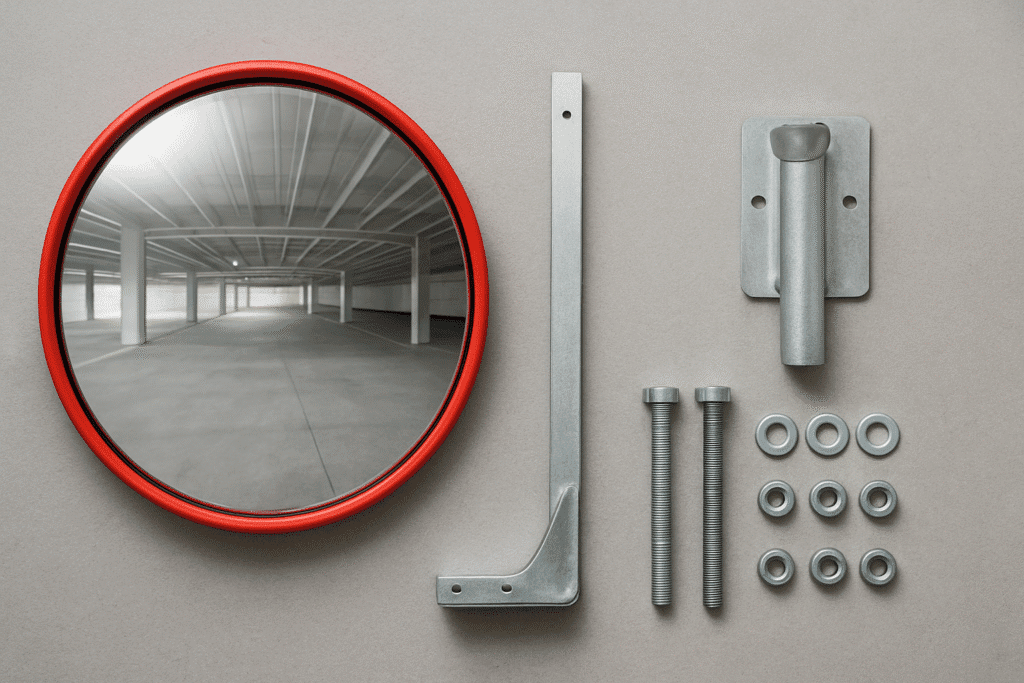
Coastal locations subject convex mirrors to extreme wind conditions that stress mounting systems and can dislodge inadequately secured installations. Hurricane-prone regions including the Gulf Coast and Atlantic seaboard require mirror systems designed and tested for sustained winds exceeding 120 mph with gust factors amplifying instantaneous loads. Terminal safety directors cannot accept standard commercial mounting hardware for these applications, requiring instead engineered systems with documented wind resistance verification.
Wind Tunnel Testing and Aerodynamic Load Determination
Curved mirror surfaces capture wind differently than flat surfaces, generating complex aerodynamic loads that depend on mirror geometry, mounting orientation, and wind approach angle. Rigorous engineering analysis requires wind tunnel testing of representative mirror assemblies to measure actual drag coefficients and peak pressure distributions under controlled airflow conditions. These empirical measurements inform structural calculations that properly size mounting poles, brackets, and anchor systems for site-specific wind exposures.
Terminal operators planning installations at exposed waterfront locations should require manufacturers to provide wind tunnel test data or certified engineering calculations based on established aerodynamic principles. Mounting hardware must demonstrate adequate strength with appropriate safety factors, typically 2.0 for steel components and 3.0 for anchor systems, ensuring installations withstand design wind events without failure. Documentation should reference ASCE 7 wind load provisions and clearly identify design wind speeds, importance factors, and structural analysis methodologies used to verify system adequacy.
Fatigue Testing Under Cyclic Wind Loading
Beyond ultimate strength requirements, marine terminal mirrors endure millions of wind-induced vibration cycles throughout their service lives. Cyclic loading generates fatigue stresses that can precipitate structural failures at load levels well below ultimate static capacity. Welded mounting assemblies require particular attention to fatigue performance, as weld discontinuities concentrate stress and accelerate crack initiation.
Fatigue testing protocols subject mounting assemblies to cyclic loads simulating years of wind exposure, with test regimens typically specifying 100,000 to 2,000,000 load cycles at stress ranges representing service conditions. Successful test completion without crack propagation or visible damage validates design service life predictions. Terminal procurement specifications for exposed installations should require fatigue testing documentation from manufacturers, particularly for custom mounting configurations not covered by existing test data.
Ultraviolet Exposure and Optical Degradation Testing
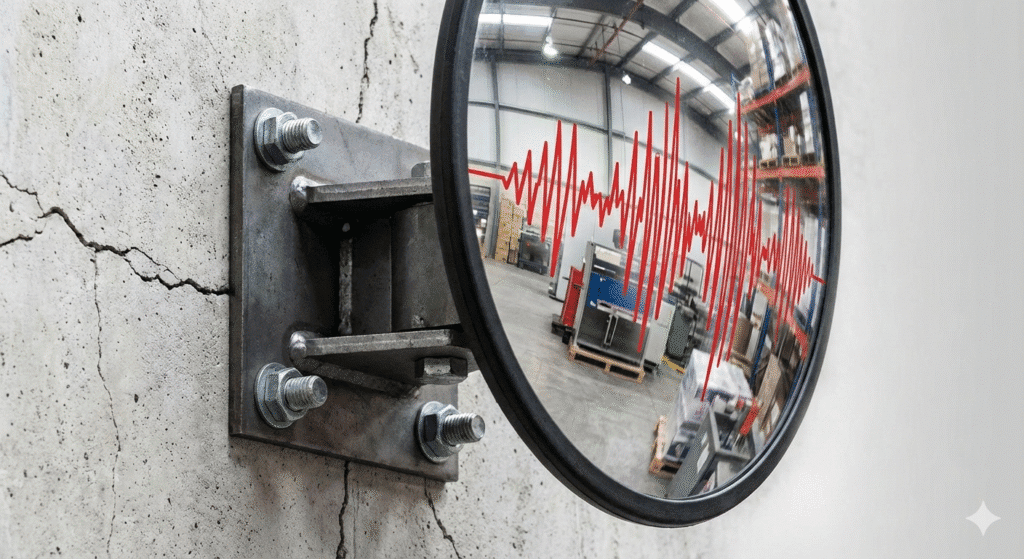
The marine environment’s intense ultraviolet radiation, amplified by reflection from water surfaces and light-colored pavements, rapidly degrades polymer materials including acrylic and polycarbonate mirror substrates. Extended UV exposure causes yellowing, surface crazing, and reduced impact resistance that compromise both optical performance and structural integrity. Terminal operators must specify mirrors with UV-stabilized materials and protective coatings proven through accelerated weathering tests to maintain acceptable performance throughout intended service intervals.
Accelerated Weathering Test Methods
ASTM G154 and ASTM G155 establish standardized accelerated weathering protocols using fluorescent UV lamps or xenon arc sources that reproduce solar radiation spectra. Test procedures specify exposure intensities, black panel temperatures, and wet-dry cycling schedules that simulate outdoor weathering. Marine terminal applications require particularly stringent testing given the intense UV exposure characteristic of waterfront locations with minimal shade.
Mirror substrates should demonstrate less than 5% reflectivity loss after 3,000 hours of accelerated weathering exposure, equivalent to approximately 7 to 10 years of coastal service depending on local solar radiation intensity. Color stability testing using Delta E measurements verifies that acrylic materials maintain neutral color without significant yellowing that would distort color perception in reflected images. Terminal procurement specifications should establish maximum acceptable Delta E values, typically 3.0 or less, ensuring mirrors continue providing accurate visual information throughout their service life.
Anti-Reflective and Protective Coating Performance
Advanced mirror designs incorporate hard coating systems that provide both scratch resistance and ultraviolet protection, extending substrate service life beyond uncoated alternatives. These coatings must themselves resist UV degradation without delamination, yellowing, or loss of adhesion to underlying substrates. Terminal operators should require coating adhesion testing according to ASTM D3359, with coatings demonstrating 5B adhesion ratings indicating no edge lifting or substrate exposure.
Coating flexibility becomes critical in marine environments where thermal cycling creates differential expansion between coatings and substrates. Brittle coatings crack under thermal stress, creating pathways for moisture intrusion and subsequent delamination. Mandrel bend testing (ASTM D522) evaluates coating flexibility by bending coated samples around progressively smaller diameter mandrels until cracking occurs, with acceptable marine-grade coatings tolerating 1/4-inch mandrel diameters without visible damage.

Impact Resistance and Vandalism Testing
Marine terminals present elevated impact risks from cargo handling equipment, suspended loads, and severe weather events that can project debris against installed mirrors. Additionally, remote terminal locations sometimes experience vandalism attempts requiring robust mirror construction that resists intentional damage. Terminal safety managers must balance optical performance requirements with adequate impact resistance for the specific operational environment.
Drop Weight Impact Testing
ASTM D3763 establishes procedures for instrumented impact testing using calibrated drop weights striking material samples at controlled energies. Test results quantify peak impact force, energy absorption, and failure characteristics that inform material selection decisions. Polycarbonate mirror substrates typically demonstrate superior impact resistance compared to acrylic alternatives, absorbing 2 to 3 times more energy before failure while producing minimal fragmentation if fracture occurs.
Terminal applications with elevated impact risk, including areas where overhead crane operations occur or locations subject to storm debris, should specify polycarbonate mirrors with impact resistance exceeding 400 inch-pounds. While polycarbonate offers lower optical clarity than acrylic and greater susceptibility to surface scratching, these compromises prove acceptable for applications where impact survivability takes priority. Terminal operators should conduct site-specific risk assessments to determine appropriate impact resistance specifications for each installation location.
Hail Impact Simulation
Coastal storms occasionally include large hail that can damage exterior equipment including convex mirrors. Facilities in regions with documented hail occurrence should consider testing according to UL 2218 or FM 4473 protocols that simulate hail strikes using ice balls or steel spheres propelled at terminal velocities determined by hailstone size. These tests verify whether mirror assemblies survive hail events without requiring immediate replacement, an important consideration for maintaining terminal operations during storm recovery periods when replacement parts may face supply chain delays.
Humidity Resistance and Delamination Prevention
Sustained high humidity characteristic of marine environments creates moisture intrusion risks for multi-layer mirror assemblies. Reflective coatings applied to acrylic substrates can delaminate if moisture penetrates through substrate edges or coating defects, creating cosmetic defects that eventually compromise optical performance. Terminal operators must specify mirrors with proven resistance to moisture-induced delamination verified through environmental chamber testing.
Humidity Cycling Test Protocols
ASTM D2247 establishes procedures for condensing humidity testing, exposing samples to 100% relative humidity conditions with surface condensation for extended periods. Marine terminal applications should require minimum 1,000 hours of humidity exposure without visible delamination, bubbling, or reflectivity loss. Advanced test protocols incorporate temperature cycling during humidity exposure, reproducing the thermal stress that accompanies diurnal temperature variations in actual service.
Edge sealing techniques significantly influence moisture resistance, with properly sealed mirror perimeters preventing capillary water intrusion that initiates delamination. Terminal procurement specifications should require manufacturers to document edge sealing methods and provide test data demonstrating long-term moisture resistance. Silicone edge sealants offer superior performance compared to mechanical edge crimping alone, providing elastic barriers that accommodate substrate expansion while maintaining moisture exclusion.
Installation Hardware and Fastener Testing
The most durable mirrors deliver no value if mounting fasteners corrode or loosen during service. Terminal operators must address fastener material specifications, thread-locking mechanisms, and torque requirements that ensure secure installation maintained throughout service life. Stainless steel fasteners matching mounting bracket material grades prevent galvanic corrosion between dissimilar metals, while mechanical locking devices or thread-locking compounds prevent vibration-induced loosening.
Vibration and Loosening Resistance Testing
DIN 65151 and ISO 16130 establish procedures for testing fastener resistance to self-loosening under vibration, simulating the sustained vibration exposure that occurs in marine terminals from heavy equipment operation and wave action transmitted through terminal structures. Fastener assemblies incorporating nylon insert lock nuts, deformed threads, or split lock washers demonstrate superior loosening resistance compared to plain fasteners that rely solely on friction for pre-load maintenance.
Terminal maintenance programs should include periodic inspections verifying fastener torque retention, with re-torquing schedules established based on manufacturer recommendations and site-specific operational experience. Proper initial installation torque application using calibrated torque tools prevents both under-tightening that allows loosening and over-tightening that can strip threads or crack mounting hardware.
Quality Control and Acceptance Testing
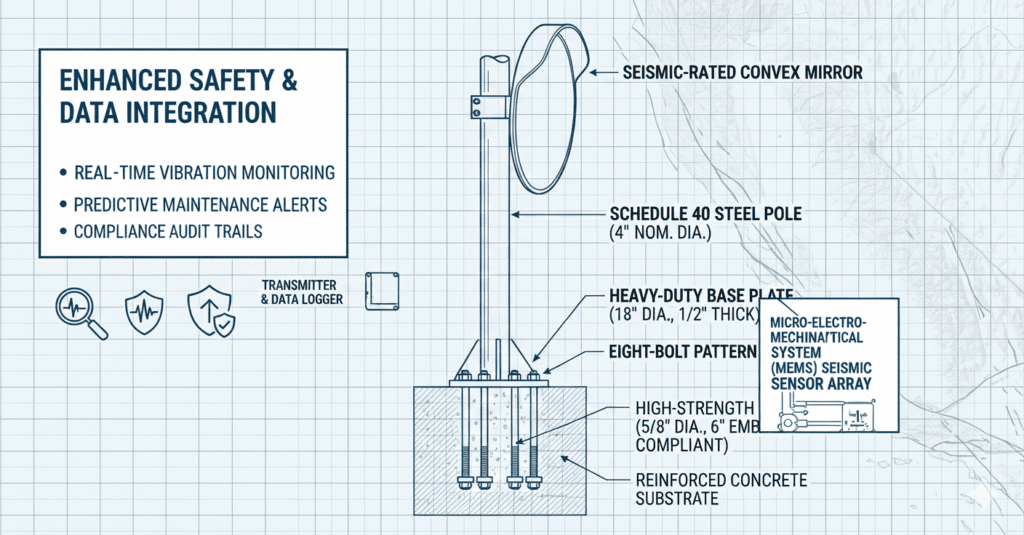
Large-scale terminal mirror installations representing significant capital investments warrant structured quality assurance programs that verify delivered equipment meets specified requirements before acceptance. Terminal project managers should implement receiving inspection protocols that include optical performance verification, material certification review, and sample destructive testing confirming compliance with durability requirements.
Sample Testing Programs for Large Procurements
Major installations involving dozens or hundreds of mirror assemblies should include contractual provisions requiring suppliers to submit representative samples for independent testing verification. Third-party testing laboratories accredited under ISO/IEC 17025 provide unbiased assessment of product compliance with technical specifications, protecting terminal owners from substandard equipment. Sample sizes typically range from 1% to 5% of total procurement quantities depending on lot sizes and specification criticality.
Testing programs should prioritize the most critical performance characteristics including corrosion resistance, optical quality, and structural adequacy. Abbreviated test protocols providing rapid results enable timely procurement decisions without delaying project schedules. For example, 168-hour salt spray testing provides meaningful corrosion assessment within one week, allowing project teams to identify problems before large-scale installation activities commence.
Long-Term Performance Monitoring and Service Life Validation
Progressive terminal operators implement structured asset management programs that document mirror system performance throughout their operational lives. Systematic inspection and condition assessment data validate service life predictions while informing future procurement specifications. Digital asset management systems tracking installation dates, maintenance activities, and condition ratings enable data-driven decisions about replacement cycles and specification refinements.
Performance monitoring should document both functional degradation including reduced optical clarity or developing corrosion, and structural concerns including mounting hardware loosening or pole deflection. Photographic documentation creates objective condition records supporting warranty claims if premature failures occur while providing historical references for condition trend analysis. Terminal operators accumulating multi-year performance data generate valuable institutional knowledge informing future specifications and vendor selections.
Vendor Qualification and Performance History
Terminal procurement decisions should consider manufacturers’ documented experience in marine environments and proven performance histories at comparable installations. Vendor qualification processes requesting reference installations, performance data from existing marine terminal applications, and documented testing capabilities identify suppliers with appropriate expertise. Site visits to reference installations enable direct observation of long-term product performance under actual service conditions, providing insights beyond laboratory test data.
Procurement specifications should require manufacturers to warrant products against defects in materials and workmanship for minimum five-year periods, with extended warranties of 7 to 10 years available for premium products. Warranty terms should clearly define covered failure modes, maintenance requirements for warranty validity, and remediation processes if defects occur. Terminal operators should evaluate warranty provisions as part of total cost of ownership analysis, recognizing that superior warranties indicate manufacturer confidence in long-term product performance.
Conclusion *( Investment in Proven Durability )*
Marine terminal convex mirror procurement demands rigorous attention to durability testing protocols that validate performance in uniquely challenging coastal environments. Terminal operators who specify comprehensive testing requirements, document performance expectations through detailed technical specifications, and partner with qualified manufacturers possessing marine environment expertise maximize the probability of successful long-term installations. While marine-grade products command premium pricing compared to standard commercial alternatives, the incremental investment proves economical when evaluated against total lifecycle costs including maintenance, premature replacement, and operational disruptions from equipment failures. Strategic procurement emphasizing proven durability ultimately serves terminal operators’ fundamental objectives of maintaining safe, efficient operations while protecting capital infrastructure investments.
Looking for a custom convex mirror manufacturer or supplier? Struggling to find the right factory to bring your vision to life? We’ve got you covered! At our place, we craft top-quality convex mirrors with precision and care. Big or small, your needs are our mission. Let’s launch your mirror project and take your product line to the next level! Click here to contact