
Traffic cones may seem like a small part of workplace and facility management, but their size, color, and placement are carefully regulated for safety and compliance reasons. For commercial operation, ranging from warehouses and construction zones to logistics yards, airports, and retail parking areas, cone height regulations directly influence visibility, accident prevention, and compliance with local safety standards.
Choosing the wrong cone height can result in fines, insurance issues, or even accidents due to reduced visibility. This detailed guide explores cone height standards across different commercial applications, the reasoning behind them, and best practices for choosing the right traffic cones for various environments.
Understanding the Role of Cone Height
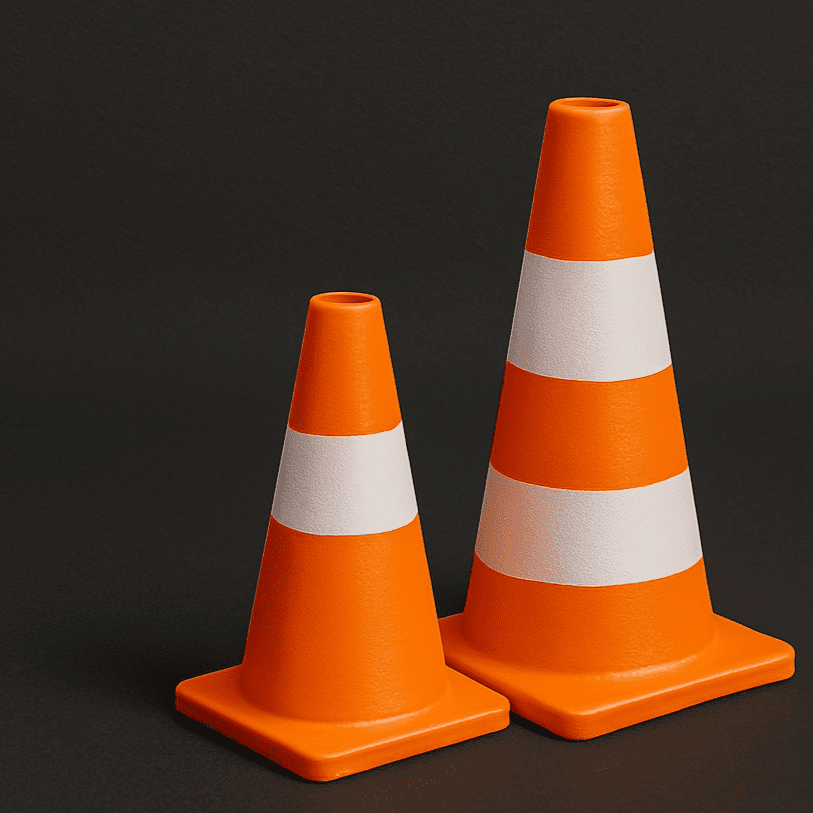
Cone height is not just an arbitrary dimension; it defines how visible the cone is to drivers, equipment operators, and pedestrians under specific conditions.
In general:
- Shorter cones (below 18 inches) are used for indoor or low-traffic environments.
- Mid-sized cones (18–28 inches) are used in light to moderate traffic zones such as warehouses, parking lots, and loading areas.
- Taller cones (28–36 inches or more) are required in high-traffic or outdoor environments where vehicles move at higher speeds.
Height regulations are based on standards such as the Manual on Uniform Traffic Control Devices (MUTCD) in the U.S., which specifies minimum cone dimensions depending on roadway speed limits and environmental conditions.
Regulatory Framework for Traffic Cone Height
Several standards and safety authorities dictate cone height requirements for specific applications. Key references include:
- MUTCD (Manual on Uniform Traffic Control Devices): Sets the benchmark for cone usage on public roads and construction zones.
- OSHA (Occupational Safety and Health Administration): Focuses on workplace safety and visibility requirements for equipment operators.
- ANSI (American National Standards Institute): Provides material and reflectivity guidelines that complement MUTCD regulations.
Municipal, state, or regional agencies may also have additional specifications, especially for construction and maintenance projects funded by local governments.
Cone Height Guidelines by Environment
Different commercial settings require specific cone heights and reflective features to ensure adequate visibility and safety. Below is a breakdown of the most common applications and corresponding height standards.
1. Warehouse and Distribution Centers (18 to 28 inches
In controlled indoor environments such as warehouses, distribution centers, and manufacturing plants, cones primarily serve to:
- Mark restricted zones or maintenance areas
- Direct pedestrian or forklift movement
- Indicate spills or temporary hazards
Typical heights range between 18 and 28 inches, as visibility requirements are lower due to controlled speeds and indoor lighting.
Recommendations:
- Use 18-inch cones for indoor pedestrian pathways or low-risk zones.
- Choose 28-inch cones for forklift lanes or mixed-traffic zones where visibility from higher vantage points is necessary.
- Reflective collars may be added if lighting conditions vary or during night shifts.
2. Parking Lots and Commercial Properties (28 inches minimum)
For outdoor parking lots, retail centers, or business complexes, 28-inch cones are considered the standard height. These areas often involve moving vehicles, delivery trucks, and pedestrians.
Why 28 inches?
This height ensures cones remain visible above most vehicle hoods and across varying sightlines, especially in areas where cars are backing up or turning.
Best practices:
- Use weighted bases to prevent cones from tipping in windy conditions.
- Opt for high-visibility orange cones with reflective bands for nighttime visibility.
- Deploy taller cones (36 inches) near parking entrances or loading zones where trucks operate.
3. Construction and Maintenance Zones (28 to 36 inches or more)
When cones are used on public roads or large commercial construction sites, they must adhere strictly to MUTCD regulations.
MUTCD Requirements:
- For roadways with speed limits under 45 mph, cones must be at least 28 inches in height.
- For roadways with speed limits 45 mph or higher, cones must be 36 inches or taller, often with two reflective collars for enhanced nighttime visibility.
These cones are often made from heavy-duty PVC or rubber bases to withstand strong wind and impact from moving vehicles.
Additional considerations:
- Reflective collars must meet ASTM Type IV or higher standards.
- In low-light conditions, cones should include LED lighting or reflective sleeves.
- For high-speed zones, barrels or delineators may be used in combination with cones.
4. Airport and Aviation Facilities (36 inches or more)
Airports have their own strict safety and visibility standards due to the size of aircraft and vast open environments. According to FAA guidelines, cones in active airfields, taxiways, or maintenance zones typically measure 36 to 42 inches in height.
Applications include:
- Marking construction areas on runways or taxiways
- Defining equipment parking zones
- Designating pedestrian walkways in maintenance areas
Key features:
- Bright orange or fluorescent red colors for maximum contrast against concrete runways
- Weighted bases for wind resistance
- Optional LED lights for nighttime visibility
In some cases, cones are replaced with low-profile markers or LED beacons, but when cones are used, they must meet the visibility standards outlined by the FAA’s Advisory Circular 150/5370-2.
5. Industrial Yards and Logistics Parks (28 to 36 inches)
Logistics parks, freight terminals, and container yards often feature heavy-duty equipment such as cranes, trucks, and forklifts. These environments demand visibility at both ground level and higher operator sightlines.
Recommended cone heights:
- 28-inch cones for pedestrian walkways and low-traffic areas
- 36-inch cones for zones where heavy trucks or container handlers operate
- Reflective collars or LED lights for night operations or dim lighting conditions
Durability and stability are essential, as cones in these environments are exposed to impact, dust, and continuous movement.
6. Retail and Event Management (18 to 28 inches)
For temporary crowd management, retail promotions, or event setups, lighter cones between 18 and 28 inches are commonly used. They help direct pedestrian flow or temporarily block vehicle access without requiring permanent fixtures.
Advantages:
- Easy to transport and deploy quickly
- Suitable for both indoor and outdoor use
- Often available in multiple colors to match branding or event themes
While these cones don’t fall under stringent MUTCD standards, organizers should still ensure they are visible enough for public safety.
7. Emergency Response and Utility Work (28 to 42 inches)
Police, fire departments, and utility companies rely on tall, reflective cones for emergency or roadside operations. These cones need to be visible from a long distance, even under poor lighting or adverse weather.
Regulations:
- Minimum height: 28 inches for local utility zones
- 36 to 42 inches for highways and major roads
- Double reflective collars for nighttime use
Some cones come with integrated LED lights or collapsible designs for rapid deployment from service vehicles.
Reflectivity and Color Requirements
In addition to height, color and reflectivity are key components of regulatory compliance.
Standard colors:
- Orange: General-purpose, high-visibility for most commercial uses
- Green or Blue: Specialized use in airports or event areas
- Yellow: Used for low-risk or cautionary applications
Reflectivity standards:
- One 6-inch reflective collar for cones between 28 and 36 inches
- Two collars (a 6-inch and a 4-inch band) for cones 36 inches or taller
Reflective materials must comply with ASTM Type IV or higher performance ratings to ensure visibility up to 1,000 feet under headlights.
Choosing the Right Cone for Your Application
To ensure compliance and effectiveness, commercial facility managers and safety supervisors should consider:
- Speed and traffic type – Higher speeds require taller cones.
- Lighting conditions – Use reflective collars or LED lights in low-light environments.
- Weather exposure – Select heavy-base or all-weather cones for outdoor use.
- Space limitations – For indoor environments, compact 18-inch cones may be sufficient.
- Durability – Use PVC or rubber cones for heavy-duty areas; lightweight polyethylene for temporary use.
Procurement and Maintenance Best Practices
1. Source from Certified Manufacturers
Always procure cones that meet MUTCD or local road authority standards. Certificates of compliance ensure safety and insurance compatibility.
2. Standardize Across Sites
For multi-location operations, like retail chains or logistics companies, standardize cone heights and designs to simplify inventory management and training.
3. Inspect Regularly
Faded or cracked cones lose their effectiveness and may fail safety inspections. Establish a quarterly inspection routine to identify replacements.
4. Use Weighted Bases
Outdoor cones should have rubber bases or sand-filled bottoms to resist wind displacement, especially near busy roads.
The Consequences of Non-Compliance
Using cones of incorrect height or reflectivity in regulated areas can lead to:
- Safety hazards for pedestrians and drivers
- Liability issues in case of accidents
- Fines or project delays during safety audits
- Reduced visibility for equipment operators and drivers
Municipal and commercial safety inspectors often verify that cone specifications align with regulatory standards. Failing to comply can affect contractor approvals or facility safety ratings.
Conclusion
Cone height regulations may appear minor, but they are critical to maintaining safety, visibility, and compliance across diverse commercial applications. Whether managing a warehouse floor, a construction site, or a municipal roadway, understanding the right cone height and configuration ensures safer, more efficient operations.
By aligning cone selection with recognized standards like MUTCD and OSHA, commercial organizations can prevent accidents, protect workers, and enhance the professionalism of their safety programs.
When properly implemented, traffic cones aren’t just warning devices, they’re active components of a facility’s safety and traffic management strategy, ensuring smooth operations and peace of mind for all stakeholders.
Looking for a custom traffic cones manufacturer or supplier? Struggling to find the right factory to bring your vision to life? We’ve got you covered! At our place, we craft top-quality traffic cones with precision and care. Big or small, your needs are our mission. Let’s launch your cones project and take your product line to the next level! Click here to contact